
Level Sensor
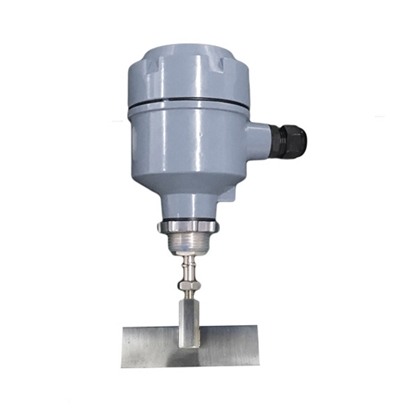
Paddle Level Switch for Silo/Tank, SPDT Contact
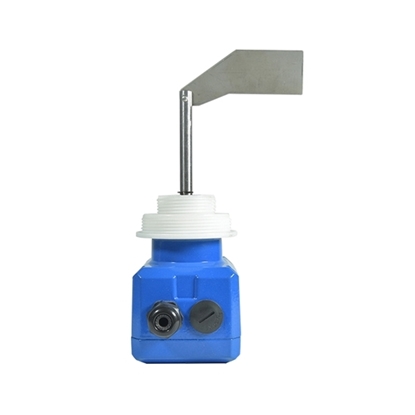
Rotary Paddle Level Switch for Solids, 220VAC/110VAC/24VDC
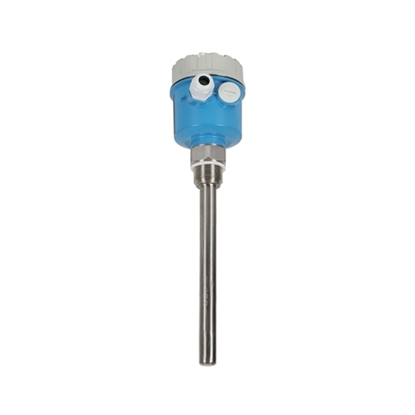
Vibrating Rod Level Switch for Powder/Tanks/Solids
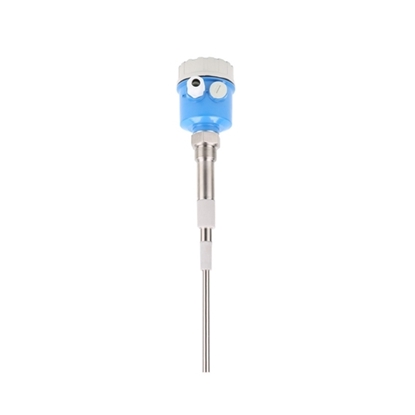
RF Admittance Level Switch for Powder/Silo, SPDT
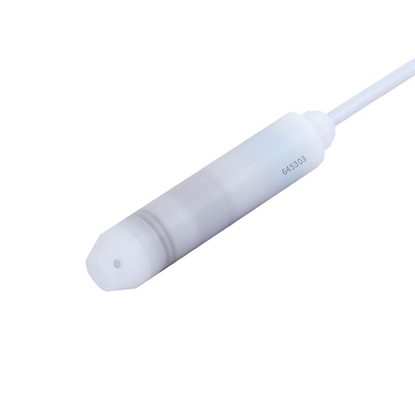
Submersible Level Sensor, Anti-corrosion, 4-20mA/RS485
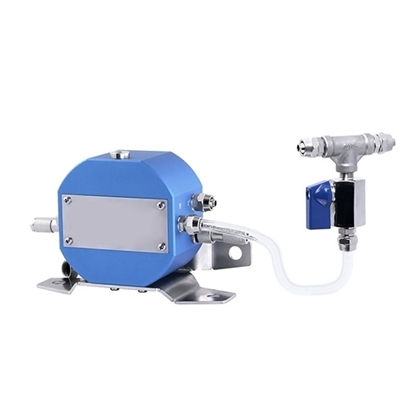
Hydrostatic Level Sensor for Settlement Monitoring, RS485
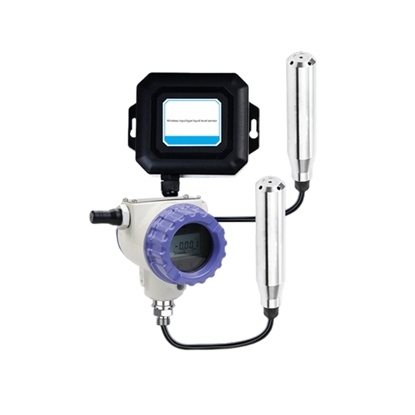
Wireless IoT Water Level Sensor, NB/4G/LoRaWAN
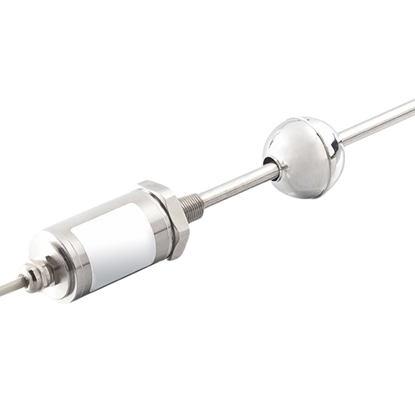
Magnetostrictive Level Transmitter, Contactless, 4-20mA
What is a Level Sensor
A level sensor is a device used to measure the level (amount or height) of a substance—usually a liquid or sometimes a solid—inside a container, tank, or system.
In simple terms, it tells you how full or empty something is.
Common Types of Level Sensors
Level sensing technologies fall into two primary categories: continuous (measuring the exact volume or height) and point-level (detecting an overflow or empty state).
Continuous level sensors provide real-time, precise measurement of liquid or solid levels throughout the entire tank or container.
Point-level sensors detect when a liquid or solid reaches a specific threshold, such as “full” or “empty,” and then trigger an action like turning on a pump, closing a valve, or activating an alarm.
Tips:
Continuous sensors → exact level measurement, often for process control or monitoring.
Point-level sensors → detect “full” or “empty” conditions, often for alarms or automation.
Common Sensing Technologies
These technologies are the key methods used to detect material levels in tanks and containers. The main types of level sensing technologies include:
Continuous Level Sensors
These sensors measure the exact volume or height of a material within a container.
- Capacitive level sensors
- Submersible Level Sensor
- Ultrasonic Level Sensor
- Rotary paddle Level Sensors
Point Level Sensors
These act as switches, indicating whether a material is above or below a specific point.
- Optical Level Sensors
- Electromagnetic (radar) Level Sensors
- Vibrating (tuning fork) Level Sensors
- Rotary Paddle Level Sensors
Quick ATO Level Sensor Selection Table
The table below provides a quick overview of different level sensor types to help you select the most suitable solution based on application and measurement requirements.
Capacitive Level Sensor
Capacitive level sensors detect the liquid level by measuring changes in capacitance between the sensor plates. When the liquid replaces air between the plates, the capacitance changes, reflecting the liquid height in the tank. They are compact, accurate, and cost-effective.
| Model SKU | Measuring Range | Working Temp | Power Supply | Output Signal | Best For |
| ATO-LEVS-900 | 0–900 mm | -40°C~+85°C | 15–30V DC | 4–20mA / RS485 / RS232 / 0–5V | Rivers, reservoirs, and power plants |
| ATO-LEVS-1000 | 0–1000 mm | -20°C~+85°C | 9–30V DC / 15–30V DC | 4–20mA / RS485 / RS232 | Industrial oil and gas tanks |
| ATO-LEVS-2000 | 0–2000 mm | -50°C~+200°C | 9–30V DC / 15–30V DC | 4–20mA / 0–10V | Diesel/gas fuel tanks for generators |
| ATO-LEVS-GLTV7S | 100–1400 mm | -35°C~+70°C | 9–30V DC | 4–20mA / RS485 / RS232 / 0–5V | Hydraulic systems, machinery, fluid monitoring |
Submersible Level Sensor
Measures the liquid level by detecting hydrostatic pressure when submerged in the liquid. Ideal for deep tanks, water treatment, chemical storage, and sealed containers. Provides continuous and reliable measurement, resistant to harsh conditions.
| Model SKU | Measuring Range | Working Temp | Power Supply | Output Signal | Best For |
| ATO-LEVS-S200M | 0–200 m | 0°C~+60°C | 12–24V DC | 4–20mA / RS485 / 0–5V | Water level monitoring in wells, tanks, and reservoirs |
| ATO-LEVS-CYW71 | 0–200 kPa | -40°C~+85°C | 9–28V DC | 4–20mA / RS485 | Acid and alkali liquid level detection in corrosive environments |
| ATO-LEVS-HT20M | 0–20 m | -20°C~+85°C | 12–24V DC | 0–20mA / 4–20mA / 0–5V / 0–10V | High-temperature liquid level monitoring of industrial tanks |
Ultrasonic Level Sensor
Uses ultrasonic waves to measure the distance to the liquid surface. Non-contact design is safe for corrosive or hazardous liquids. Suitable for large tanks, wastewater, and industrial chemical storage.
| Model SKU | Measuring Range | Working Temp | Power Supply | Output Signal | Best For |
| ATO-LEVS-05 | 0–5 m | -20°C ~ +60°C | 12V DC / 24V AC | 4–20mA | Reservoirs, chemical containers |
| ATO-LEVS-U40M | 0–40 m | -20°C ~ +60°C | 12–16V DC / 24–28V DC / 220V AC | 4–20mA / RS485 / HART | Rivers, sewage tanks, outlet systems |
| ATO-LEVS-U60M | 0–60 m | -20°C ~ +80°C | 12V DC / 24V AC | 4–20mA / RS485 / RS232 | Diesel, oil, mixed liquid tanks |
| ATO-LEVS-NC | 0–20 m | -40°C ~ +80°C | 24V DC | 4–20mA | Acid-alkali liquids, wells |
Rotary Paddle Level Switch
A rotating paddle stops when it is obstructed by solids, triggering a switch. Commonly used in silos, hoppers, and bulk solid storage. Ideal for point-level detection to prevent overfill or empty conditions.
| Model SKU | Measuring Range | Working Temp | Power Supply | Output Signal | Best For |
| ATO-LEVS-RD901 | 0–10 m | -40°C ~ +150°C | 12–24V DC / 220V AC | 4–20mA / RS485 / HART | Corrosive liquids, chemical, and storage systems |
| ATO-LEVS-RD902 | 0–30 m | -40°C ~ +250°C | 12–24V DC / 220V AC | 4–20mA / RS485 / HART | High-temperature and high-pressure industrial liquids |
| ATO-LEVS-RD903 | 0–40 m | -40°C ~ +130°C / -40°C ~ +230°C | 12–24V DC / 220V AC | 4–20mA / RS485 / HART | Bulk material level monitoring, solids, industrial raw materials |
| ATO-LEVS-RD909 | 0–70 m | -40°C ~ +150°C | 12–24V DC / 220V AC / 50Hz | 4–20mA / RS485 / RS232 / HART | Water level in reservoirs, lakes, and industrial tanks |
Optical Level Sensor
Optical level sensors detect liquid presence using light reflection or refraction. They are compact with a fast response, suitable for point-level detection in small tanks, laboratory instruments, and medical liquid monitoring.
| Model SKU | Material | Measuring Temp | Power Supply | Output Signal | Best For |
| ATO-MR-M12 | PSU | -20°C ~ +110°C | 5–24V DC | NPN/PNP | Oil, coolant, hydraulics – low-level run-dry protection |
Electromagnetic (Radar) Level Switch
Electromagnetic radar level switches use microwave signals to detect the presence or absence of liquid. They work reliably in harsh conditions, including vapor or dust, and are ideal for high-pressure or high-temperature industrial tanks.
| Model SKU | Material | Measuring Temp | Power Supply | Output Signal | Best For |
| ATO-ELS-040 | SUS304 / 316L+PTFE | -20°C ~ +200°C | 24V DC / 220V AC | SPDT | Conductive liquids – industrial control |
Vibrating (Tuning Fork) Level Switch
Vibrating tuning fork level switches detect liquids or solids by a frequency change when the vibrating element is covered. They are reliable, work with foam, sticky liquids, or powders, and are suitable for silos, hoppers, and point-level detection to prevent overfill.
| Model SKU | Material | Measuring Temp | Power Supply | Output Signal | Best For |
| ATO-TFLS-501 | Stainless Steel 316 | -40°C ~ +80°C | 24V DC / 220V AC | DPDT | Conductive liquids – industrial control |
| ATO-VLS-YN100 | Stainless Steel 316 | -30°C ~ +200°C | 250V AC / 30V DC / 5A | SPDT | Powders, granules, bulk solids – silos/bins |
Rotary Paddle Level Switch
Rotary paddle level switches have a rotating paddle that stops when obstructed by solids, triggering a switch. They are commonly used in silos, hoppers, and bulk solid storage and are ideal for point-level detection to signal full or empty conditions.
| Model SKU | Material | Measuring Temp | Power Supply | Output Signal | Best For |
| ATO-PLS-004 | SUS304 Stainless Steel | -20°C ~ +80°C | 220V AC / 110V AC / 24V DC | SPDT | Bulk solids – bins, hoppers, silos |
Where can level sensors be used?
Typical applications for Continuous Level Sensors measurement in the process industry are:
- Process tanks
- Storage tanks
- Silos
- Mobile containers
Point Level Sensors are mostly used for good such as:
- Liquids
- Pastes and slurrys
- Powders, grains and granules
- Bulk solids
Quick Recommendation by Application
There are various types of level sensors designed for different applications and characteristics. Select the most suitable level sensor type and model based on your specific industrial application to ensure accurate measurement and reliable control.
| Application | Recommended Sensor Type | Recommended SKU |
| Liquid level detection of water, oil, and chemicals | Capacitive / Ultrasonic Level Sensor | ATO-LEVS-900 / ATO-LEVS-1000 / ATO-LEVS-U40M |
| Liquid level detection and control at multiple points | Electrode Level Switch | ATO-ELS-040 |
| Slurry, powder, or bulk solid level monitoring | Vibrating / Rotary Paddle Level Switch | ATO-VLS-YN100 / ATO-PLS-004 |
| Slurry level in tanks or containers | Ultrasonic / Submersible Sensor | ATO-LEVS-CS03 / ATO-LEVS-S200M |
| Conductive liquids (water, acid, alkali) | Electrode Level Switch | ATO-ELS-040 / ATO-LEVS-CYW71 |
Key Considerations in selecting level sensors
Choosing the style and type of level sensor required for a specific application should be based on knowledge of the application conditions and properties of the media being measured. The factors to be evaluated and considered in the sourcing process include the following:
- What type of material will you measure?
Determine whether your target is liquid, slurry, powder, or granular solids, and choose a sensor compatible with that material. - What measurement range is required?
Ensure the sensor can cover the full height of your tank, silo, or container. - Do you need continuous monitoring or point-level detection?
Continuous sensors provide precise, real-time levels, while point-level switches trigger alerts at specific thresholds. - What are the process conditions?
Consider temperature, pressure, vibration, foam, dust, or corrosive liquids in your environment. - How will the sensor be installed?
Decide between submersible, non-contact, top-mount, or side-mount configurations based on your system. - Which output type is compatible with your control system?
Options include analog 4–20 mA, digital, wireless, or relay outputs. - What level of accuracy and response time is needed?
Match the sensor to your process’s precision and speed requirements. - How often will maintenance or calibration be required?
Evaluate sensor lifespan, cleaning frequency, and ease of calibration or replacement. - What is your budget?
Balance performance, installation costs, and ongoing maintenance requirements.
By evaluating these factors, you can ensure the chosen level sensor delivers accurate, reliable, and efficient performance for your specific industrial application.
Frequently Asked Questions About Level Sensors
Q1: Radar vs Ultrasonic Level Sensor: Which One Should I Choose?
A: Use a radar level sensor for harsh environments and an ultrasonic level sensor for clean liquid applications.
Radar works best in vapor, foam, dust, high temperature, and pressure conditions, while ultrasonic is suitable for cost-effective water tank and reservoir monitoring.
Q2: Which ATO Level Sensor Is Best for Water Tanks?
A: Ultrasonic, submersible, and level switches are the best ATO sensors for water tanks.
Ultrasonic is used for non-contact measurement, submersible for deep tanks and wells, and level switches for overflow and pump control.
Q3: When should I use a submersible level sensor?
A: Use a submersible level sensor for deep tanks, wells, and underground liquid level measurement.
It is used in hydrostatic pressure-based applications where stable, continuous monitoring is required.
Q4: Which type of level switch is best for industrial use?
A: Tuning fork level switches are best for liquids, and vibrating rod level switches are best for powders and bulk solids.
They are used for reliable ON/OFF level detection in industrial control systems.
Q5: How do I choose between continuous and point-level sensors?
A: Choose continuous level sensors for real-time level measurement and point-level sensors for ON/OFF control.
Continuous sensors are used for process monitoring, while point-level sensors are used for alarms and pump protection.
Summary
Level sensors play a crucial role in modern industry and daily life, improving production efficiency, reducing costs, and ensuring safe operation.
Some level sensor applications can overlap, and when deciding on a sensor, it is important to identify the product that you are sensing and the type of feedback that your application requires. Sensors like tuning fork or optical level sensors can be used to indicate a high or low level. Ultrasonic and radar level sensors can measure your level to give specific feedback on how much product is in a tank. If you have any questions about purchasing, you can contact us.
