
Dew Point Sensor
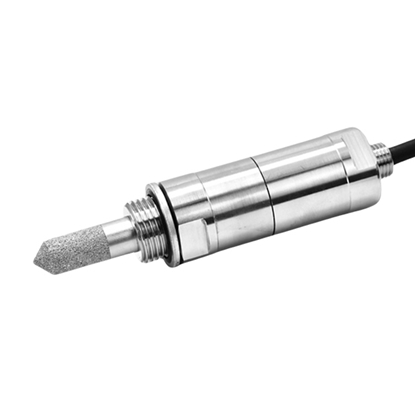
Dew Point Sensor for Cold Dryer, -30~50°C, RS485&4-20mA
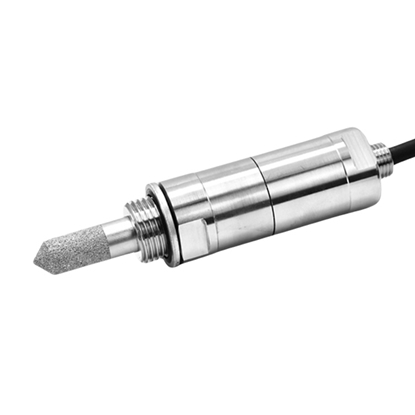
Dew Point Sensor for Compressed Air, -60~60°C, RS485&4-20mA
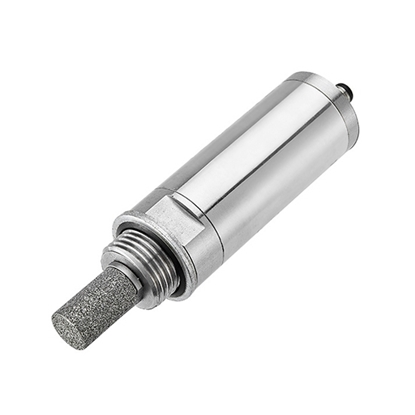
Dew Point Sensor for Air Dryer, -60~+20°C, 4-20mA/RS485
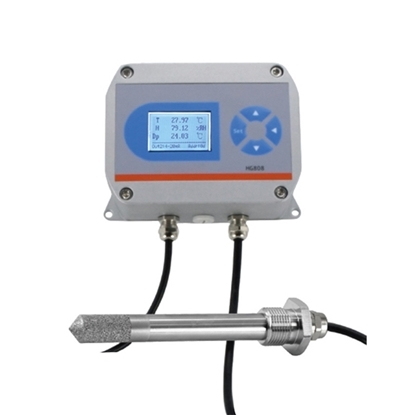
Industrial digital Dew Point Transmitter, -60~90°C, Online Type
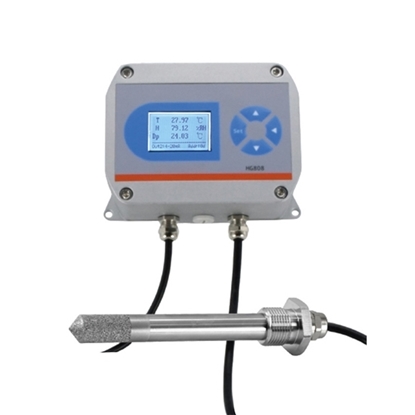
Dew Point Temperature Sensor, -20~100°C Dewpoint, 80~180°C Temp
A dew point sensor is an instrument used to measure the temperature at which moisture condenses from air or gas. It helps monitor moisture levels in compressed air systems, industrial gases, and drying processes to prevent corrosion, contamination, and equipment failure. ATO dew point sensors and transmitters provide accurate moisture measurement with 4–20mA, 0–10V, and RS485 outputs for reliable industrial monitoring and automation.
Why Use a Dew Point Sensor?
Excess moisture in compressed air and industrial gas systems can lead to condensation, corrosion, equipment failure, and reduced product quality. A dew point sensor continuously monitors moisture levels by measuring dew point temperature, helping industries maintain dry operating conditions and improve process reliability.
By providing real-time moisture data, dew point sensors help to:
- Prevent condensation and corrosion in compressed air pipelines
- Protect pneumatic tools, valves, and production equipment
- Maintain product quality in moisture-sensitive processes
- Improve dryer efficiency and energy utilization
- Reduce maintenance costs and unexpected downtime
- Support reliable process control and quality management
How Does a Dew Point Sensor Work?
A dew point sensor works by detecting water vapor in a gas stream and converting moisture measurements into a dew point temperature value. The sensor uses a specialized sensing element and signal processing technology to provide accurate moisture monitoring for industrial automation and process control systems.
The measurement process typically includes:
- Moisture Sensing: The sensing element detects water vapor changes in the gas stream using technologies such as capacitive polymer, chilled mirror, or impedance measurement.
- Signal Processing: The internal electronics process the sensor signal, compensate for temperature variations, and calculate the dew point temperature with high accuracy.
- Data Transmission: The measured dew point value is converted into standard output signals, including 4–20 mA, 0–10 V, and RS485 Modbus, for connection with controllers and monitoring systems.
- Process Control: PLCs, SCADA systems, and industrial controllers use the data for moisture monitoring, alarm activation, dryer control, and process optimization.
What Is the Difference Between Dew Point and Humidity?
Dew point and humidity are both measurements related to moisture in the air, but they describe moisture conditions in different ways. Dew point indicates the actual moisture content by measuring the temperature at which condensation occurs, while humidity shows how much moisture is present compared with the maximum amount of moisture the air can hold at a specific temperature.
| Feature | Dew Point | Relative Humidity (RH) |
| Definition | The temperature at which air becomes saturated and water vapor starts to condense | The percentage of moisture in the air compared with the maximum moisture capacity at a given temperature |
| Measurement Unit | °C Td or °F Td | %RH |
| Temperature Influence | Less affected by temperature changes | Highly affected by temperature changes |
| Measurement Focus | Absolute moisture content | Moisture level relative to air capacity |
| Best Applications | Compressed air, industrial gases, dryers, moisture control | HVAC, weather monitoring, indoor comfort |
What Output Does a Dew Point Sensor Provide?
A dew point sensor converts measured moisture levels into electrical signals for monitoring and control systems. Different output options allow the sensor to connect with PLCs, SCADA systems, data loggers, and industrial automation equipment.
Common dew point sensor output types include:
| Output Type | Description | Typical Applications |
| 4–20 mA Analog Output | Provides a stable current signal for long-distance transmission with strong resistance to electrical interference | Industrial PLC control, compressed air monitoring, process automation |
| 0–10 V Analog Output | Provides a voltage signal proportional to the measured dew point value | Local controllers, instrumentation systems |
| RS485 Modbus Output | Enables digital communication and multi-device networking through the Modbus RTU protocol | SCADA systems, smart factories, IoT monitoring |
| Relay Alarm Output | Provides switching signals when moisture levels exceed preset limits | Alarm systems, dryer control, safety monitoring |
When selecting a dew point sensor, choose an output type based on your existing control system. 4–20 mA and RS485 Modbus are commonly used in industrial applications because they provide reliable long-distance transmission and easy integration with automation systems.
How Do I Choose a Dew Point Sensor?
Choosing the right dew point sensor depends on your application requirements, measurement range, accuracy, output signal, and installation environment.
| Selection Factor | Consideration |
| Dew Point Range | Select a suitable range based on your dryer type and required moisture level. Low dew point sensors are recommended for desiccant dryers and ultra-dry gas systems. |
| Accuracy | Choose higher accuracy models for critical applications such as pharmaceuticals and semiconductor manufacturing. |
| Output Signal | Select 4–20 mA, 0–10 V, or RS485 Modbus according to your control system. |
| Operating Conditions | Ensure the sensor matches the temperature, pressure, and installation environment of your application. |
What Measurement Technologies Are Used in Dew Point Sensors?
Dew point sensors use different sensing technologies to measure moisture content in air and gases. The selection of sensing technology depends on required accuracy, dew point range, response time, and application conditions. The most common technologies include capacitive, chilled mirror, and aluminum oxide sensing methods.
| Sensor Type | Working Principle | Typical Applications |
| Capacitive Dew Point Sensor | Measures moisture changes through variations in capacitance of a sensing film | Compressed air systems, dryers, industrial gases |
| Chilled Mirror Dew Point Sensor | Detects condensation on a cooled mirror surface for high-precision measurement | Calibration, laboratories, reference measurement |
| Aluminum Oxide Dew Point Sensor | Measures moisture through changes in electrical impedance | Ultra-low dew point gases and critical processes |
For most industrial moisture monitoring applications, capacitive dew point sensors are widely used due to their fast response, wide measurement range, and cost-effective performance. Chilled mirror sensors are preferred for high-accuracy reference measurements, while aluminum oxide sensors are suitable for ultra-low moisture applications.
ATO Dew Point Sensor Selection Guide
The following table compares different dew point sensors and transmitters by measurement range, accuracy, output, and typical applications to help you select the right solution.
| Product Type | Dew Point Range | Accuracy | Output | Application |
| Dew Point Sensor for Cold Dryer | -30~50°C Td | ±2°C Td | 4-20mA / RS485 | Refrigerated dryers |
| Dew Point Sensor for Compressed Air | -60~60°C Td | ±2°C Td | 4-20mA / RS485 | Compressed air systems |
| Dew Point Sensor for Air Dryer | -60~20°C Td | ±2°C Td | 4-20mA / RS485 | Air dryers |
| Industrial Dew Point Transmitter | -60~90°C Td | ±2°C Td | 4-20mA / RS485 | Industrial process monitoring |
| Dew Point Temperature Sensor | -20~100°C Td | ±3°C Td | 4-20mA / RS485 | High-temperature applications |
Why Choose Our Dew Point Sensors?
Different models are designed for various moisture monitoring requirements, from refrigerated dryers and compressed air systems to industrial processes and high-temperature applications.
Key advantages include:
- Wide Dew Point Measurement Range: Supports different moisture monitoring needs from standard compressed air systems to ultra-dry applications.
- Multiple Output Options: Available with 4–20mA, 0–10V, and RS485 communication for easy integration with PLC and industrial control systems.
- High Measurement Accuracy: Provides reliable dew point monitoring with accuracy up to ±2°C Td for demanding industrial applications.
- Designed for Different Applications: Models are available for cold dryers, compressed air systems, air dryers, and high-temperature processes.
- Stable Industrial Performance: Designed for continuous operation with reliable moisture measurement and long-term stability.

