
Dew Point Sensor vs Temperature and Humidity Sensor
One of the most surprising misconceptions in industrial monitoring is using "dew point" and "humidity" interchangeably. While they seem similar, they are fundamentally different metrics measured by a Dew Point Sensor and a Temperature & Humidity Sensor, respectively. Understanding these differences is critical to preventing hidden moisture damage and ensuring production safety.
To help you navigate these technologies, ATO Industrial Automation provides a deep dive into the working principles of both the Dew Point Sensor and Temperature & Humidity Sensor, highlighting their core differences and offering an expert selection guide to help you stabilize your processes.
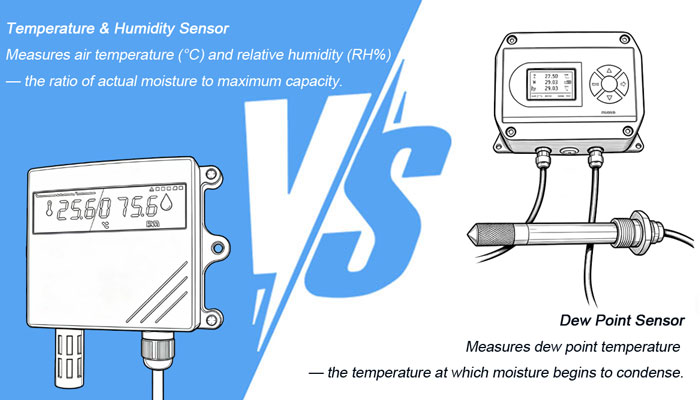
Dew Point Sensor vs Temperature & Humidity Sensor: What's the Difference?
To choose the correct sensor, you must first understand what each one tracks and how it functions.
What is a Dew Point Sensor?
A dew point sensor gives you precise control over moisture by measuring the exact temperature at which condensation begins.
- Protects equipment from corrosion and water damage
- Ensures consistent product quality in industrial processes
- Ideal for compressed air systems and harsh environments
What is a Temperature & Humidity Sensor?
A temperature and humidity sensor is a device that simultaneously measures ambient temperature and relative humidity in the surrounding environment.
- Maintains optimal comfort and air quality
- Improves energy efficiency in HVAC systems
- Perfect for smart buildings, storage, and automation systems
Key Differences between Dew Point Sensor and Temperature & Humidity Sensor
| Feature | Dew Point Sensor | Temperature & Humidity Sensor |
| Units | Percentage (%) | °C (temperature) and %RH (humidity) |
| Sensor type | 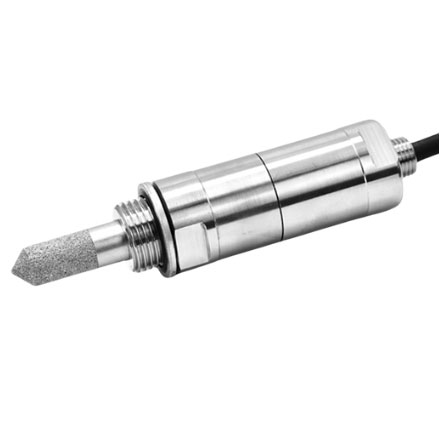 Dew Point Sensor |
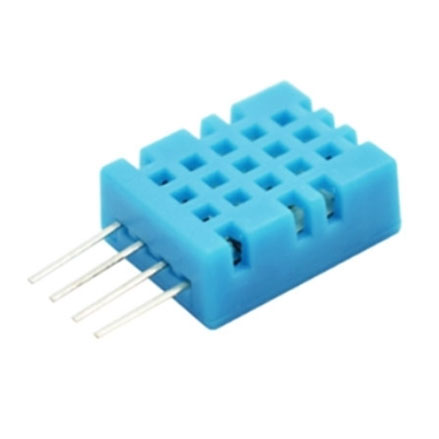 Temperature and Humidity Sensor |
| Temp. Dependence | Independent | Dependent |
| Sensitivity | Extremely high, capable of <1% RH detection | Limited, cannot measure very low humidity |
| Best for |
Industrial safety, drying, compressed air |
Comfort, HVAC, general monitoring |
| Pros |
Stable measurement unaffected by temperature fluctuations |
Inexpensive, quick response for ambient air |
| Cons | Higher technical requirements | Accuracy drops in extreme heat/dryness |
When to Use Which?
- Use dew point sensors when: If your application involves protecting industrial machinery or ensuring stringent process drying.
- Use Temperature & Humidity Sensor when: If your application is focused on human comfort or general material storage.
Pro Tip:
For comprehensive monitoring in demanding industries such as coal mining, metallurgy, food processing, and brewing, ATO recommends an Explosion-proof temperature and humidity sensor.
Which Sensor Is Better for ultra-dry environments?

In industrial processes that demand extremely dry air, such as compressed air drying, lithium battery production, and semiconductor manufacturing.
—The Dew Point Sensor is the undisputed winner.
- Superior Resolution: In ultra-low humidity environments, the change in Relative Humidity (RH) can be as minute as 0.1% or even less. A standard humidity sensor struggles to detect these microscopic fluctuations, which often leads to significant reading drift and instability.
- Unmatched Precision: Dew point sensors (specifically chilled mirror or high-performance thin-film capacitive types) maintain incredible repeatability. They provide highly accurate data even at a dew point of -60°C or lower, where conventional sensors reach their physical limits.
Pro Tip:
Many modern dew point sensors, such as the dew point temperature sensor provides reliable -20~100°C dew point monitoring for high-temperature environments up to 80~180°C. It ensures real-time moisture detection in industrial applications such as thermal processing and compressed air systems, with ±3°C Td accuracy and long-term stability (<0.1°C/year). Designed as a robust dew point transmitter, it supports up to 16 bar pressure and offers RS485 and analog output options.
Which Sensor Is Better for HVAC?

In the HVAC (Heating, Ventilation, and Air Conditioning) sector, encompassing human comfort, building maintenance, and standard warehousing.
—The Temperature & Humidity Sensor is the more practical and widely adopted choice.
- Human Perception: How humans perceive their environment depends primarily on relative humidity rather than the absolute water content in the air. A range of 40% to 60% RH is the globally recognized "comfort zone" for indoor living and working spaces. Using a temperature & humidity sensor is more intuitive for controlling and adjusting indoor air quality.
- Cost-Effectiveness: Compared to a specialized dew point sensor, a standard temperature & humidity sensor is significantly more cost-effective. These sensors are easier to install, require less complex maintenance, and provide more than enough precision for routine environmental monitoring and climate control.
How to Choose Your Dew Point Sensor or Temperature & Humidity Sensor?
When comparing the Dew Point Sensor vs Temperature & Humidity Sensor, the right choice depends on your application environment, measurement goal, and required accuracy level. These two sensors serve different industrial needs, especially in moisture control and environmental monitoring.
Step 1: Identify Your Core Measurement Goal
Are you primarily focusing on condensation risks, ultra-dry air challenges, or the monitoring of gas systems?
→ You need a dew point sensor.
Are you primarily concerned with room climate, laboratory ventilation, or human comfort?
→ You need a temperature & humidity sensor.
Many complex scenarios benefit from "dual-output" sensors, which provide both dew point and humidity data simultaneously for comprehensive control.
Step 2: Application-Based Selection Guide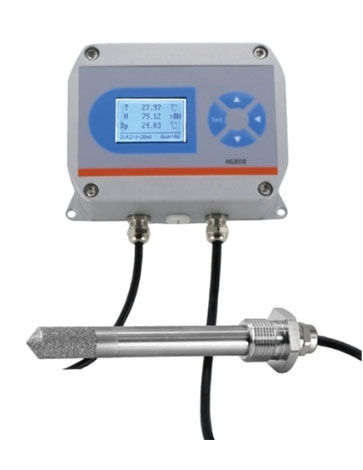
Choose the Dew Point Sensor if you work in:
- Compressed air systems
- Industrial drying processes
- Semiconductor manufacturing
- Lithium battery production
- Gas moisture monitoring
Choose the Temperature & Humidity Sensor if you work in:
- HVAC systems
- Indoor climate control
- Warehouses and storage facilities
- Agriculture and greenhouses
- Smart building systems
Step 3: Locking in Key Technical Specifications
- Accuracy Grade: High-precision processes demand accuracy within ±1.5% RH or ±1°C Td.
- Response Time: Faster response times ensure superior real-time performance for closed-loop control.
- Installation Options: Choose from wall-mounted, duct-mounted, or probe-type configurations based on your site layout.
Why Choose ATO for Your Needs?
ATO offers a comprehensive range of industrial-grade Dew Point Sensors and Temperature & Humidity Sensors, specifically engineered to tackle the world’s most demanding environmental monitoring challenges.
- Full Industry Coverage: Our solutions span across critical sectors, from pharmaceutical clean rooms and HVAC systems to compressed air monitoring and food processing.
- Rugged Durability: High-precision explosion-proof sensors from the ATO one-stop online store are built for longevity, offering significant advantages in shock resistance and anti-aging performance in harsh industrial settings.
- Reliable Functional Configuration: Accurately monitor temperature and humidity in extreme environments to minimize system downtime, protect equipment, and prevent hazardous conditions.
- Globalized Service & Support: We provide customized sensing solutions, rapid global delivery, and expert-level technical support, ensuring our international clients receive the best-in-class service.
Frequently Asked Questions
Q1: Can a temperature & humidity sensor calculate dew point?
A: Yes, relative humidity (RH) and temperature can be used to calculate the dew point using the Magnus formula. However, this is a calculated value, not a direct measurement. In ultra-dry or high-temperature environments, small errors in RH or temperature readings are magnified, leading to highly inaccurate dew point calculations. For industrial safety, a dedicated Dew Point Sensor is always recommended.
Q2: At what humidity level should I switch to a dew point sensor?
A: As a general rule, when your environment consistently drops below 10% to 15% RH, standard humidity sensors begin to lose accuracy and suffer from drift. If your process requires monitoring moisture levels equivalent to <5% RH (such as in compressed air or glove boxes), a Dew Point Sensor is the only reliable solution.
Q3: Does a dew point sensor require frequent calibration?
A: While high-quality sensors from the ATO one-stop online store are designed for long-term stability (with drift as low as <0.1°C/year), we recommend an annual calibration for critical industrial applications. This ensures the sensor maintains its precision and compensates for any potential "sensor drift" caused by chemical exposure.
Conclusion
Correct sensor selection is the first line of defense for your process safety. Whether you operate in pharmaceuticals, HVAC, precision electronics, or high-demand compressed air systems, choosing the right monitoring dimension is critical.
If you have questions regarding your current Dew Point Sensor or Temperature and Humidity Sensor strategy, contact the ATO engineering team immediately. We will introduce the most suitable solutions and technical specifications tailored to your specific environment and industry.
