
Battery Indicator
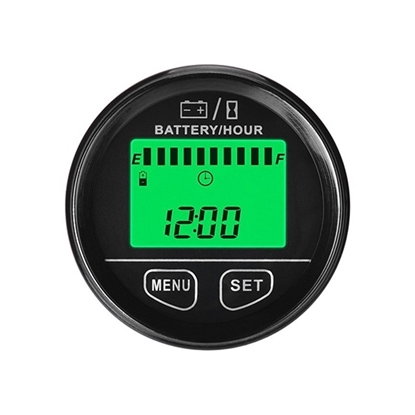
Multifunctional Golf Cart Battery Gauge, LCD Display
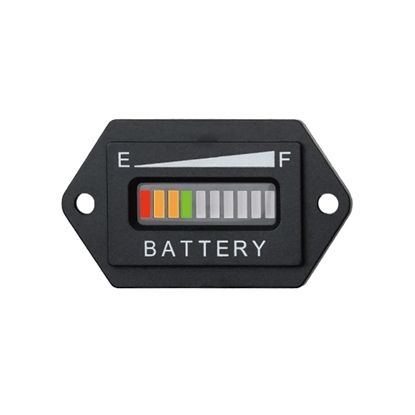
Waterproof Lead Acid Battery Indicator, 12V/24V
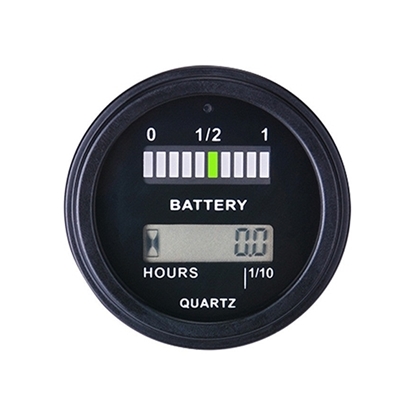
Digital Car Battery Indicator With Hour Meter, 12V/24V/36V/48V
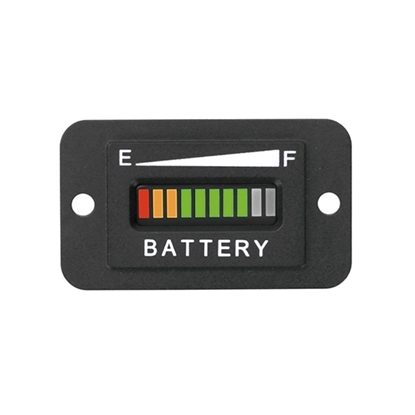
Electric Motorcycle Battery Level Indicator , IP67, 48V
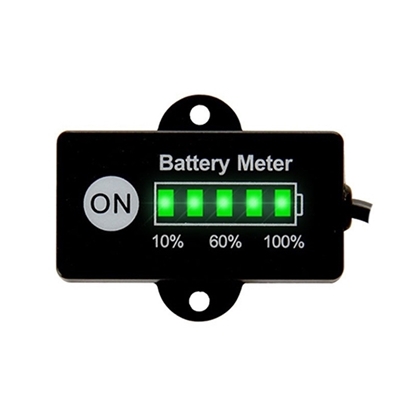
LED Battery Charge Indicator, Lead Acid/Lithium Battery
Battery indicators are devices used to monitor battery charge level or voltage in real time. To choose the right battery indicator, users should consider system voltage (12V–48V), display type (LED or LCD), battery chemistry (lead-acid or lithium), and application requirements.
Choosing the right battery indicator depends on several factors, including battery voltage, display type, battery chemistry, and application requirements. The correct battery indicator helps users quickly check battery status, prevent over-discharge, and improve battery management efficiency.
1. How to Choose a Battery Indicator Based on Voltage?
Choosing a battery indicator with the correct voltage range is essential for accurate battery status monitoring. ATO battery indicators are available for 12V, 24V, 36V, and 48V battery systems.
12V battery system: ATO-BI-LA, ATO-BI-LED, ATO-BI-LCD
24V battery system: ATO-BI-LA, ATO-BI-HM, ATO-BI-LED, ATO-BI-LCD
36V battery system: ATO-BI-HM, ATO-BI-LCD
48V battery system: ATO-BI-HM, ATO-BI-EM, ATO-BI-LCD
Selection Tip: Always choose a battery indicator that supports your battery system voltage. Using an indicator outside its designed voltage range may result in inaccurate battery status readings.
2. LED vs LCD Battery Indicator: Which Should You Choose?
The display type determines how battery information is presented. Battery indicators are mainly available in LED and LCD display types. The right choice depends on whether you need a simple battery level indication or additional battery information such as remaining power level and operating time.
LED Battery Indicator
LED battery indicators use multiple LED segments or lights to show the approximate battery charge level. They provide a simple and intuitive way to check battery status.
Advantages:
1) Quick visual battery level indication
2) Simple operation
3) Low power consumption
4) Compact design
5) Suitable for applications requiring basic battery status monitoring
Choose an LED Battery Indicator When:
1) You only need to know the approximate battery level
2) A simple and easy-to-read display is preferred
3) Low power consumption is important
4) Detailed battery information is not required
LCD Battery Indicator
LCD battery indicators provide a more detailed display of battery information. In addition to showing battery level, some LCD battery indicators also include an hour meter function to record accumulated operating time.
Advantages:
1) Clear LCD screen display
2) Shows battery charge level more intuitively
3) Provides additional information such as accumulated working hours
4) Suitable for applications requiring battery status and operation tracking
Choose an LCD Battery Indicator When:
1) You need both battery level indication and hour meter functionality
2) Tracking equipment operating time is important
3) A clearer and more detailed display is required
4) The application requires regular battery and usage monitoring
Selection Tip: Choose an LED battery indicator for simple battery level checking. Choose an LCD battery indicator when you need additional functions such as battery level display and hour meter tracking.
3. Are Battery Indicators Different for Lithium and Lead-Acid Batteries?
Battery type is another factor to consider when selecting a battery indicator. Lead-acid and lithium batteries have different voltage characteristics, so choosing a compatible indicator helps ensure more reliable battery status monitoring.
Lead Acid Battery
Lead-acid batteries, including AGM, GEL, and flooded lead-acid batteries, are commonly used in traditional battery systems. They are suitable for battery indicators designed for voltage-based battery status monitoring.
Lithium Battery
Lithium batteries, including lithium-ion and LiFePO4 batteries, have different discharge characteristics compared with lead-acid batteries. A compatible battery indicator helps provide more accurate battery status information for lithium battery systems.
4. Applications
Battery indicators are widely used for monitoring battery status in various battery-powered systems, including RV and camper batteries, golf carts, solar energy storage systems, marine equipment, electric vehicles, backup power systems, and industrial equipment. They provide a convenient way to check battery condition and help users manage power usage more effectively.