
Micrometers
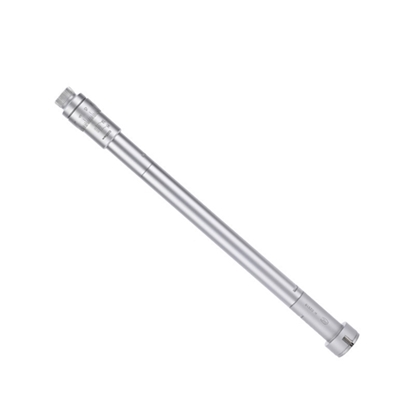
6-8 mm (0.23" - 0.31") 3 Point Inside Micrometer
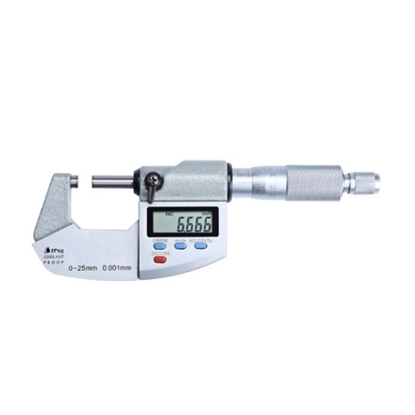
0-1" Range Digital Micrometer, 0.00005 Inch Accuracy

0-1" Range Digital Micrometer, 0.00007 Inch Accuracy
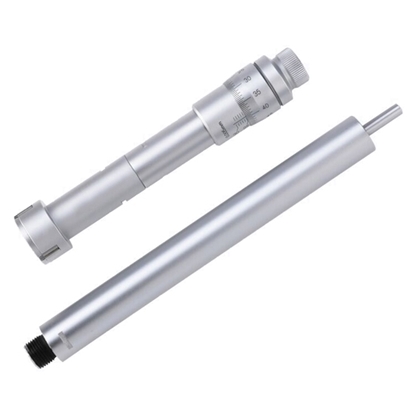
10-12 mm (0.39" - 0.47") 3 Point Inside Micrometer
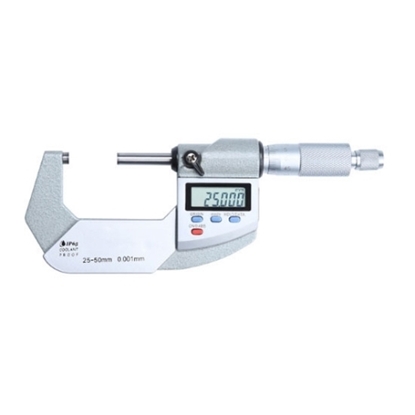
1-2" Range Digital Micrometer, 0.00005 Inch Accuracy
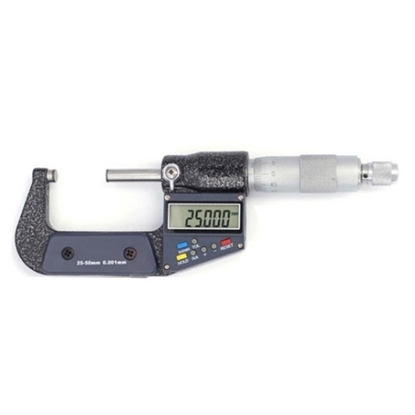
1-2" Range Digital Micrometer, 0.00007 Inch Accuracy
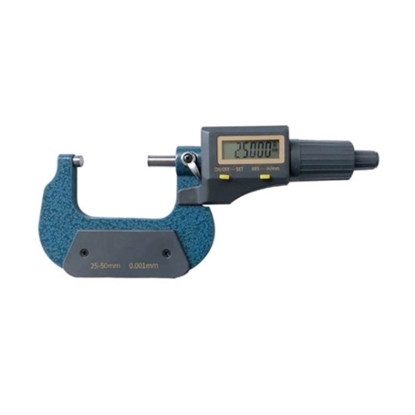
1-2" Range Digital Micrometer, 0.0001 Inch Accuracy
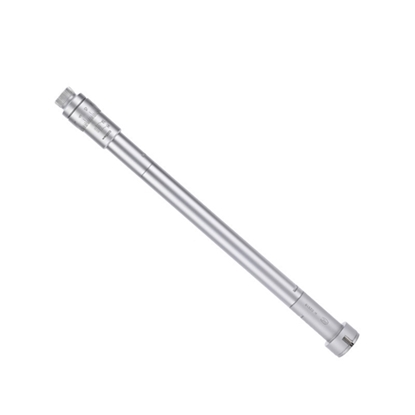
16-20 mm (0.62" - 0.78") 3 Point Inside Micrometer
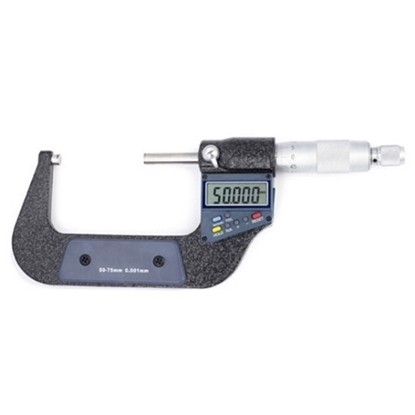
2-3" Range Digital Micrometer, 0.0001 Inch Accuracy
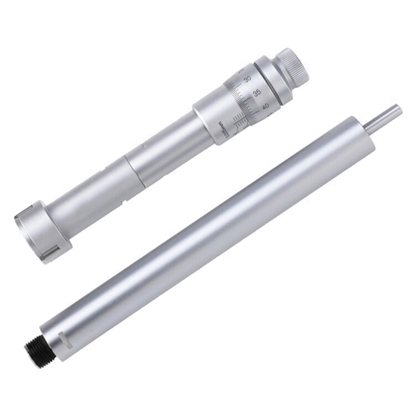
25-30 mm (0.98" - 1.18") 3 Point Inside Micrometer
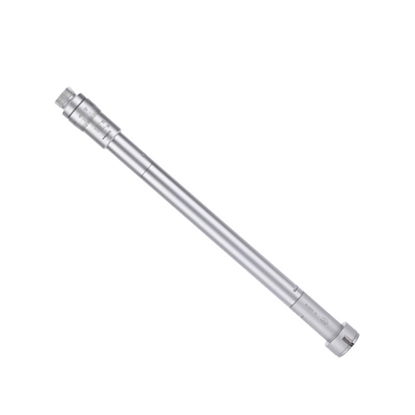
30-40 mm (1.18" - 1.57") 3 Point Inside Micrometer
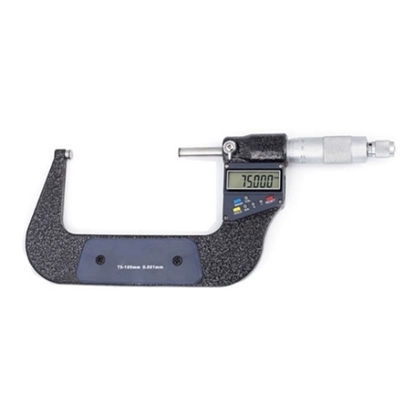
3-4" Range Digital Micrometer, 0.0001 Inch Accuracy
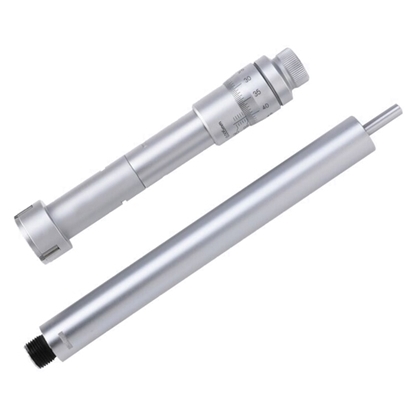
50-63 mm (2.08"- 2.36") 3 Point Inside Micrometer
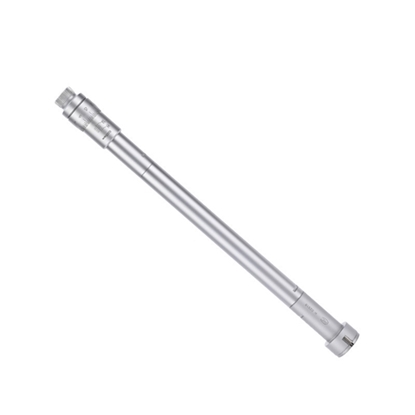
87-100 mm (3.42" - 3.93") 3 Point Inside Micrometer
A micrometer is a precision measuring instrument, also known as a micrometer screw gauge, accurate to 0.01 mm. It converts rotational motion into linear displacement using a screw mechanism. Available in mechanical and digital versions, it provides highly repeatable readings. Micrometers are widely used in machining, quality control, and mechanical engineering for measuring small parts, shafts, and bores with high accuracy.
Micrometer Uncertainty & Error Sources
Measurement uncertainty quantifies the range where the true dimension lies. For a 3-point inside micrometer, key error sources include:
- Calibration standard: The setting ring itself carries uncertainty (±0.001mm typical).
- Repeatability: Operator technique (rocking, alignment) causes 0.001–0.003mm variation.
- Temperature: A 5℃ difference between the tool and the workpiece adds ~0.001mm per 25mm diameter.
- Mechanical limits: Hysteresis, lobing error, and extension rod misalignment affect readings.
- Workpiece geometry: Ovality or taper may not be captured by three contact points.
Micrometer Measurement Units (mm vs. inch)
- Metric System (mm)
Most micrometers use the metric system. A typical digital or mechanical micrometer measures in 0.001?mm (1?μm) or 0.005?mm resolution. For example, a 3-point inside micrometer often resolves 0.005?mm, suitable for H7 bore tolerances. - Imperial System (inch)
In countries like the United States, inch-based micrometers are common. Common resolutions include 0.00005″ (fifty millionths) or 0.0001″ (tenths of a thousandth). Digital micrometers easily switch between mm and inches at the push of a button. - Why Unit Conversion Matters
Avoid costly mistakes: Misreading a 25 mm bore as 1″ (25.4mm) leads to scrapped parts.
International standards: Many engineering drawings use mm even in regions where inches are dominant.
Digital convenience: Digital outside micrometers (e.g., ATO?DM series) offer instant mm/inch switching, eliminating manual conversion errors. - Quick Reference: Common Equivalents
| mm | inch (approx.) |
| 1mm | 0.03937″ |
| 6mm | 0.236″ |
| 10mm | 0.394″ |
| 25mm | 0.984″ |
| 50mm | 1.969″ |
| 100mm | 3.937″ |
Complete Micrometer Model List
This chapter lists every available digital outside micrometer and 3-point inside micrometer. Use the tables to quickly find the right tool for your measurement task.
Digital Outside Micrometers
| SKU | Measuring Range | Accuracy (inch) | Key Feature | Best For |
| ATO-DM-N7025 | 0–1″ (0–25mm) | 0.00005″ | IP65 protection, high resolution | Machining with coolant |
| ATO-DM-J025 | 0–1″ (0–25mm | 0.00007″ | HD LCD, data hold, tolerance alert | Inspection with pass/fail |
| ATO-DM-J50 | 1–2″ (25–50mm) | 0.00005″ | Digital + mechanical dual display, IP65 | Versatile shop use |
| ATO-DM-N750 | 1–2″ (25–50mm) | 0.00007″ | Carbide anvil, hardened spindle | Durable daily measuring |
| ATO-DM-1025 | 1–2″ (25–50mm) | 0.0001″ | Economic model, IP65 | Budget external measuring |
| ATO-DM-N775 | 2–3″ (50–75mm) | 0.0001″ | LCD screen, mechanical scale | Large shaft inspection |
| ATO-DM-N7100 | 3–4″ (75–100mm) | 0.0001″ | Smooth ratchet, high precision | Extra-large diameter parts |
3-Point Inside Micrometers
| SKU | Measuring Range | Resolution | Material | Key Feature | Best For |
| ATO-IM-68 | 6–8mm | 0.005mm |
Bearing steel |
Smallest bores | Hydraulic valves, injectors |
| ATO-IM-1012 | 10–12mm | Groove and bore measurement | Precision small holes | ||
| ATO-IM-1620 | 16–20mm | Economic model, deep hole reading | General machining | ||
| ATO-IM-2530 | 25–30mm | 150mm extension rod | Tube ID, bearing seats | ||
| ATO-IM-3040 | 30–40mm | Durable, medium bore | Engine cylinders | ||
| ATO-IM-5360 | 50–63mm | Blind/through holes | Larger hydraulic bores | ||
| ATO-IM-87100 | 87–100mm | Factory direct, portable | Moulds, large cavities |
Advanced Micrometer Operating Tips
- Prepare before measuring: Clean the anvils/contacts and the workpiece. Check zero: close the outside micrometer fully, or use a setting ring for inside type. Let the tool and part equalize temperature for 30 minutes.
- Use correct measuring technique: For outside micrometers, use the ratchet (2–3 clicks) and rock to find the smallest reading. For 3-point inside micrometers, insert until contacts touch the bottom (blind holes) or rock to find the minimum (through holes). Tighten extension rods firmly, but do not overtighten.
- Improve repeatability: Take 3–5 readings and average them. Develop a consistent motion (insert → find min → read → remove). For tools larger than 50mm, use a stand to prevent sagging.
- Work efficiently: Pre-set the micrometer as a go/no?go comparator for batch measurements. Store tools at room temperature, away from coolants. Remove batteries if not used for a month.
- Know when to recalibrate: Check zero daily. Re-calibrate immediately after any drop. Send to an accredited lab every 6–12 months. If one reading differs from the average by more than double the tool’s resolution, remeasure – that outlier is likely an error.
FAQs of Micrometers
Below are answers to the most common questions users ask when selecting or operating digital outside micrometers and 3-point inside micrometers. These practical responses will help you avoid typical mistakes and get the most from your tool.
Q1: What is the difference between a micrometer and a caliper?
A: A micrometer is more precise (0.001mm or 0.00005″) than a caliper (0.01mm or 0.0005″). Micrometers are best for small, precise parts like shafts and bores, while calipers are faster for rough measurements and larger ranges.
Q2: Can a 3-point inside micrometer measure a blind hole?
A: Yes. The three-point design self-centers and can measure down to the bottom of a blind hole. Insert slowly until the contacts touch the bottom, then read the value.
Q3: Why does my digital micrometer show unstable readings?
A: Common causes: low battery, dirty encoder scale, or temperature shock. Replace the battery first. If the problem persists, clean the spindle and anvil, and let the tool reach room temperature before use.
Q4: How do I convert mm to inches on a mechanical micrometer?
A: Mechanical micrometers have separate metric or imperial scales. You cannot convert instantly. For frequent switching, use a digital micrometer with push-button conversion.
Q5: How often should I replace the battery in a digital micrometer?
A: Every 6–12 months with normal use. Remove the battery if storing for over a month. A low battery icon or erratic readings signal replacement is needed.
