
Reversing AC Contactors
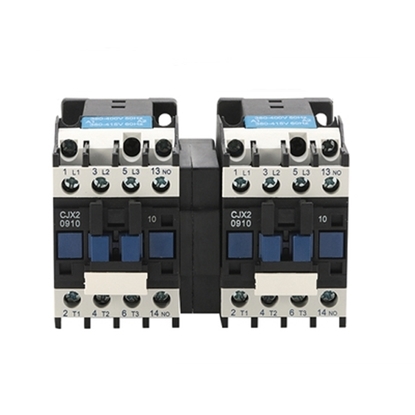
9 amp Reversing AC Contactor with Mechanical Interlock
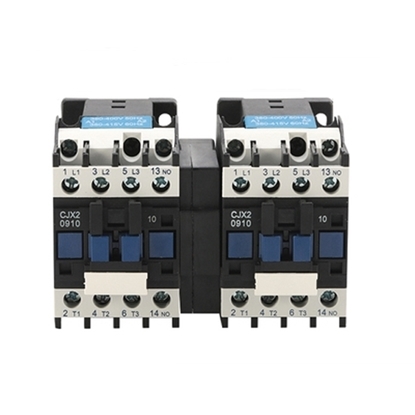
12 amp Reversing AC Contactor with Mechanical Interlock
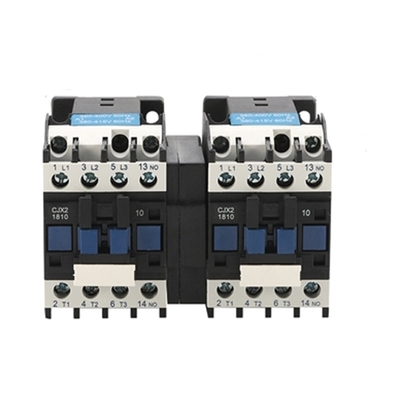
18 amp Reversing AC Contactor with Mechanical Interlock
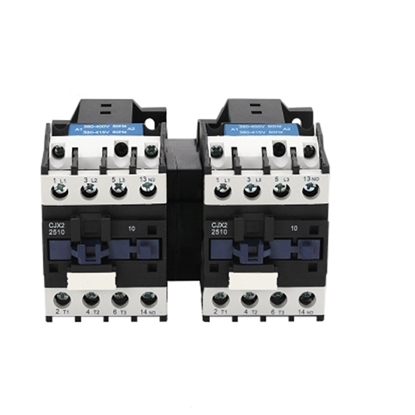
25 amp Reversing AC Contactor with Mechanical Interlock
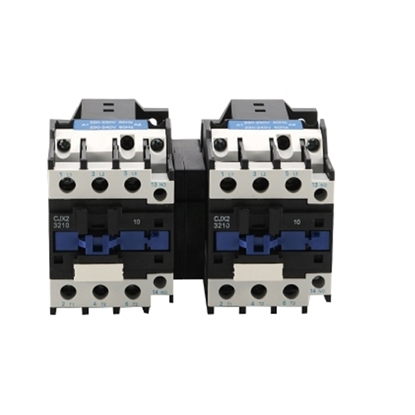
32 amp Reversing AC Contactor with Mechanical Interlock
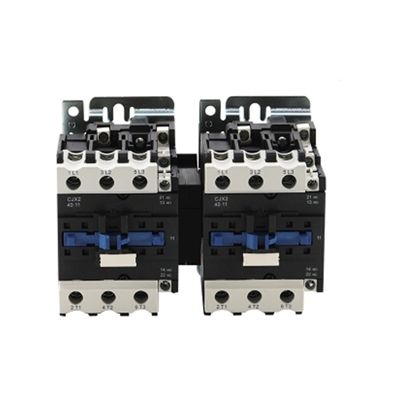
40 amp Reversing AC Contactor with Mechanical Interlock
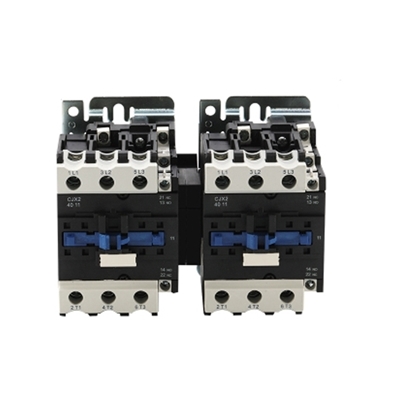
50 amp Reversing AC Contactor with Mechanical Interlock
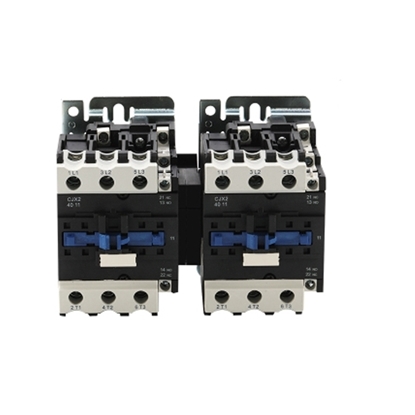
65 amp Reversing AC Contactor with Mechanical Interlock
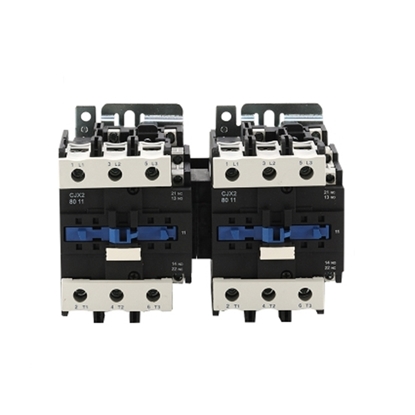
80 amp Reversing AC Contactor with Mechanical Interlock
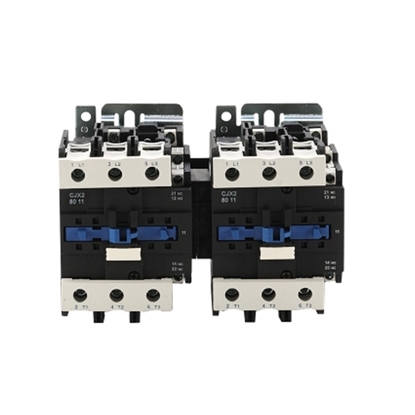
95 amp Reversing AC Contactor with Mechanical Interlock
Reversing AC contactors are used to control the forward and reverse rotation of three-phase AC motors. A reversing assembly uses two contactors with opposite phase connections, allowing the motor direction to change by switching between the contactors. This configuration is commonly used for equipment requiring controlled bidirectional movement.
Mechanical Interlock
A mechanical interlock physically links the forward and reverse contactors to prevent both from closing simultaneously. This helps avoid conflicting switching conditions and reduces the risk of phase-to-phase faults during reversing operation. Together with the electrical control circuit, the interlock keeps the two contactors coordinated during direction changes.
ATO offers reversing AC contactors with mechanical interlock in rated currents from 9A to 95A, including 9A, 12A, 18A, 25A, 32A, 40A, 50A, 65A, 80A, and 95A options.
Common Applications
Reversing AC contactors are commonly used in industrial equipment requiring forward and reverse motor operation, including:
- Conveyors for bidirectional material movement
- Hoists and winches for directional lifting and lowering
- Machine tools requiring reversible motor rotation
- Material handling equipment requiring controlled movement
- Pumps, fans, and industrial machinery with reversible operation
How to Select a Reversing AC Contactor
Selecting a reversing AC contactor requires matching the contactor to the motor's electrical and operating requirements. Consider the following factors:
- Rated Motor Current: Select a contactor with a rated current suitable for the motor's operating current and load conditions.
- Operating Voltage: Match the contactor's rated voltage with the motor power circuit.
- Motor Duty: Consider the motor's starting frequency, operating cycle, and frequency of direction changes.
- Utilization Category: Check that the contactor's utilization category is appropriate for the motor load and switching conditions.
Reversing AC Contactor FAQs
Q1: Can a reversing AC contactor be used with any three-phase AC motor?
A reversing AC contactor can be used with a three-phase AC motor that requires forward and reverse operation, provided the contactor's rated voltage, current, utilization category, and reversing duty are suitable for the motor and application. Check the motor and contactor specifications before selection.
Q2: What happens if the contactor is undersized for the motor?
An undersized reversing AC contactor may be exposed to excessive current or switching stress, which can accelerate contact wear and affect service life. Select the contactor according to the motor's rated current, load characteristics, and operating duty.
Q3: Does a reversing AC contactor provide motor overload protection?
A reversing AC contactor controls motor switching but does not normally provide overload protection by itself. An overload relay or other suitable motor protection device may be added to the motor control circuit to protect the motor against excessive current and prolonged overload conditions.
Q4: Can a motor be reversed while it is running?
Whether a motor can be reversed while running depends on the motor, contactor, control system, and required reversing duty. In many applications, the motor is stopped before the reverse contactor is energized. The control circuit should follow the motor manufacturer's recommended reversing method.
Filter by:
Clear All