
Current Sensor
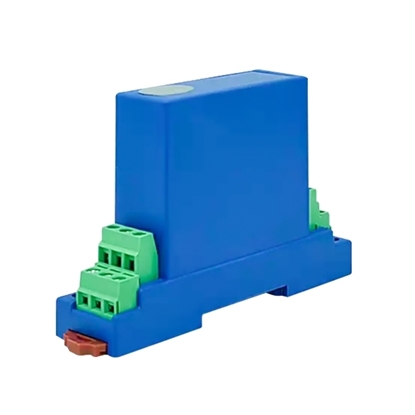
True RMS Current Sensor, AC/DC 1mA-5A Input, DC 0-20mA Output
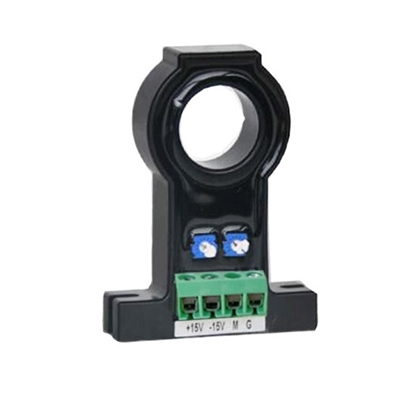
Hall Effect Current Sensor 50A/100A/200A/500A/800A/1000A
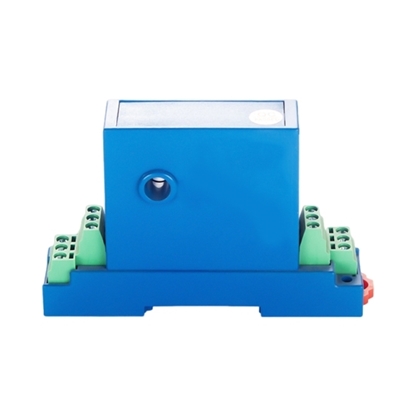
Isolated AC Current Sensor/Transducer, 0~200A to 0-5V/0-10V
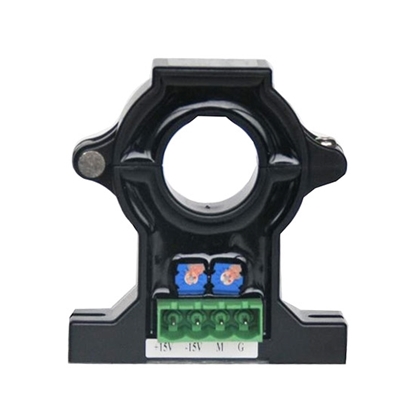
Hall Effect Current Sensor 50A/100A/300A/800A/1200A to 1500A
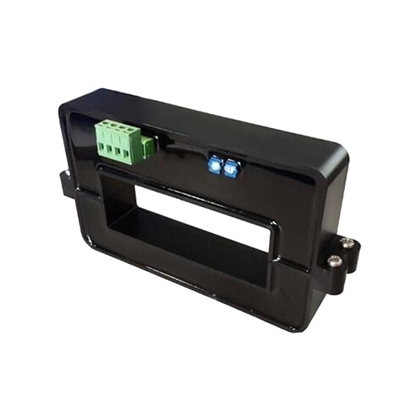
Hall Effect Current Sensor 400A/2000A/3000A/5000A/8000A to 20000A
A current sensor measures how much electric current flows through a wire. You don't have to disconnect or cut the wire — just clamp it or pass the wire through the sensor. Common uses: power monitoring, motor control, battery management, and DIY electronics projects. ATO offers AC, DC, AC/DC universal, and true‑RMS current sensors using Hall effect technology, split‑core (non‑invasive) design, and outputs like 4‑20mA, 0‑5V, and RS485.
Primary Types of Current Sensors
- Hall effect sensor: Works for both AC and DC, provides electrical isolation. The most popular type. (Best for: motor drives, power monitoring, battery management, industrial automation)
- Open‑loop Hall vs closed‑loop Hall
- Open‑loop: cheaper, smaller, ~1% accuracy. (Best for: cost‑sensitive, space‑limited devices like home appliances, power tools)
- Closed‑loop: more accurate (~0.5%), costs more, uses more power. (Best for: high‑precision metering, calibration instruments, lab power supplies)
- Current transformer (CT): AC only, low cost, no external power needed. Simple and reliable. (Best for: AC energy monitoring, electricity meters, building automation, relay protection)
- Rogowski coil: AC only, flexible, handles huge currents without saturation. Works for very high AC currents. (Best for: high‑current power systems, power quality analysis, VFD output measurement)
- Shunt‑based sensor: Very accurate for small DC currents (mA range), but no isolation (direct electrical connection). (Best for: low‑current detection, battery management, electronic loads, precision power supplies)
Popular Development & DIY Current Sensor Modules
What's popular: For Arduino, ESP32, or Raspberry Pi projects, the two most common needs are: small battery currents (mA) and larger load currents (5‑30A). Two modules lead the pack:
- INA219 (shunt‑based, I²C output): Best for small currents (≤±3.2A) and battery monitoring because it measures both current and voltage and gives digital output without calibration hassle.
- ACS712 (Hall effect, analog output): Simple, isolated, handles 5A/20A/30A. Good for quick tests, but analog output is noisier and less precise than INA219.
Example: Use INA219 for a solar‑charged battery logger; use ACS712 for a motor stall detector.
Current Sensor Selection Guide
| Model | Type | Range | Output | Best For |
| AC150 | AC (CT) | 1‑150A | 0‑5V / 0‑10V | Low‑cost AC monitoring, DIN rail |
| AC1500 | AC (open‑loop) | 0‑1500A | 4‑20mA | Non‑invasive industrial AC |
| DC1500 | DC (open‑loop) | 50‑1500A | 4‑20mA | Split‑core DC, fast response |
| ACDC5 | AC/DC (Hall) | 1mA‑5A | 0‑5V | Universal small signal, DIN rail |
| 153S01 | DC (closed‑loop) | 1mA‑5A | RS485 / TTL | High precision (Class 0.5), battery & solar |
FAQs About Current Sensors
Q1: What does a current sensor do?
A: It detects the electrical current in a circuit and converts it into a measurable output signal (like 4‑20mA or 0‑5V). This lets you monitor power usage, protect motors from overloading, and manage battery health — all without cutting any wires.
Q2: What's the difference between AC and DC current sensors?
A: AC sensors measure alternating current (wall outlets, 50/60 Hz). DC sensors measure direct current (batteries, solar panels). Some sensors (like ACDC5) measure both.
Q3: Hall effect vs current transformer – which one is better for current sensing?
A: Hall effect works for AC & DC and provides isolation — safer for beginners and ideal for DC applications. Current transformers (CT) are simpler, work for AC only, and require no external power — great for low‑cost AC monitoring. The better choice depends on whether you need DC capability, isolation, or a self‑powered solution.
Q4: Open‑loop vs closed‑loop Hall sensors — which one should I pick?
A: Open‑loop (e.g., AC1500) is cheaper, smaller, ~1% accuracy — fine for most tasks. Closed‑loop (e.g., 153S01) is more accurate (~0.5%) but costs more. Pick closed‑loop only for high precision, like power meters.
Q5: Which DIY module is best for Arduino — INA219 or ACS712?
A: For small currents (mA level) and battery monitoring, use INA219 (I²C, measures both current and voltage). For larger currents (5A–30A) and quick tests, use ACS712 (analog, isolated). Choose based on your current range.
