
Foam Cutter
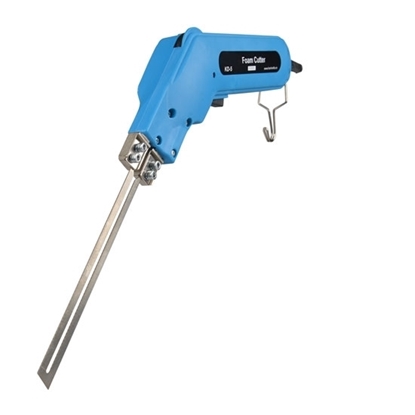
Electric Hot Knife Foam Board Cutter, Styrofoam, 150mm Blade
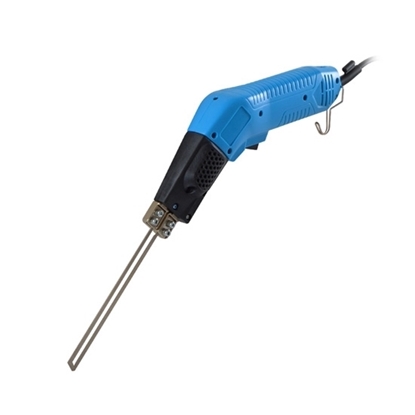
Handheld Hot Knife Foam Cutter, EPS/XPS, 200mm Blade
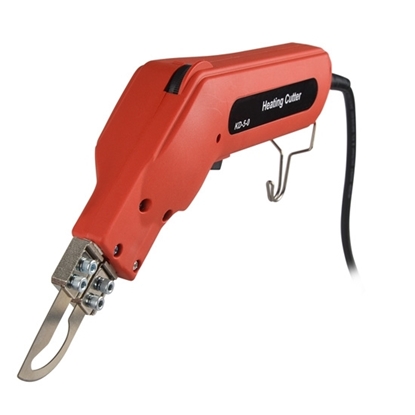
Electric Hot Knife Fabric Cutter
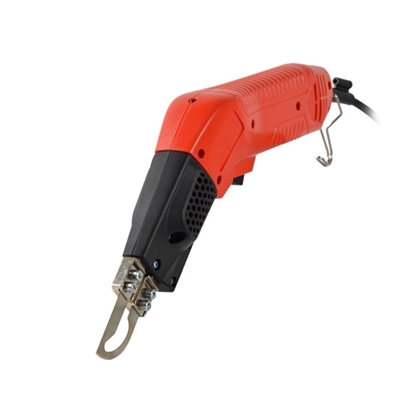
Handheld Hot Knife Fabric Cutter
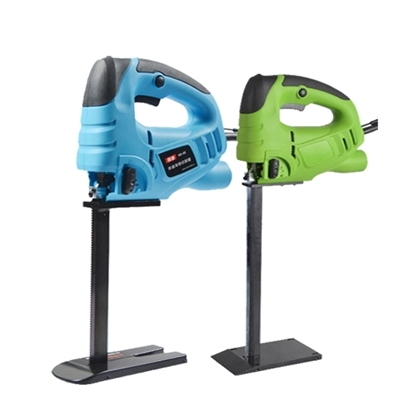
Electric Foam Rubber Cutter Saw
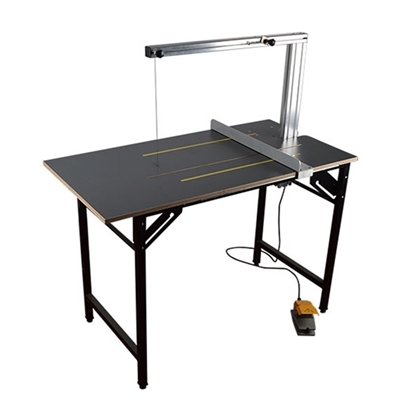
Hot Wire Foam Cutter, Styrofoam Cutting Table
Foam cutting is used across packaging, construction, manufacturing, and other industries where foam materials need to be processed into specific shapes. The right cutting method depends on foam type, material density, and how the finished piece will be used.
A foam cutter is a specialized tool designed to cut, shape, and trim foam materials — including EPS, XPS, and foam rubber — with clean, precise edges and no tearing or crumbling.
ATO Industrial Automation offers foam cutters for every application: handheld electric hot knife foam cutters for EPS and XPS board cutting, and bench-top hot wire foam cutting tables for large panels and angled slices. Explore the full range below to find the right model for your material, thickness, and application.
What Types of Foam Cutters Does ATO Offer?
Below are the main foam cutter types in this category, including hot knife foam cutters, hot wire foam cutting tables, and foam rubber cutting saws. These tools are widely used in packaging, insulation, model making, and industrial foam processing applications.
Foam Cutter Product Overview
| Product Type | Model | Description | Key Specs | Price |
| Electric Hot Knife Foam Cutter | ATO-CUTTER-5 |
|
|
$248.65 |
| Handheld Hot Knife Foam Cutter | ATO-CUTTER-7H |
|
|
$329.58 |
| Hot Wire Foam Cutting Table | ATO-CUTTER-60 |
|
|
$1,238.46 |
| Electric Foam Rubber Cutter Saw | ATO-CUTTER-03 |
|
|
$496.62 |
How to Choose the Right Foam Cutter for Your Project?
Selecting a foam cutter depends on material type, thickness, cutting geometry, operation frequency, and voltage requirements. The following rules help match each condition with the correct cutting method and model.
1. What Type of Foam Are You Cutting?
- EPS / XPS boards → Thermal blade cutting (ATO-CUTTER-5 / ATO-CUTTER-7H)
- Foam rubber → Mechanical cutting with low deformation force (ATO-CUTTER-03)
- Large Styrofoam blocks → Wire-guided cutting for structural stability (ATO-CUTTER-60)
- Coated / synthetic materials → Continuous heat cutting for edge sealing (ATO-CUTTER-7H)
2. How Thick Is Your Foam?
- ≤ 15 cm → Standard hot knife cutting (ATO-CUTTER-5)
- 15–30 cm → Reinforced thermal cutting (ATO-CUTTER-7H)
- Large block structures → Hot wire cutting system (ATO-CUTTER-60)
3. Straight Cuts or Complex Geometry?
- Linear cutting → Wire-guided separation method (ATO-CUTTER-60)
- Freeform shaping → Heated blade contour cutting (ATO-CUTTER-5 / ATO-CUTTER-7H)
- Cushion forming → Oscillating blade cutting (ATO-CUTTER-03)
4. Occasional Use or Continuous Operation?
- Intermittent use → Basic thermal cycle control (ATO-CUTTER-5)
- Frequent use → Stabilized heat regulation system (ATO-CUTTER-7H)
- Continuous operation → Heat dissipation + durability system (ATO-CUTTER-7H / ATO-CUTTER-60)
5. What Voltage Configuration Do You Need?
- North America (120V) → Standard single-phase supply (ATO-CUTTER-5 / ATO-CUTTER-7H)
- Europe / Asia (230V) → Industrial standard supply (all models)
- Multi-region use → Dual compatibility required (check specification before use)
Foam Cutter Comparison: Types and Performance Overview
This comparison highlights key performance differences between foam cutter types to help identify the most suitable model based on cutting method, power level, and application scenario.
| Model | Type | Cutting Mechanism / Operating Metric | Cutting Capacity | Voltage | Best For |
| ATO-CUTTER-5 | Electric hot knife foam cutter | 150W heating power | Up to 15cm foam thickness | 120V / 230V | Precision shaping, small foam boards |
| ATO-CUTTER-7H | Industrial handheld hot knife cutter | 190W heating power / up to 500°C | Medium-density foam cutting | 230V | Continuous cutting, commercial use |
| ATO-CUTTER-60 | Hot wire foam cutting table | Up to 550°C thermal wire | Large foam blocks / vertical cutting | 230V | Structural cutting, insulation panels |
| ATO-CUTTER-03 | Foam rubber cutter saw | 0–3200 RPM motor speed | Foam rubber / cushions | 230V | Flexible materials, upholstery work |
Hot Knife vs. Hot Wire Foam Cutter — Which One Is Right for You?
Hot knife and hot wire foam cutters differ in cutting method and application focus. The right choice depends on whether the task requires detail control or large-format cutting stability.
| Feature | Hot Knife Foam Cutter (ATO-CUTTER-5 / ATO-CUTTER-7H) |
Hot Wire Foam Cutter (ATO-CUTTER-60) |
| Cutting Method | Heated blade direct contact cutting | Heated wire continuous slicing |
| Cutting Focus | Detail shaping and curved cutting | Straight, vertical, and diagonal cutting |
| Material Suitability | EPS / XPS foam boards | Large foam blocks / insulation panels |
| Operation Type | Manual control, flexible movement | Fixed structure, stable guiding |
| Cutting Scale | Small to medium projects | Large-scale industrial projects |
| Typical Use | Model making, trimming, custom shaping | Construction insulation, bulk foam cutting |
Hot knife foam cutters are more suitable for detailed and flexible foam shaping, while hot wire foam cutters are better suited for large-scale, straight, and structural cutting applications.
Why Choose ATO Foam Cutters
- Precise Temperature Control
The ATO-CUTTER-5 offers 16-level temperature adjustment. The ATO-CUTTER-7H reaches up to 500°C and maintains stable output during extended use — no manual recalibration required between cuts. - Fast Heat-Up, No Waiting
Both hot knife models reach working temperature within seconds. The ATO-CUTTER-60 wire heats to 550°C rapidly, keeping production cycles short. - Clean Cut Results
Thermal cutting melts through foam rather than tearing it, producing smooth, sealed edges with no crumbling or deformation — critical for packaging inserts and insulation panels. - Continuous Operation Support
The ATO-CUTTER-7H and ATO-CUTTER-60 are designed for extended working cycles. Built-in thermal management keeps output stable under repeated use without performance drop. - Dual Voltage Compatibility
The ATO-CUTTER-5 supports both 120V and 230V input. Other models are rated for 230V, covering most industrial power environments globally.
Foam Cutting Applications by Industry
Foam cutting is used in many industries to cut, shape, or trim foam materials for different uses.
1. Packaging & Shipping Foam
Foam blocks used in packaging need to be cut to precise dimensions to protect products during transit. The ATO-CUTTER-60 hot wire cutting table handles large foam blocks with consistent straight cuts at production volume.
→ Recommended: ATO-CUTTER-60
2. Building Insulation (XPS / EPS Boards)
Insulation panels often require on-site trimming to fit wall cavities, window frames, or structural gaps. The ATO-CUTTER-7H delivers clean cuts on thick XPS and EPS boards with continuous operation support.
→ Recommended: ATO-CUTTER-7H
3. Model Making & Sculpture
Scale models and foam sculptures require precise shaping and curved cuts that follow a design outline. The ATO-CUTTER-5 provides controlled blade movement with 16-level temperature adjustment for detailed work.
→ Recommended: ATO-CUTTER-5
4. Cushions & Upholstery Foam
Furniture foam requires cutting to specific contour shapes with minimal surface deformation. The ATO-CUTTER-03 oscillating blade operates at 0–3200 RPM with low vibration for clean, dimensionally accurate foam rubber cuts.
→ Recommended: ATO-CUTTER-03
5. Synthetic Fabric Sealing
Industrial textiles such as polyester webbing and synthetic ropes need to be cut with sealed edges to prevent fraying. ATO fabric cutters are designed specifically for this application.
→ Recommended: ATO-CUTTER-50 / ATO-CUTTER-70
Foam cutters are used in packaging, construction, furniture, modeling, and textile work. Different industries use different cutting tools depending on foam type and thickness.
Frequently Asked Questions About Foam Cutters
This section answers common questions about foam cutter types, usage limits, and electrical compatibility to help users quickly understand basic selection and operation differences.
Q: What is the difference between a hot knife and a hot wire foam cutter?
A hot knife uses a heated blade for direct contact cutting — better for freeform shaping, curved cuts, and smaller foam boards. A hot wire uses a tensioned heated wire for straight, continuous slicing — better for large foam blocks and structural panel cutting.
Q: How thick of foam can these cutters handle?
The ATO-CUTTER-5 cuts foam up to 15cm thick. For foam exceeding 15cm, the ATO-CUTTER-7H handles medium-density thick foam, and the ATO-CUTTER-60 is designed for large blocks with no fixed thickness limit.
Q: Do your foam cutters support 120V power?
The ATO-CUTTER-5 supports both 120V/60Hz and 230V/50Hz. The ATO-CUTTER-7H and ATO-CUTTER-60 are rated for 230V. Check the model specification before ordering for international use.
Q: Can I use a foam cutter continuously without overheating?
The ATO-CUTTER-7H includes a built-in air cooling system designed for continuous industrial operation. The ATO-CUTTER-60 is also built for extended use. The ATO-CUTTER-5 is better suited for intermittent or DIY use.
Q: Can a fabric cutter also cut foam?
Yes, ATO fabric cutters (ATO-CUTTER-50 / ATO-CUTTER-70) are optimized for synthetic fabrics with edge sealing. They are not recommended as a substitute for foam cutters — use the foam cutter series for EPS, XPS, or foam rubber materials.
