
Butterfly Valve Buying Guide (2026)
Selecting the right butterfly valve requires a comprehensive consideration of factors such as media characteristics, pressure, and structure. Choosing the wrong specification can lead to frequent maintenance and costly system downtime.
ATO has developed this professional guide to help you navigate the complexities of butterfly valve selection. We break down everything you need to know to ensure optimal performance in your specific application.
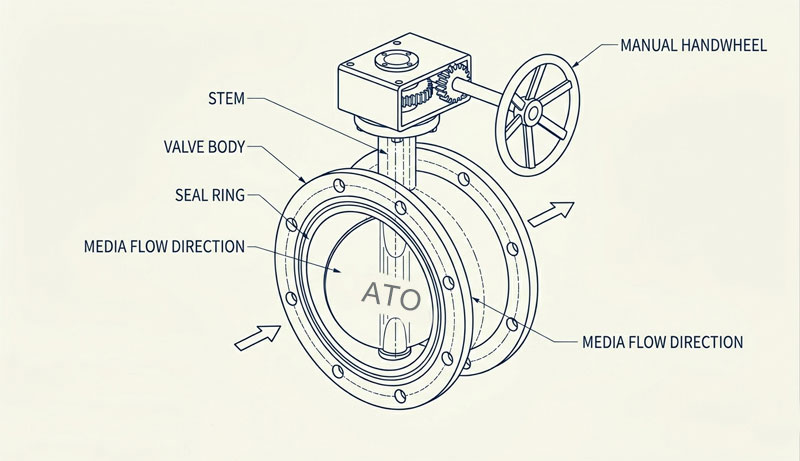
Step 1: Scenario Self-Test for Butterfly Valve Selection
Before diving into technical specs, answer these three core questions to narrow down your search for the butterfly valve that best suits your needs:
What is the flow medium?
- Standard media such as water or air
- Corrosive media such as acids or alkali solutions
- Abrasive slurries or particle-containing fluids
- Food-grade or sanitary liquids
This directly determines the butterfly valve body material and sealing material, ensuring chemical compatibility and long-term reliability.
What are the extreme operating conditions?
- Operating temperature range (°C / °F)
- System pressure rating (PN / Class)
- Potential pressure fluctuations or peak conditions
These parameters define the structural strength of the butterfly valve body and the temperature resistance of its sealing system.
What is the required function?
- Simple on/off shut-off control
- Flow regulation or throttling control
- Automated or remote operation integration
Different functions require different butterfly valve types, such as manual, pneumatic, or electric actuated configurations.
Step 2: Selecting the Right Butterfly Valve Based on Your Requirements
Based on your answers above, match your needs with the following technical dimensions:
A. Concentric vs. Offset Types
Concentric Butterfly Valves:
- The Standard for General Utility.
- The standard for general utility (HVAC, water supply).
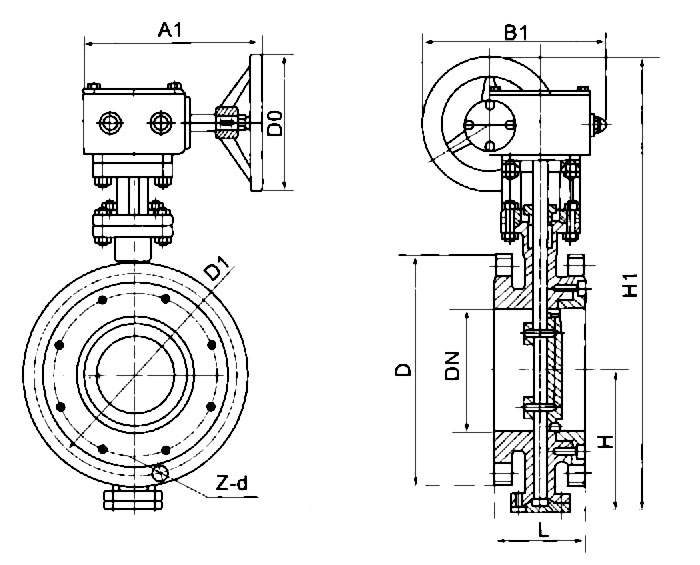
- It uses an elastomer seat (EPDM/NBR) for bubble-tight sealing in low-to-medium pressure.
Double Offset Butterfly Valves:
- Sustainable Automation for Longevity.
- Features a "cam-action" design that reduces seat friction.
- Ideal for chemical processing and high-frequency automated cycling.
Triple Offset Butterfly Valves:
- Use for Extreme & Severe Service.
- Employs a metal-to-metal seal and a third angular offset to eliminate rubbing.
- Designed for extreme pressure and cryogenic or high-heat environments.
B: Butterfly Valve Body Material
- Ductile Iron: The most cost-effective butterfly valve option for water, air, and neutral media. It offers high strength, good wear resistance, and is widely used in general industrial piping systems.
- Stainless Steel (304/316): Essential for corrosive environments (acids/alkali/seawater) and food-grade applications.
- Cast Steel (WCB): High-temperature and high-pressure specialist. The standard for steam and thermal oil pipelines.
C. Connection Style
- Wafer type butterfly valve: Best for space-constrained pipelines. It is the most lightweight and budget-friendly option, but it cannot be used for end-of-line service.
- Lug style type butterfly valve: Ideal for maintenance-heavy systems. As the industry standard, its threaded lugs allow you to remove downstream piping for repairs without shutting down the entire system.
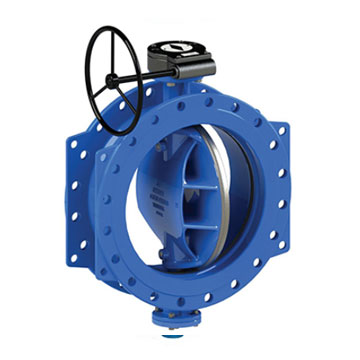
- Flange type butterfly valve: The go-to choice for large-diameter (above DN300) and high-pressure industrial projects. It provides the most robust structural integrity.
According to the engineering system requirements, ATO provides the right connection type to meet pipeline installation.
D. Actuation & Automation
- Manual: Best for low-frequency operation and tight budgets.
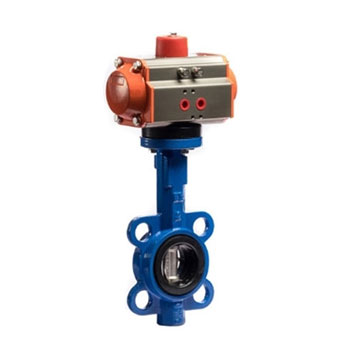
- Pneumatic Actuators: Offers fast response times (<1s) and is naturally explosion-proof.
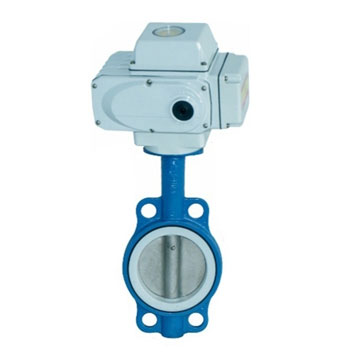
- Electric Actuators: Available in various voltages (24V DC to 380V AC) with self-locking and manual override features.
Step 3: Key Technical Specifications for Butterfly Valves
- Standard Compliance: Ensure the butterfly valve complies with international standards such as API 609, ASME B16.5, or ISO 5752. These standards define key dimensions, face-to-face length, and pressure-temperature ratings, ensuring proper integration into industrial piping systems.
- Zero Leakage Rating: For critical applications such as oil, gas, and chemical processing, the butterfly valve should meet ISO 5208 Rate A zero-leakage requirements.
- Industry Certification: In the food, beverage, and pharmaceutical industries, the butterfly valve must use FDA-compliant sealing materials to ensure hygiene and safety. Additional certifications may be required depending on regional regulatory standards and application environments.
Quick Procurement Matrix
Use this matrix to quickly match your industry needs with the correct butterfly valve specifications:
| Application Scene | Valve Type | Seal Material | Body Material | Temperature Range | Max Pressure |
| HVAC & Water Supply | Concentric | EPDM / NBR | Ductile Iron | -20°C to 120°C | 232 PSI (PN16) |
| Food & Pharma | Sanitary | Silicone / PTFE | SS316L | -10°C to 150°C | 145 PSI (PN10) |
| Chemical Processing | Double Offset | PTFE (Teflon) | SS304 / 316 | -20°C to 200°C | 725 PSI (Class 300) |
| Steam / Oil & Gas | Triple Offset | Metal-to-Metal | Cast Steel / SS | -196°C to 800°C | 2200+ PSI (Class 900+) |
ATO Tip: Selection is more than just replacing a part. If you have questions regarding body material compatibility or pressure ratings, contact our engineers for dedicated technical support.
Step 4: How to Buy a Butterfly Valve?
Physical Store to Buy
If you prefer to personally inspect the construction and craftsmanship details of the butterfly valve, you can visit local industrial hardware stores, fluid equipment specialty shops, or large-scale machinery markets. The advantage of purchasing from a physical store is that you can try them out firsthand, gain a better understanding of various parameters and models, and clarify your selection requirements; however, prices are relatively higher.
Online Shopping Mall to Buy
Another way to purchase butterfly valves is through online stores. Compared to physical stores, online shopping offers more discounts and more transparent pricing. Furthermore, you can review feedback from other users, making it more convenient to select the appropriate model based on different application requirements.
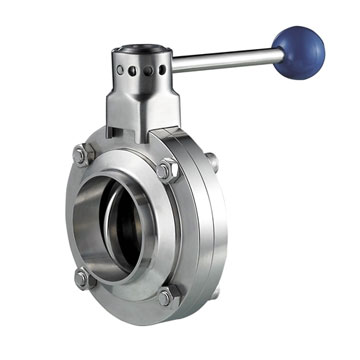
ATO provides a wide range of butterfly valve models for various purposes, spanning from standard water treatment to extremely severe operating conditions. You can choose different wetted materials based on the media (chemicals, food, steam, etc.). Below is a price list of ATO’s commonly used butterfly valves for your reference. For more specifications, please refer to the butterfly valve catalog.
ATO Popular Butterfly Valve Price List
| Product Name | Size | SKU | Price | Application |
|
Sanitary Butterfly Valve |
1/2 inch | ATO-BV-12I | $89.29 |
Food and beverage industry Cosmetics production Medical equipment Sanitary piping systems Pharmaceutical manufacturing |
| 3/4 inch | ATO-BV-34I | $89.99 | ||
| 1 inch | ATO-BV-1I | $93.29 | ||
| 1.5 inch | ATO-BV-15I | $96.39 | ||
| 2 inch | ATO-BV-2I | $99.29 | ||
| 2.5 inch | ATO-BV-25I | $121.59 | ||
| 3 inch | ATO-BV-3I | $126.89 | ||
| 4 inch | ATO-BV-4I | $169.99 | ||
| 6 inch | ATO-BV-6I | $228.49 | ||
|
Pneumatic Wafer Butterfly Valve |
2 inch (DN50) | ATO-PBV-50 | $195.89 |
Automation control systems Air transport pipelines Liquid and gas transmission Water treatment plants Industrial gas regulation |
| 2-1/2 inch (DN65) | ATO-PBV-65 | $205.59 | ||
| 3 inch (DN80) | ATO-PBV-80 | $246.69 | ||
| 4 inch (DN100) | ATO-PBV-100 | $302.59 | ||
| 5 inch (DN125) | ATO-PBV-125 | $382.59 | ||
| 6 inch (DN150) | ATO-PBV-150 | $498.49 | ||
| 8 inch (DN200) | ATO-PBV-200 | $825.49 | ||
| 10 inch (DN250) | ATO-PBV-250 | $1028.59 | ||
| 12 inch (DN300) | ATO-PBV-300 | $1522.98 | ||
|
Electric Wafer Butterfly Valve |
2 inch (DN50) | ATO-EBV-50WF | $365.09 |
Power industry Thermal system control Automated valve control HVAC systems Industrial fluid control |
| 2-1/2 inch (DN65) | ATO-EBV-65WF | $404.79 | ||
| 3 inch (DN80) | ATO-EBV-80WF | $444.49 | ||
| 4 inch (DN100) | ATO-EBV-100WF | $547.69 | ||
| 5 inch (DN125) | ATO-EBV-125WF | $626.99 | ||
| 6 inch (DN150) | ATO-EBV-150WF | $769.89 | ||
| 8 inch (DN200) | ATO-EBV-200WF | $825.49 | ||
| 10 inch (DN250) | ATO-EBV-250WF | $1119.09 | ||
| 12 inch (DN300) | ATO-EBV-300WF | $1769.89 | ||
| 14 inch (DN350) | ATO-EBV-350WF | $3055.59 | ||
| 16 inch (DN400) | ATO-EBV-400WF | $3753.99 | ||
|
Double Offset Butterfly Valve |
4 inch (DN100) | ATO-DOBV-D342X | $563.84 |
High temperature applications Oil and gas industry Chemical processing Gas pipelines Heavy industrial equipment |
| 5 inch (DN125) | ||||
| 6 inch (DN150) | ||||
| 8 inch (DN200) | ||||
|
Triple Offset Butterfly Valve |
2 inch (DN50) | ATO-TOBV-DN50 | $529.09 |
Precision fluid control High-temperature fluids Oil and gas pipelines Power plants Marine and offshore engineering |
| 3 inch (DN80) | ATO-TOBV-DN80 | $396.92 | ||
| 4 inch (DN100) | ATO-TOBV-DN100 | $442.77 | ||
| 5 inch (DN125) | ATO-TOBV-DN125 | $625.84 |
Frequently Asked Questions
Q1: What is the leakage standard for triple offset butterfly valves in 2026?
A: Under 2026 standards, they must meet ISO 5208 Rate A (Zero visible leakage) for high-safety sectors.
Q2: Is a butterfly valve suitable for throttling or flow control applications?
A: Yes, but stick to a Double or Triple Offset butterfly valve. Concentric valves are prone to seat erosion if used for prolonged throttling at high velocities.
Q3: Can I use an industrial butterfly valve for food or beverage processing?
A: No, it is not recommended to use a standard industrial butterfly valve for food or beverage processing, as it does not meet hygienic design and food-grade material requirements, which may lead to contamination risks.
Conclusion
The key to butterfly valve selection is not just buying one that "works," but one that "excels." An ideal choice must balance media properties, pressure ratings, operating temperatures, and actuation efficiency. By following the standards in this guide, you can secure a reliable and cost-effective solution, significantly reducing system downtime and extending equipment life.
If you would like to know more about the ATO industrial automation shop, please feel free to contact us at any time.
