
Optical Time Domain Reflectometer
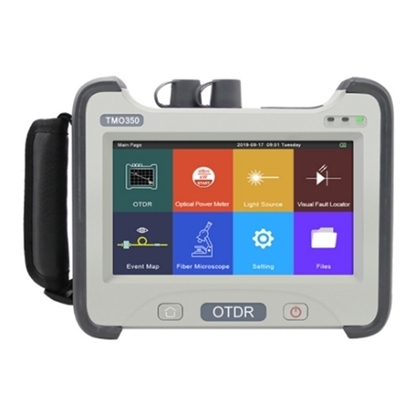
5 in 1 OTDR Fiber Optic Tester
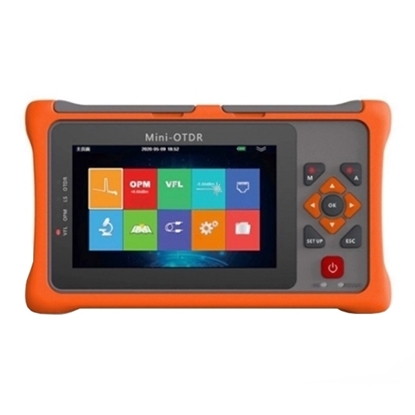
9 in 1 Mini OTDR Fiber Optic Tester
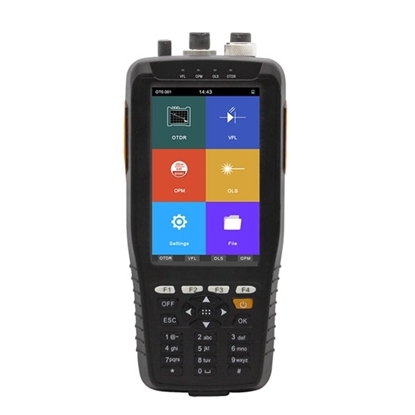
Handheld Smart OTDR Fiber Tester
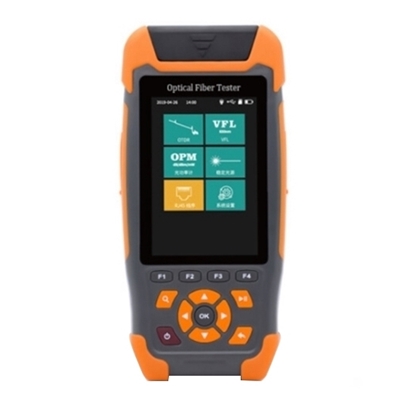
Mini-Pro OTDR Fiber Optic Tester
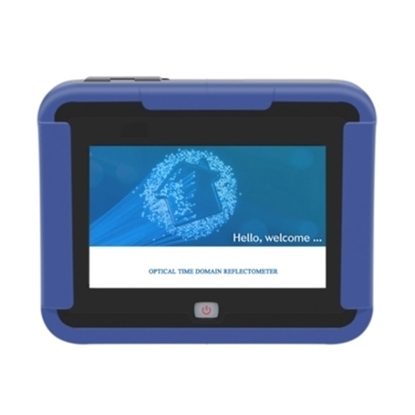
Multi-Functional OTDR Fiber Optic Tester
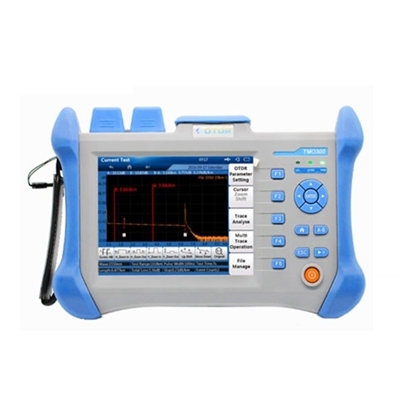
Optical Time Domain Reflectometer, OTDR Machine
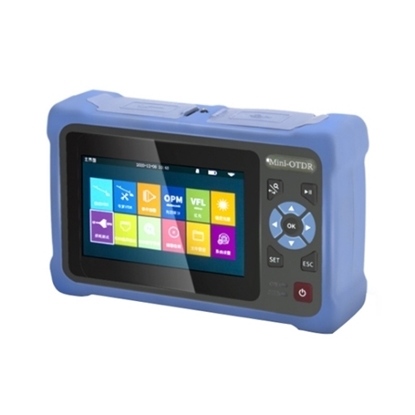
Single Mode Mini OTDR Tester
An Optical Time-Domain Reflectometer (OTDR) is an essential fiber optic testing device used to analyze fiber attenuation, locate breaks or splices, and map loss distribution along a cable. It works by injecting a series of optical pulses into the fiber and measuring the backscattered light and Fresnel reflections. Critical for network installation, fault diagnosis, and maintenance, an OTDR helps technicians efficiently identify fiber defects, connector quality issues, and bending losses.
What Matters When Choosing or Using an Optical Time Domain Reflectometer?
When evaluating an Optical Time-Domain Reflectometer, the specification sheet is your blueprint. To help you choose the ideal device for your network, here is a detailed breakdown of the critical parameters found on standard OTDR datasheets:
| Parameter | Technical Definition | The Interlocking Technical Trade-off |
| Pulse Width vs Dynamic Range | Duration of the laser pulse (ns or μs). | Wide pulse = High Dynamic Range (dB) but creates a massive near-end blind spot (dead zone). Narrow pulse = High Resolution, but runs out of power quickly. |
| Event Dead Zone(EDZ) | Minimum gap needed to separate two consecutive reflections. | Lower is better (≤1m) but requires pristine, clean connectors to prevent saturation from stretching the blind spot. |
| Attenuation Dead Zone(ADZ) | Minimum distance needed after a reflection to measure splice or bend loss. | Always longer than EDZ (typically 4m-5m). Dictates how close a splice can be to a connector without being hidden in its shadow. |
| Wavelength Selection(1310 / 1550 / 1625 nm) | Specific light frequencies used for scanning | No single wavelength catches every flaw. 1310nm finds splice flaws; 1550nm tracks macrobends; 1625nm requires internal hardware filtering. |
Optical Time Domain Reflectometer Trace Analysis Common Events
- Healthy fiber: Displays a smooth, steadily downward sloping line with no sudden drops or spikes. This indicates uniform attenuation and no faults.
- Splice: Appears as a small, clean step downward without a reflection spike. A good splice shows ≤0.3 dB loss; values above 0.5 dB suggest the splice should be redone.
- Connector or mechanical splice: Produces a sharp upward spike followed by a downward drop. A very high spike (> -25dB) means the connector is dirty or damaged; clean it first, then replace it if the spike remains.
- Macrobend (tight bend): Looks similar to a splice on a single wavelength but reveals itself when comparing dual wavelengths – loss is significantly higher at 1550nm than at 1310nm. Physically inspect and relax any tight bends.
- Fiber break: Shows a steep drop straight down to the noise floor with no signal recovery. The OTDR gives the exact distance to the break for repair dispatch.
- Ghost event (artifact): Produces fake spikes that repeat at regular intervals after a strong reflection. Ignore ghosts; add a launch fiber or shorten the pulse width to eliminate them.
Optical Time Domain Reflectometer Model Comparison
Different network environments demand distinct operational specifications. This comparison matrix outlines key wavelengths, dynamic ranges, and specialized capabilities to help you select the most efficient tool for your fiber optic troubleshooting requirements.
| SKU | Wavelength | Dynamic Range | Key Features | Best For | Price |
| ATO-OTDR-SA32 | 1310/1550 nm | 32/30 dB | 5-in-1, high-power VFL, event map | High precision, long haul, near-end fault location | $6,987.65 |
| ATO-OTDR-1100 | 1310/1550 nm | 22/20 dB | 9-in-1, touch screen, 70 km range | Budget all-in-one, FTTH, first-time user | $897.86 |
| ATO-OTDR-FC290 | 1310/1550 nm | 24/22 dB | 4″ touch screen, smart fault detection | Simple operation, touch screen preference | $1,307.69 |
| ATO-OTDR-2800D | 1310/1550 nm | 22/20 dB | 6-in-1, RJ45 test, no setup needed | Quick field testing, copper plus fiber | $998.62 |
| ATO-OTDR-OT5F | 1625 nm | 20 dB | 5″ HD touch, FTTH solution | Live network testing (no downtime) | $1,698.75 |
| ATO-OTDR-FC300 | 1310/1550 nm | 30/28 or 32/30 dB | 5.6″ touch, 120 km range, multi-language | Long-distance, backbone networks | $1,989.76 |
| ATO-OTDR-4000D | 1550 nm | 24 dB | 12 h battery, OPM/VFL/OLS, RJ45 | Outdoor field work, long shifts | $897.86 |
Common Applications of Optical Time Domain Reflectometers
- Fiber construction acceptance testing: Verifies splice quality, connector loss, and total link attenuation before handing over a new cable line. This is a core optical time domain reflectometer function for contractors.
- Fault location after fiber cuts: Identifies the exact distance to a break, allowing repair crews to dig or splice at the right spot without guessing. A reliable time domain reflectometry test pinpoints breaks instantly.
- Live network troubleshooting (1625 nm): Tests PON and FTTH links without disconnecting customers. Uses filtered wavelength to avoid interference with traffic.
- Data center patch panel mapping: High-resolution mode (short pulse width, low dead zone) checks densely packed connectors and jumpers for loss or reflection.
- Outdoor long-haul monitoring: High dynamic range (≥30 dB) units track fiber health over 100+ km, detecting gradual degradation or bending before failure occurs. When looking for a time domain reflectometer for sale, prioritize dynamic range for long-haul use.
Frequently Asked Questions About Optical Time Domain Reflectometer
Whether you are new to OTDR testing or troubleshooting an unusual trace, the following common questions and answers will help you get accurate results and avoid costly mistakes.
Q1: Why does my measured distance not match the actual fiber length?
A: Incorrect refractive index (IOR) setting. For single-mode fiber, use 1.4675–1.4685. Adjust the IOR in your device and retest.
Q2: Can I test through a 1×32 splitter with any optical time domain reflectometer?
A: No. Testing through a splitter requires a high dynamic range (≥28 dB) and a long pulse width. For OTDR in optical fiber networks with splitters, entry-level models (20–22 dB) will fail. Use ATO-OTDR-SA32 or ATO-OTDR-FC300.
Q3: How often should I clean the optical port on my time domain reflectometer?
A: Before every test. A dirty port reduces dynamic range and creates false events, directly affecting the optical time domain reflectometer function. Use a one-click cleaner or lint-free swab.
Q4: Why does my splice show a negative loss (gain) on the trace?
A: This happens when splicing fibers from different manufacturers. Different backscatter coefficients cause the artifact. Understanding the optical time domain reflectometer's working principles helps identify this artifact. Ignore the negative loss – use a power meter for true loss.
Q5: Can I use a 1550 nm single-mode reflectometer on multimode fiber?
A: No. Core size mismatch (9?μm vs 50/62.5?μm) causes huge loss and wrong distance. This is a frequent mistake for buyers looking at any time domain reflectometer for sale. You need a multimode unit with 850/1300 nm wavelengths.
Q6: How long does an optical time domain reflectometer calibration last?
A: Typically 12 to 24 months. Recalibrate after a hard drop or exposure to high humidity. Regular calibration protects your optical time domain reflectometer's price value and ensures measurement accuracy.
