
Dew Point Meter Working Principle
A dew point meter is an instrument used to measure the temperature at which water vapor in air or gas begins to condense into liquid. It works by detecting moisture content through a dew point sensor, converting the detected moisture signal into an electrical output, and calculating the corresponding dew point temperature.
Dew point measurement is essential in industrial applications where moisture control directly affects equipment reliability, product quality, and process safety. Industries such as compressed air systems, pharmaceuticals, semiconductor manufacturing, and industrial gas production rely on dew point meters to monitor gas dryness and prevent moisture-related problems.
What is a Dew Point Meter and what does it measure?
A dew point meter (also known as a dew point transmitter or hygrometer) is a specialized instrument designed to measure the moisture content within a gas.Instead of measuring Relative Humidity (RH)—which fluctuates constantly with air temperature—a dew point meter measures the Dew Point Temperature (Td). This is the exact temperature to which a gas must be cooled at constant pressure for water vapor to condense into liquid dew or ice.Dew point meters measure absolute dryness and are widely used in compressed air systems, cleanrooms, power plants, and industrial drying processes to ensure moisture levels remain within safe operational limits.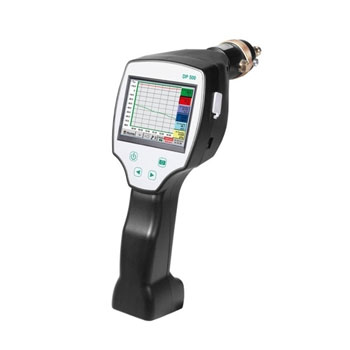
How does a Dew Point Meter work?
A dew point meter works by cooling a gas sample to measure its exact condensation temperature, or by detecting changes in electrical properties (capacitance or impedance) as an internal sensor element absorbs trace moisture from the gas.It operates through two primary technology categories: Direct Optical Condensation (Chilled Mirror), which measures the fundamental temperature at which physical dew forms on a mirror, and Electrical Parameter Shift (Capacitive/Resistive), which converts moisture-induced dielectric or impedance changes into a dew point reading (Td).
Uncontrolled moisture in industrial gases can cause severe piping corrosion, frozen valves, product contamination, and system downtime. To prevent these issues, engineers rely on dew point meters (also known as dew point transmitters or hygrometers) to measure gas dryness accurately.
Understanding how a dew point meter works requires looking at both its general measurement process and the specific sensing technologies involved.
The General Working Process (4 Core Stages)
Regardless of the underlying sensor type, almost all industrial dew point meters process gas samples through four primary stages:
- Gas Sampling: The sample gas enters a sealed measurement chamber at a controlled flow rate (typically 0.5 to 2.0 L/min) and stable pressure.
- Moisture Interaction: The gas flows across a cooled mirror or a highly sensitive hygroscopic (moisture-absorbing) sensor element.
- Signal Detection: The meter detects light scattering caused by physical dew condensation, or measures a microscopic shift in electrical capacitance/impedance.
- Data Conversion & Output: A microprocessor applies temperature compensation and converts the physical or electrical signal into an absolute dew point temperature reading (Td, e.g., -40℃ Td).
How does a Chilled Mirror Dew Point Meter work?
The Chilled Mirror Hygrometer is the most precise and direct method for measuring dew point, often used as a primary reference standard in laboratories.
Working Principle:
- Cooling the Mirror: A polished metal mirror inside a sealed test chamber is cooled using a thermoelectric cooler (Peltier element).
- Optical Detection: An LED shines a light beam onto the mirror, which reflects into an optical photodetector.
- Condensation Formation: As the mirror temperature drops to the gas's dew point, water droplets condense on the mirror surface, scattering the reflected light.
- Temperature Recording: The photodetector senses the drop in light intensity and signals the Peltier element to maintain the mirror at the precise temperature where condensation and evaporation are balanced. A high-precision Platinum Resistance Thermometer (Pt100) measures this mirror temperature, providing the exact dew point.
How does a Capacitive Dew Point Sensor work?
Capacitive dew point sensors are the most common industrial sensors due to their compact size, rapid response times, and cost-effectiveness.
Working Principle:
- Sensor Structure: The sensor consists of a hygroscopic polymer or thin-film dielectric layer sandwiched between two conductive electrodes.
- Moisture Absorption: As gas flows over the sensor, the polymer layer absorbs or releases water vapor until it reaches equilibrium with the surrounding gas.
- Dielectric Change: Water has a very high dielectric constant (approx 80) compared to the polymer polymer matrix (approx 3-5). As moisture is absorbed, the overall dielectric constant of the layer changes significantly.
- Capacitance Output: The sensor measures the resulting change in electrical capacitance and converts it into a corresponding dew point reading.
How does a Resistive Dew Point Sensor work?
Resistive (or Impedance-based) dew point sensors—which frequently utilize Aluminum Oxide (Al2O3)—are engineered specifically for measuring trace moisture in ultra-dry industrial gases.
Working Principle:
Structure: An aluminum base is anodized to form a porous layer of aluminum oxide, topped with a porous gold electrode layer.
Water Molecule Trapping: Water molecules from the gas penetrate the gold layer and become trapped in the microscopic pores of the aluminum oxide.
Impedance Alteration: Water molecules alter the electrical resistance and impedance between the aluminum base and the gold layer.
Signal Processing: The measured impedance is inversely proportional to the water vapor pressure, allowing the instrument to detect extremely low dew points (down to -100℃ Td).
Summary Comparison of Dew Point Technologies
Different dew point technologies excel in different environments. Use the summary table below to compare the three main sensing methods by range, key advantages, and recommended applications:
| Technology | Measurement Range | Key Advantage | Best Application |
| Chilled Mirror | -90°C to +95°C Td | Highest accuracy with minimal sensor drift | Calibration laboratories, high-precision measurement standards |
| Capacitive Polymer | -50°C to +60°C Td | Fast response and cost-effective performance | Compressed air systems, general industrial applications, HVAC monitoring |
| Aluminum Oxide (Resistive) | -100°C to +20°C Td | Capable of measuring trace moisture in ultra-dry gases | Petrochemical plants, gas pipelines, and dry gas monitoring |
Why is measuring dew point critical in industrial applications?
Uncontrolled moisture in industrial gases can cause severe operational and financial damage. Measuring dew point is critical for several key reasons:
- Preventing Equipment Damage & Corrosion: Water condensation inside compressed air lines leads to pipe rusting, valve failures, and premature wear on pneumatic tools.
- Protecting Product Quality: In industries like lithium battery manufacturing, pharmaceuticals, and semiconductors, ambient moisture can ruin chemical formulas or ruin delicate microchips.
- Avoiding Pipe Freeze-ups: In natural gas pipelines or outdoor pneumatic systems, moisture can freeze in cold weather, causing complete system blockages or pipe bursts.
- Preventing Microbial Growth: Maintaining low dew points in food packaging and pharmaceutical cleanrooms inhibits the growth of bacteria and mold.
What is the difference between dew point and relative humidity (RH)?
While both parameters measure moisture, they serve fundamentally different purposes:
| Feature / Dimension | Dew Point Temperature (Td) | Relative Humidity (%RH) |
| Definition | The temperature at which air reaches 100% saturation and water vapor begins to condense | The ratio of actual water vapor pressure to the saturation vapor pressure at a specific temperature |
| Temperature Dependency | Independent of ambient temperature changes and directly reflects the actual moisture content | Highly dependent on ambient temperature; RH changes when air temperature rises or falls |
| Best Used For | Industrial gas drying, compressed air systems, moisture control, and process monitoring | HVAC systems, weather forecasting, and indoor comfort monitoring |
| Measurement Stability | Highly stable and provides a consistent indication of water vapor content | Fluctuates rapidly as air temperature changes |
FAQ
Q1: Where are dew point meters used?
A1: Dew point meters are widely used in compressed air systems, pharmaceuticals, semiconductor manufacturing, cleanrooms, industrial gases, and HVAC applications.
Q2: What affects dew point measurement accuracy?
A2: Measurement accuracy can be affected by sampling line materials, gas flow rate, temperature changes, contamination, and improper calibration.
Q3: How do I choose a dew point meter?
A3: Select a dew point meter based on measurement range, sensor type, accuracy requirements, gas conditions, and required output options such as RS485 or 4-20mA.
Q4: How accurate is a dew point meter?
A4: Accuracy depends on the sensor technology and calibration. Chilled mirror meters provide the highest accuracy, while capacitive sensors offer reliable performance for most industrial applications.