
DC 24V Relay Controls 380V AC Contactor
With the continuous advancement of industrial automation, electrical control technology is also undergoing continuous development and innovation. As essential components of electrical control, relays and contactors are playing an increasingly crucial role, especially in high-voltage electrical equipment, where safety and stability have a significant impact on production processes. In recent years, controlling 380V AC contactors with 24V DC relays has become a popular solution. ATO Automation will delve into the application principles, advantages, and vital role of this technology in modern industry.
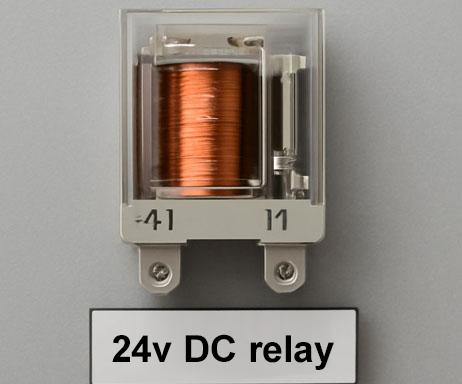
Working Principle of 24V DC Relay Controlling 380V AC Contactor
The core operating principle of a 24V DC relay controlling a 380V AC contactor is to control the switching of high-voltage AC current using a low-voltage DC relay. Specifically, the relay, as a control element, uses a 24V DC power supply to provide contact closure and opening operations, thereby achieving on-off control of the 380V AC current.
When the relay receives a 24V DC signal, the coil within the relay generates electromagnetic force, closing the contacts, which in turn closes the contacts of the 380V AC contactor, completing the on-off control of the AC current. When the relay power is disconnected, the relay contacts open, and the 380V AC contactor in the control circuit also opens, disconnecting the AC power supply. This approach not only reduces the voltage in the control circuit but also improves control safety.
Application Scenarios and Advantages
Energy-saving and Highly Efficient
Using a 24V DC relay to control a 380V AC contactor offers significant energy-saving advantages. Traditional AC relays and contactors require higher voltages to drive and control them. However, using a 24V DC relay for control significantly reduces power consumption, enabling a more energy-efficient electrical control system. Low-voltage control also effectively reduces power loss during transmission, improving overall system efficiency.
Improving Safety
In many industrial fields, the high voltage of 380V AC presents a safety hazard. Controlling this high-voltage equipment with a 24V DC relay effectively isolates the low-voltage control circuit from the high-voltage load, significantly improving the safety of electrical equipment. This solution can mitigate risk, ensuring the safety of personnel and equipment, particularly in environments prone to electrical accidents.

Widely Applicable
24V DC relays controlling 380V AC contactors are widely used in various industries, including industrial automation, home appliances, lighting control, and fire protection systems. In these fields, users often require precise control of high-power, high-voltage equipment, and the combination of DC relays and AC contactors precisely meets this need.
Key Applications in Industrial Automation
In industrial automation, electrical control systems often require fast response times and efficient and stable operation. 24V DC relays controlling 380V AC contactors are an ideal choice for many industrial equipment. Whether controlling the start and stop of large motors or managing various electrical loads, this solution provides precise control and excellent stability.
For example, automated production lines frequently start and stop high-power motors, heaters, and other equipment. 380V AC contactors controlled by DC relays can quickly respond to signals and execute operations. The low-voltage design of this system significantly reduces equipment wear and tear, extending its service life.

5 Key Points for Choosing a 24V DC Relay Controlling a 380V AC Contactor
With the increasing number of electrical products on the market, choosing the right 24V DC relay controlling a 380V AC contactor is crucial. The following key points will help you select the product that best suits your needs.
Relay Current Capacity
When selecting a 24V DC relay, pay special attention to its rated current capacity. Different applications require different currents, so you need to select an appropriate relay based on the actual load current. If the relay's current capacity is too low, it may cause frequent damage or malfunction, while if it is too high, it will result in unnecessary cost.
Working Voltage Range of Contactor
When selecting a suitable 380V AC contactor, ensure its operating voltage range covers the voltage values in the actual application. The contactor's rated operating voltage should be higher than the actual system voltage to ensure normal operation under high voltage and a long service life.
Compatibility of Relays and Contactors
When purchasing, it's crucial to ensure that the relay and AC contactor are compatible. The relay output should match the contactor input to avoid instability in control signal transmission or equipment damage caused by mismatches. Therefore, choosing compatible equipment of the same brand or certified components is crucial to ensuring stable system operation.
Protection Level and Environmental Adaptability
Due to the harsh nature of many industrial environments, the protection level of equipment is particularly important. Depending on the environmental conditions, such as high temperature, high humidity, and dust, relays and contactors with appropriate protection levels should be selected to ensure reliable operation in these extreme conditions.
Product Certification and After-sales Service
To ensure product quality and reliability, choose brands with strong certification systems and after-sales service. Certifications such as CE and UL ensure compliance with international safety regulations. Excellent after-sales service provides timely technical support and repair guarantees, further safeguarding your business's production.
Summary
Using a 24V DC relay to control a 380V AC contactor is an efficient, energy-saving, and safe electrical control solution, widely used in various fields, including industry, automation, and home automation. By properly buying the right relay and contactor pairing, precise control of high-power equipment can be achieved, improving system reliability and safety. With the continuous advancement of technology, this solution is expected to be widely adopted in more fields and become a key component of intelligent electrical control systems.
