
How to Convert a BLDC Motor into a Generator?
Have you ever wondered if a motor could generate electricity instead of consuming it? In this tutorial, we’ll show you how to convert a Brushless DC (BLDC) motor into a DIY generator, perfect for renewable energy experiments, small-scale energy recovery, and off-grid projects.
Whether you want to power small devices using a wind turbine, hand-crank charger, or even a mini hydro setup, this guide will walk you through the process step by step.
- Working Principle
- Components
- Operation Guide
- Why Convert Electricity
- Applications
- Tips for Optimization
- Conclusion
I. Working Principle
Before examining the BLDC motor in detail, it is important to understand its basic function as an energy converter. It transforms electrical energy into mechanical motion, and conversely, mechanical motion can induce electrical voltage, allowing the motor to operate as a generator. This dual function underlies both its operation and its use in electrical generation.
1. How a BLDC Motor Works
A BLDC motor consists of two main components: a rotor with permanent magnets and a stator with windings. When electricity flows through the stator windings, it generates a rotating magnetic field that drives the rotor to spin.
2. Why a BLDC Motor Can Work as a Generator
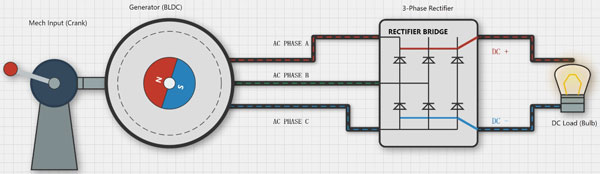
If we reverse this process and mechanically spin the rotor, the moving magnets induce a voltage in the stator windings. This is electromagnetic induction, the core principle behind converting a BLDC motor into a generator. Essentially, mechanical energy is converted into electrical energy.
II. Components
- 1×BLDC motor
- 1×12V DC motor + drill chuck
- 1×Multimeter
- 1×Rectifier
- 1×Supercapacitor
- 3×Light bulbs
III. Operation Guide
1. Preparing the BLDC Motor
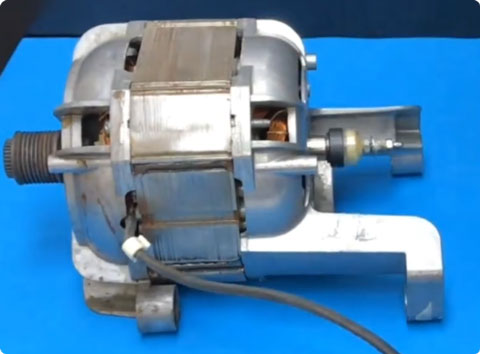
To start, obtain a BLDC motor from discarded electrical appliances, such as an old washing machine or the rear wheel of an electric motor bike. Ensure that the motor has three wires for connection. Inspect the motor for any physical damage and confirm that the rotor can rotate freely. For this project, we salvaged a motor from a washing machine.
2. Setting Up the Drive System
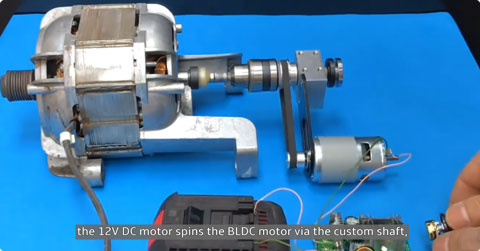
Next, a method is required to spin the BLDC rotor in order to generate electricity. In this setup, a 12V DC motor coupled with a drill chuck is used to drive the rotor. This arrangement allows control over the rotational speed. Alternatively, a hand crank or a small wind turbine can be used to drive the motor. The DC motor is powered by an 18V battery. When the drive system is powered on, the BLDC rotor spins smoothly via the custom shaft, confirming that the system is operational.
3. Connecting the Load and Initial Testing
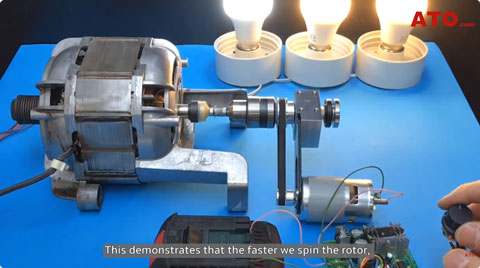
With the rotor spinning, it is time to connect a load. Three light sockets are prepared for this purpose. Any two of the three wires from the BLDC motor are connected to the sockets. Begin testing by installing a small-wattage bulb in one socket to verify that the generator can power it. Once the small bulb lights up, higher-power bulbs can be added to the remaining sockets. At lower speeds, the small bulb remains stable while the larger bulbs may flicker, indicating that the generator is not producing sufficient power at this speed. Increasing the rotor speed stabilizes the bulbs and increases their brightness, demonstrating that higher rotational speed produces higher voltage.
4. Enhancing Voltage Output
Voltage output can be improved by rewinding the stator coils with additional turns. For example, quadrupling the turns can produce over 200V, suitable for higher-power applications.
Safety Tip: High voltages can be dangerous. Always use proper insulation and safety precautions when working above safe voltage levels.
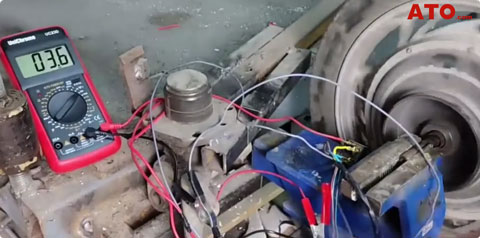
5. Testing with Alternative Power Sources
The generator can be tested with alternative power sources such as a supercapacitor. Supercapacitors store energy like a battery but can charge and discharge much faster. When the supercapacitor is connected and the rotor speed is adjusted, the load bulbs light up progressively from low to high power as the generator output increases.
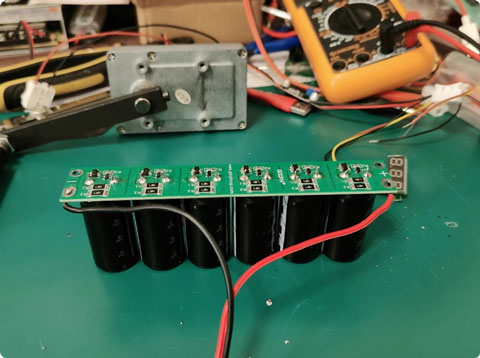
6. Converting AC to DC
Most BLDC motors produce three-phase AC voltage. If the generator is intended for DC applications, a rectifier bridge is required to convert the AC output to DC. If the load can operate on AC, a rectifier is optional. To convert AC to DC, connect the three-phase wires from the motor to the rectifier input terminals. If a three-phase rectifier bridge is not available, two single-phase rectifier bridges can be used instead. Once connected, the output becomes more stable and the bulbs stop flickering. A voltmeter or multimeter set to DC mode can be used to measure the output voltage, which increases proportionally with rotor speed. At the highest speed, the maximum DC voltage can reach up to 130V.
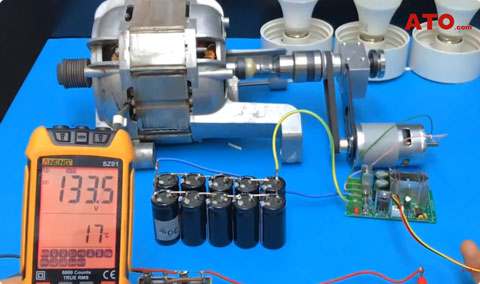
IV. Why Convert Electricity
You might wonder: why spin a motor just to generate electricity? At first glance, it may seem redundant—but it’s actually a practical and efficient way to harness energy.
Generators need a source of mechanical energy to produce electrical power. By connecting them to renewable sources like solar panels, wind turbines, or flowing water, we can convert natural energy into usable electricity. This is the essence of electricity conversion: turning available energy into power we can use. For instance, attaching a turbine wheel to a BLDC motor rotor lets the kinetic energy of flowing water generate electricity. The faster the water moves, the higher the voltage output, making it perfect for small devices or off-grid setups in areas with abundant water resources.
This principle applies to most generators we encounter in daily life—they all require an energy input. Electricity isn’t created from nothing; it’s a matter of conversion, capturing energy from the environment and putting it to work.
A BLDC motor is generally considered better for conversion into a DC generator because of its higher efficiency with the use of permanent magnets, longer lifespan due to the lack of brushes, better controllability, and reduced electrical noise compared to a brushed DC motor. This makes it a more reliable and efficient option for generating electricity.
Benefits of Using a BLDC Motor as a Generator:
- Higher efficiency
- Longer lifespan
- Better controllability
- Less electrical noise
V. Applications
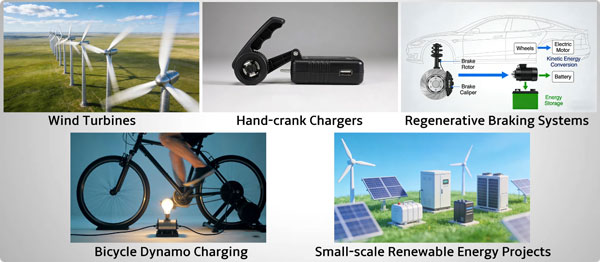
These applications highlight the versatility of using a BLDC motor as a generator, especially in scenarios where converting mechanical energy into electrical power is practical and efficient. From everyday devices to experimental setups, this approach enables sustainable energy use across a wide range of situations:
- Wind turbines
- Hand-crank chargers
- Regenerative braking systems
- Bicycle dynamo charging
- Small-scale renewable energy experiments
VI. Tips for Optimization
To optimize the performance of your BLDC motor generator, consider the following:
- Use a high-quality BLDC motor with strong permanent magnets to improve overall efficiency.
- Maintain a consistent rotational speed to ensure stable and reliable voltage output.
- Add an appropriate load, such as a battery or resistor, to help stabilize the output and prevent fluctuations.
VII. Conclusion
Converting a BLDC motor into a generator is a rewarding DIY project that illustrates the fundamentals of energy conversion. By applying mechanical force to spin the rotor, you can generate usable electrical power for various small-scale applications.
With the right components and setup, a BLDC generator can deliver stable voltage and adapt to different energy sources such as wind or water. Whether for renewable energy experiments, DIY power solutions, or learning about electromagnetic principles, this project is both educational and practical.
For those looking for guidance or technical support, ATO.com can provide expertise on BLDC motors, generator setup, and optimization tips, helping hobbyists and innovators achieve reliable and efficient results in their energy projects.
