
Tipping Bucket Rain Sensor vs. Piezoelectric Rain Sensor
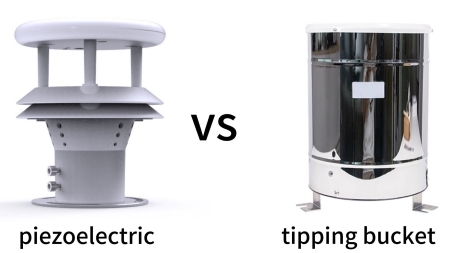
In modern meteorological monitoring and hydrological observation, rain gauges are key devices for measuring precipitation. Tipping bucket rain gauges and piezoelectric rain gauges are two mainstream technologies, each based on different operating principles and exhibiting significant differences in accuracy, applicable scenarios, and maintenance requirements. Tipping bucket sensors measure precipitation using a mechanical tipping bucket, offering a simple structure and low cost, but can be affected by environmental factors. Piezoelectric sensors, on the other hand, utilize the piezoelectric effect to detect the impact of raindrops. They have no moving parts and offer a fast response, but require consideration of signal processing accuracy. This article compares and analyzes the operating principles, advantages, and limitations of these two technologies, providing a reference for selecting equipment for applications in meteorological monitoring, smart cities, and hydrological research.
- Introduction to Tipping Bucket Rain Sensor
- Introduction to Piezoelectric Rain Sensor
- Rain Sensor Applications Comparison
- Comparison: Piezoelectric vs. Tipping Bucket Rain Sensor
Introduction to Tipping Bucket Rain Sensor
Working Principle of a Tipping Bucket Rain Sensor
A tipping bucket rain sensor is a mechanical precipitation measuring instrument that collects rainwater in one or more buckets. When the accumulated rainfall reaches a preset level (e.g., 0.2 or 0.5 mm), the bucket flips and releases the water, triggering a recording device to record the rainfall event. This simple design is suitable for long-term continuous monitoring.
Main Components of a Tipping Bucket Rain Sensor
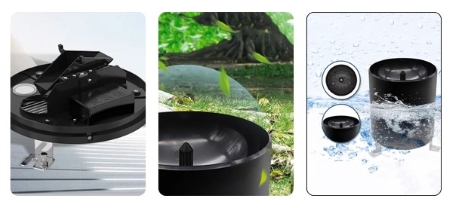
A tipping bucket rain sensor consists of three main components: a receiver to collect rainwater, a bucket with a fixed capacity that flips when filled to a certain level, and a counter that tracks the number of bucket flips to calculate the total precipitation.
Advantages of a Tipping Bucket Rain Sensor
- Simple structure: Easy to design and manufacture, with low maintenance costs.
- High reliability: Stable performance under normal weather conditions and prone to failure.
- Affordable: Low production costs, suitable for large-scale deployment.
- Wide measurement range: Suitable for a variety of precipitation types, including light, moderate, and heavy rain.
Stainless steel tipping bucket rain sensors are sold by ATO industrial automation shop. The rain sensors have a measured rainfall intensity limit of 4 mm/min and allow rainfall intensities of up to 8 mm/min for a wide range of weather monitoring applications. With millimeter-level sensitivity, the probe ensures measurement precision within ±4% accuracy under precipitation rates of 2 mm/min. Measurement data is transmitted through a reed switch in pulse form, while an integrated RS485 interface (optional) enables flexible and smart system integration.
Introduction to Piezoelectric Rain Sensor
Working Principle of Piezoelectric Rain Sensor
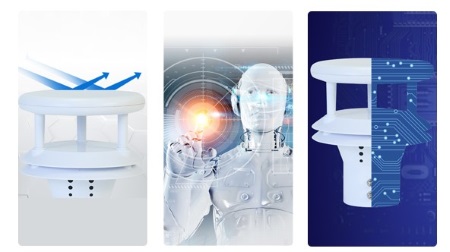
Piezoelectric rain sensors utilize the properties of piezoelectric materials. When raindrops strike a sensor, the resulting impact force is converted into an electrical signal. By processing these signals, precipitation can be calculated. Piezoelectric rain gauge sensors can measure the weight of individual raindrops and are suitable for applications requiring high accuracy and fast response.
Main Components of a Piezoelectric Rain Sensor
A piezoelectric sensor detects the pressure of precipitation falling on its surface and generates an electrical signal, which is then processed by a signal processor to convert the data into measurable precipitation values.
Advantages of Piezoelectric Rain Sensor
- High Sensitivity and Accuracy: The sensor is highly sensitive to rainfall, accurately capturing even small raindrops. It accurately captures the impact of raindrops, making it particularly suitable for monitoring light rainfall.
- Fast Response Time: The sensor directly converts mechanical force into an electrical signal, resulting in an extremely fast response time, quickly reflecting changes in rainfall intensity and making it ideal for short-term or fluctuating rainfall events.
- Simple Construction and Durability: Compared to other types of rain sensors, such as tipping bucket rain sensors, piezoelectric sensors have a simpler structure with fewer moving parts. This improves durability and allows for better resistance to adverse weather conditions.
- Low Maintenance: The sensor is rugged and typically requires minimal maintenance. With no moving parts, it is less likely to clog or wear out, helping to ensure reliable long-term operation.
- Suitable for High-Precision Measurement: It is particularly well-suited for high-end applications such as scientific research, precision agriculture, and urban drainage system monitoring.
Choosing tipping rain gauge sensors will meet your needs. The ATO tipping bucket rain gauge sensor, with high-precision measurement and reliable performance, is an ideal choice for weather monitoring. Its corrosion-resistant, long-lasting 304 stainless steel tipping bucket, coupled with a high resolution of 0.2mm and an accuracy of ±4% (at a rainfall intensity of 2mm/min), allows for precise real-time rainfall monitoring. The sensor supports dual pulse and RS485 outputs and is compatible with intelligent systems, adapting to rainfall conditions up to 4mm/min standard intensity and 8mm/min extreme intensity. The 200mm Φ water collection inlet meets national standards (at a 40°-45° inclination), the funnel filter effectively prevents clogging, and the polycarbonate base is weather-resistant and easy to install. A leveling bubble ensures stable installation. Whether used for weather stations, flood warning systems, or agricultural irrigation, the ATO sensor meets professional needs with its durable construction and intelligent connectivity.
Rain Sensor Applications Comparison
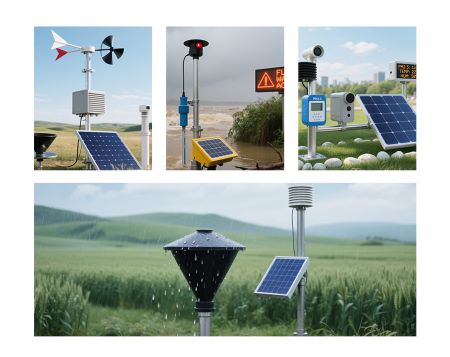
Tipping Bucket Rain Sensor Applications
- Weather Monitoring: Suitable for general weather stations, often used in small or low-cost weather monitoring networks.
- Agricultural Irrigation: Widely used in farmland and horticultural irrigation, monitoring precipitation in real time and determining whether supplemental irrigation is needed.
- Environmental Monitoring: Tipping bucket rain gauges are widely used in some environmental monitoring applications due to their cost-effectiveness.
- Flood Warning: They can be used in flood warning systems. Although their accuracy is not high, they are sufficient for monitoring precipitation over a large area.
Piezoelectric Rain Sensor Applications
- High-Precision Weather Monitoring: Suitable for weather stations requiring high data accuracy, especially for scientific meteorological monitoring and long-term data accumulation.
- Environmental Research: Piezoelectric rain gauges can provide accurate precipitation data when studying the impact of environmental changes and precipitation on ecosystems.
- Water Resources Management: In reservoir and river management, they can provide real-time monitoring and high-precision precipitation data.
- Research and Engineering Projects: Piezoelectric rain gauges are the preferred choice for fields requiring accurate precipitation data, such as engineering research and climate change.
Comparison: Piezoelectric vs. Tipping Bucket Rain Sensor
| Feature | Tipping Bucket Rain Sensor | Piezoelectric Rain Sensor |
| Working Principle | Collects rainwater and flips the bucket to record precipitation. | Measurements are made using the pressure changes of precipitation on a piezoelectric sensor to generate an electrical signal. |
| Accuracy | Low, easily affected by external factors, resolution 0.2mm | High accuracy, resolution up to 0.01mm |
| Cost | Lower, more economical | Higher |
| Durability | Relatively durable, but susceptible to weather disturbances such as strong winds and heavy snow. | Quite high, stable operation in various climates |
| Measuring Range | 0-4 mm/minute | 0-8 mm/minute |
| Response Time | Relatively slow, especially with heavy precipitation, which may cause leakage. | Fast response speed: Real-time precipitation recording. |
| Applications | Commonly used for general weather monitoring, agricultural irrigation, and environmental monitoring. | High-end applications include high-precision weather monitoring, scientific research, and water resource management. |
Tipping bucket rain gauges have a place in routine monitoring due to their affordability and reliability, making them suitable for long-term and large-area monitoring. Piezoelectric rain gauges, on the other hand, stand out for their high accuracy and fast response time, making them suitable for specific applications requiring fine-grained data, albeit at a higher cost. Choosing the right type of rain gauge depends on the specific application needs, budget, and required data accuracy. Piezoelectric rain gauges may be more popular in areas such as precision agriculture and scientific research, while tipping bucket rain gauges are more common in basic meteorological monitoring and water resource management.
Whether using a tipping bucket or piezoelectric rain gauge, the appropriate type should be selected based on specific needs and regularly calibrated and maintained to ensure accurate and reliable measurements.
