
What is a Rain Sensor?
Precipitation is a crucial component of the natural water cycle. Accurately measuring rainfall is crucial for meteorological monitoring, agricultural production, flood prevention and disaster reduction, and other fields. As an efficient and accurate modern measurement tool, rain sensors can monitor rainfall data in real time, providing a reliable basis for scientific research and practical applications. This article will provide a detailed introduction to the operating principles, main types, and application scenarios of rain sensors, providing a deeper understanding of how this technology can aid meteorological observation and water resource management.
Contents
- Basic Introduction of Rain Sensor
- Type and Working Principle of Rain Sensor
- Why Do We Need a Rain Sensor?
- How to Select and Install a Rain Sensor?
- Future Developments in Rain Sensors
1. Basic Introduction of Rain Sensor
A rain sensor, also known as a rain gauge, is a common meteorological instrument used to detect and measure precipitation. It automatically records the start and end times of rainfall, as well as the amount of rainfall. It has a wide range of applications in meteorology, agriculture, urban management, hydrology, and other fields. With the continuous advancement of technology, the types of rain sensors are increasing, and their accuracy is constantly improving. The application areas and development prospects of rain sensors are also gradually expanding. A rain sensor typically consists of two parts: a sensor, which senses rainfall and converts it into an electrical signal, and a recorder, which receives and stores these signals and converts them into readable rainfall data.
2. Type and Working Principle of Rain Sensor
Mechanical Rain Sensor
Mechanical rain sensors measure rainfall by utilizing the action of raindrops on the device's mechanical structure. For example, a tipping bucket rain sensor is a common mechanical rain sensor. It consists of a funnel and a measuring bucket. Rainwater enters the water receiver through a rain inlet, falls into the diversion funnel, and then flows through the funnel opening into the tipping bucket. When the water reaches a certain level, the tipping bucket loses balance and tips over, dumping the water. As the rain continues, the tipping bucket flips left and right. A contact switch converts the number of tipping bucket flips into an electrical signal, which is transmitted to a recorder.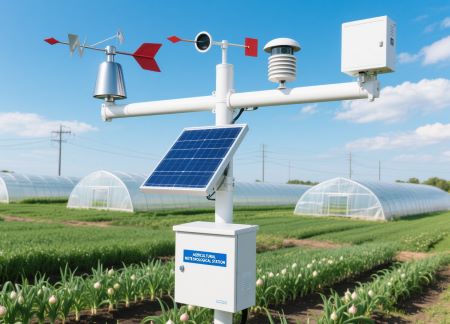
Optical Rain Sensor
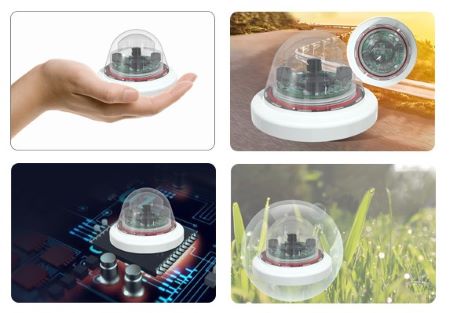
Optical rain sensors operate by the refraction or reflection of light and typically consist of a light-emitting diode (LED) and an optical sensor. When the windshield is clear of rain, almost all of the light is reflected to the sensor. However, when water droplets are present, some of the light is deflected, reducing the amount of light received by the sensor and thus detecting the presence of rain. For example, a car's rain sensor utilizes this principle. A near-infrared LED located behind the rearview mirror transmits infrared light pulses to the back of the windshield. If there are no raindrops on the glass, the windshield reflects all of the near-infrared light to a light-receiving photodiode. However, when rain falls on the glass, the light avoids the windshield and radiates to the outside world. The photodiode then reduces the signal based on the density of the raindrops. Therefore, the difference in the amount of reflected light can be used to calculate the rain density and activate and adjust the frequency of the wipers.
Capacitive Rain Sensor
This sensor detects the presence of rain by measuring changes in capacitance, leveraging the difference in dielectric constant between rainwater and glass. When water covers the sensor surface, the capacitance changes, and the sensor uses this change to determine the amount of rainfall.
Resistive Rain Sensor
A resistive rain sensor uses the effect of raindrops on electrical resistance to measure rainfall. The sensor consists of a circuit and a resistor. When raindrops fall into the sensor's detection area, they change the resistance of the circuit. By measuring this change in resistance, the amount of rainfall can be calculated.
Ultrasonic Rain Sensor
An ultrasonic rain gauge uses the reflection principle of ultrasonic waves to measure rainfall. The sensor consists of a transmitter and a receiver. When ultrasonic waves are emitted by the transmitter and hit raindrops, they are reflected back and captured by the receiver. By measuring the reflection time and signal strength, the size and number of raindrops can be calculated, thereby determining the rainfall amount.
Piezoelectric Rain Sensor
This sensor uses the piezoelectric effect to convert the mechanical displacement or vibration generated by raindrops into an electrical signal, thereby measuring rainfall. When raindrops impact the sensor surface, the piezoelectric material deforms slightly, generating an electrical signal. The piezoelectric rain gauge sold at ATO One-stop Automation Shop is designed for high-precision rainfall monitoring. Equipped with an RS485 interface and MODBUS protocol, it easily connects to various data systems. Its range covers 0-4 mm/min, accuracy ≤±4%, resolution 0.01 mm, sampling frequency less than 1 second, and fast response time make it ideal for applications such as weather monitoring and smart agriculture.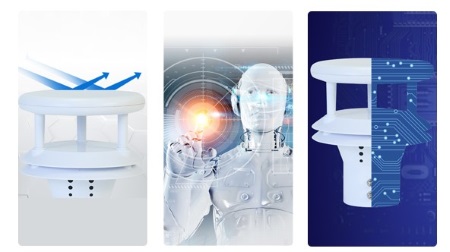
Gravimetric Rain Sensor
A gravimetric rain gauge determines rainfall by measuring the weight of collected rainwater. It measures both solid and liquid precipitation and records the start and end times of precipitation. Gravimetric rain gauges accurately measure precipitation and enable long-term monitoring. They are particularly well-suited for measuring snowfall, providing stable data records unaffected by external factors like wind and temperature, resulting in more reliable results.
In summary, different types of rain sensors have different working principles, but they all calculate rainfall by detecting the number or size of raindrops. Choosing the right rain sensor depends on the specific application scenario.
3. Why Do We Need a Rain Sensor?
Accurately measure precipitation
Rain sensors can accurately measure precipitation, providing precise data support for various fields. In meteorological observation, rain sensors can be used at weather stations to monitor meteorological parameters such as precipitation amount and intensity. This provides accurate rainfall data for weather forecasting and climate research, helping meteorological departments prepare short-term and medium-term weather forecasts, and improving forecast accuracy.
Enable automation
Rain sensors enable automation in fields such as agricultural irrigation, urban flood control, and automotive manufacturing, improving efficiency and safety.
In agricultural irrigation, rain sensors automatically adjust irrigation systems based on precipitation, achieving water-saving irrigation, increasing crop yields and quality, optimizing water resource utilization, reducing waste, and ensuring crops grow in optimal moisture conditions.
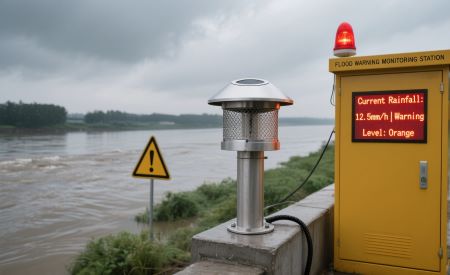
In terms of flood warnings, rainfall measurements can predict river water levels, flow rates, and other information. This provides crucial data for river flood warnings, enabling prevention of flood disasters and proactive countermeasures. This provides a scientific basis for flood prevention and disaster reduction, safeguarding people's lives and property.
In predicting drought, rain sensors also play a crucial role. By collecting and analyzing long-term rainfall data, rainfall trends in a specific area can be determined, leading to predictions of the onset and scale of droughts. This helps to proactively implement drought mitigation measures and protect people's lives and property.
In urban drainage systems, the use of rain sensors can optimize drainage system operations, prevent urban waterlogging, improve urban flood control capabilities and water resource management, and ensure the safe operation of urban infrastructure.
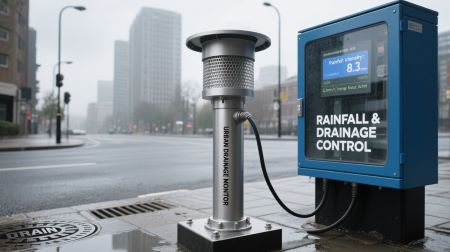
Improving Driving Safety
In the automotive industry, rain sensors are used in systems such as automatic wipers, intelligent lighting systems, and smart sunroofs. They automatically adjust wiper speed based on rainfall, ensuring a clear view for the driver and improving driving safety and comfort.
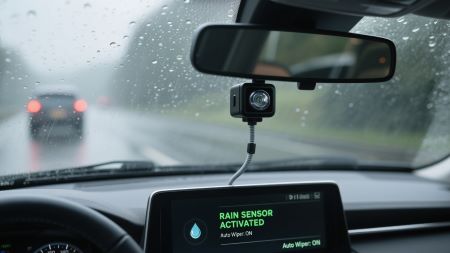
Promoting Scientific Research
Data provided by rain sensors can provide a scientific basis for climate research, water resource management, and other fields, promoting scientific research and development in related fields.
Water Resource Management: Rain sensors assist in reservoir management and water resource conservation, optimize water resource allocation, provide accurate precipitation data, and support the rational use of water resources and environmental protection.
Environmental Protection Monitoring: Monitors the impact of rainfall on the environment, supports ecological protection and restoration, provides a scientific basis for environmental research, and promotes sustainable development.
Scientific Research: Provides a scientific basis for climate research, water resources management, and other fields, promoting scientific research and development in related fields, advancing climate change research, revealing the temporal and spatial distribution patterns of rainfall, and supporting policy formulation.
Strong Adaptability
Different types of rain gauge sensors offer distinct characteristics and advantages, meeting rainfall measurement needs in diverse fields and scenarios.
4. How to Select and Install a Rain Sensor?
How to choose a rain sensor that suits your needs?
- Determine the application scenario: Before purchasing, you need to clearly define the application you will be using the rain sensor for, such as meteorology, agriculture, urban management, hydrology, etc. This will help you choose a sensor that suits your needs.
- Determine the measurement range: Different rain sensors measure different rainfall ranges, so you need to choose the right sensor based on your needs.
- Determine the accuracy requirements: Rain sensors of different accuracies have different prices, so you need to choose the right sensor based on your needs and budget.
- Choose the right brand and model: You can search online or consult with professionals to select a well-known brand and model of rain sensor that suits your needs.
ATO Store offers a variety of rain gauges, including weighing rain gauges with low-power operation and solar-powered data collection systems. These sensors are easy to install, maintain low maintenance, and calibrate, offering a variety of output formats compatible with various data collection devices. The standardized design, modular components, and castings ensure high reliability, making them suitable for all-weather rain and snow observation in harsh environments.
| Product | Features | Price |
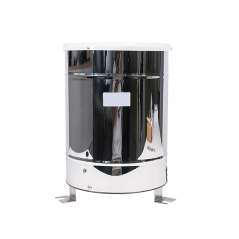 |
Smart Rain Sensor, Stainless Steel Tipping Bucket: This precision rain sensor delivers ±4% accuracy (at 2mm/min) with millimeter-level resolution. Featuring reed switch and optional RS485 outputs, it enables smart data transmission for meteorological monitoring systems. |
$428.25 |
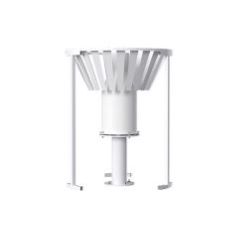 |
Weighing Bucket Rain Gauge Sensor with Pulse/RS485: This precision tipping-bucket rain gauge accurately measures all precipitation types (rain, snow, mixed) with exceptional stability. It simultaneously outputs real-time intensity and accumulated rainfall data, supporting multiple data collection systems. | $7868.39 |
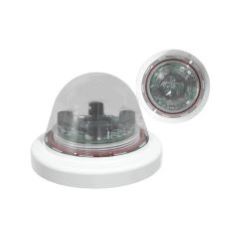 |
Optical Rain Sensor, Pulse/RS485: With excellent long-term stability, it is suitable for long-term monitoring and intelligent meteorological equipment, energy-saving and efficient. It has excellent rainfall resolution and accuracy, a wide operating temperature range, and high humidity tolerance. |
$149.68 |
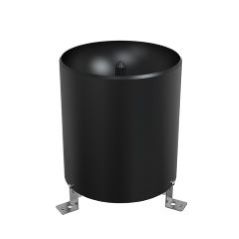 |
Tipping Bucket Rain Gauge Sensor, Resolution 0.2mm/0.5mm: This high-precision precipitation sensor supports multiple interfaces and has a wide temperature range, allowing seamless integration into monitoring networks and reliable operation in extreme weather conditions, providing reliable rainfall data for meteorological and hydrological applications. | $215.39 |
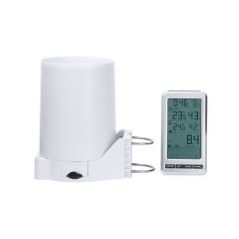 |
Wireless Digital Rain Sensor with Tempe and Humidity Display: This digital rain sensor monitors rainfall, temperature, and humidity for indoor/outdoor use. Its simple display shows real-time data at a glance, with automatic updates for accurate environmental tracking. | $169.52 |
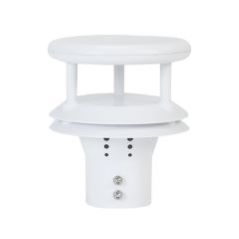 |
Piezoelectric Rain Sensor, RS485/Modbus Protocol: This high-precision rainfall monitor features quick response, real-time data reporting, and low power consumption. With strong anti-interference capabilities and easy integration into various systems, it's ideal for meteorological monitoring and smart agriculture applications. | $792.88 |
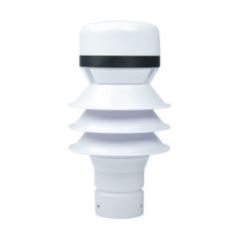 |
Radar Rain Gauge Sensor, RS485/RS232 Output: Compared to traditional mechanical rainfall monitors, this device responds faster and detects more sensitively, accurately identifying precipitation start/end times. It doesn't need anti-icing heaters and can precisely monitor rain, snow, and hail in real time. | $1151.23 |
How to install and maintain a rain sensor?
- Mounting Location: Choose a suitable location that's at an appropriate height above the ground, fully exposed to rain, and free from obstructions.
- Mounting: Mechanical rain sensors require a fixed installation to prevent errors caused by wind, rain, and animal impacts.
- Connecting the power or data cable: Depending on the sensor model, you may need to connect a power or data cable. Ensure these connections are made correctly according to the user manual.
- Regular Maintenance: Regularly inspect the rain sensor for looseness, damage, dust, or other contamination, and perform cleaning and maintenance promptly.
- Software Setup: Some digital rain sensors may require software setup for data collection and analysis. These setup instructions should be followed.
In short, choosing the right rain sensor and properly installing and maintaining it can improve measurement accuracy, extend its service life, and provide reliable service.
5. Future Developments in Rain Sensors
With the continuous advancement of technology, rainfall sensors are also constantly being updated and developed. This article predicts that rainfall sensors will develop significantly in the future, embracing trends such as Internet Plus, big data, and artificial intelligence.
Internet Plus
With the widespread adoption of the internet, rainfall sensor data can also be shared and disseminated via the internet. Future rainfall sensors can be connected to the internet, forming large-scale networks for real-time monitoring and data sharing.
Big Data
With the continuous accumulation of data, future rainfall sensors will be able to use big data analysis to more accurately predict rainfall and flooding. Furthermore, big data can help us better understand climate change and changes in the natural environment.
Artificial Intelligence
Future rainfall sensors will be able to leverage artificial intelligence technology for autonomous monitoring and data analysis. Artificial intelligence can improve data accuracy and prediction precision through learning algorithms, thereby better addressing issues such as climate change and water resource management.
