
Carbon Dioxide (CO2) Sensor Price List
A carbon dioxide sensor is a device used to detect carbon dioxide (CO2) concentration in the air. Utilizing a unique operating principle, it accurately measures ambient CO2 levels. It is not only a key tool for environmental monitoring but also plays a vital role in industrial safety, agriculture, healthcare, and building automation. With growing global awareness of indoor air quality, industrial safety, and environmental protection, demand for carbon dioxide sensors is steadily growing. This expanding market demand and the continued maturity of mainstream technologies such as NDIR (non-dispersive infrared) have driven the gradual rationalization of carbon dioxide sensor prices, facilitating widespread adoption across various industries. Whether for building automation, agricultural greenhouses, or industrial safety monitoring, users can choose from a wide range of products, from portable to fixed, and from economical to high-precision. Currently, the vast majority of industrial and commercial-grade carbon dioxide sensors use NDIR technology, as it provides the most reliable and accurate measurement results.
This article will introduce the various types of CO2 sensors available on the ATO online shop, along with their prices, to help you find the right solution for your needs.
ATO Carbon Dioxide (CO2) Sensor Price List
| product | SKU | specification | price |
| NDIR CO2 Sensor Module | |||
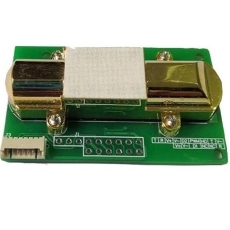 |
ATO-ICDS-Z14A |
Measure range:400~2000/5000/10000ppm Output signal: UART/ PWM/ 0.4-2V DC Response time: T90 < 120s Working temperature: -10℃ ~ 50℃ |
$103.33 |
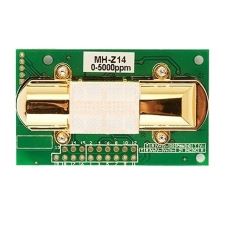 |
ATO-ICDS-Z14B |
Measure range:0~2000/5000/10000ppm Output signal: UART (TTL 3.3V)/ PWM Response time: T90 < 90s Working temperature: -10℃ ~ 50℃ |
$126.03 |
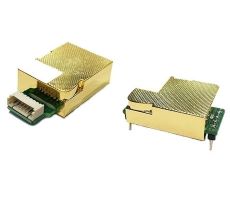 |
ATO-ICDS-Z19C |
Measure range: 400~2000/5000/1000ppm Output signal: UART/ PWM Response time: T90 < 120s Working temperature: -10℃ ~ 50℃ |
$104.56 |
| NDIR CO2 Sensor | |||
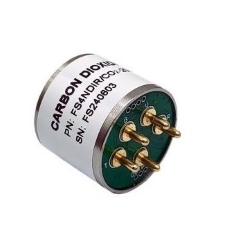 |
ATO-ICDS-711A |
Measure range: 0~2000ppm Data accuracy: 50ppm±3%FS Response time: T90≤120s Working temperature: -20℃~70℃ |
$208.30 |
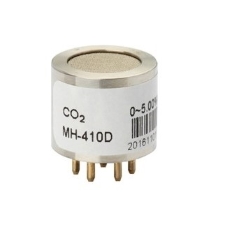 |
ATO-ICDS-411D |
Measuring range: 0~6000ppm/0~10% VOL Output signal: UART/ analog voltage signal Response time: T90 < 30s Working temperature: -20℃~60℃ |
$345.08 |
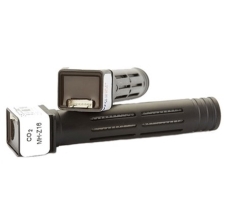 |
ATO-ICDS-Z16 |
Measuring range: 0~10000ppm/0~15% VOL Output signal: UART/ PWM Response time: T90 < 30s Working temperature: -10℃ ~ 50℃ |
$138.73 |
| Infrared Carbon Dioxide (CO2) Transmitter | |||
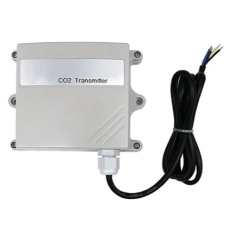 |
ATO-GS-CO2T |
Operating Voltage: DC 24V±0.5 Measure Range:0-2000/5000/10000/20000/50000ppm Output Mode: ModBus 485 Operating Temperature: 0~60°C |
$163.82 |
How to Select a Carbon Dioxide (CO2) Sensor?
Carbon dioxide (CO2) sensors are playing an increasingly important role in modern society. Their applications range from indoor air quality monitoring to industrial process control, environmental monitoring, and scientific research. However, with so many different types of CO2 sensors on the market, the following provides some key factors to consider when selecting a CO2 sensor, helping users make an informed choice based on their needs.
Measurement range
The sensor's range is also an important consideration when choosing a sensor, but excessive focus on a wide range is completely unnecessary. Choosing the right range and price is paramount, as they both suit your needs.
In the natural environment, the normal concentration of CO2 in air is 0.04% (400 ppm), though in large cities it can reach 500 ppm. When no one is indoors, CO2 concentrations typically range from 500 to 700 ppm.
Generally speaking, indoor CO2 concentrations above 5000 ppm can severely disrupt human function, leading to loss of consciousness and disorientation. For monitoring carbon dioxide concentration in a home environment, a sensor with a range of 0-5000ppm is sufficient. In crowded environments like public places and classrooms, a sensor range of 0-50000ppm is also acceptable. ATO store offers carbon dioxide (CO₂) sensors at a competitive price, and the sensors have a wide range of measurement options. Whether it is an indoor measurement scenario or an industrial use scenario, you can find a suitable carbon dioxide sensor.
When selecting a sensor, as long as the sensor's range covers carbon dioxide concentrations under extremely harsh operating conditions, it is sufficient; there is no need to pursue an excessively large range. The following are some recommendations for the measurement range of carbon dioxide (CO2) sensors in different usage scenarios:
- Indoor air: 0-2000 ppm or 0-5000 ppm is usually sufficient.
- Agricultural greenhouses: 0-5000 ppm.
- Industrial safety: 0-5% by volume (i.e., 0-50,000 ppm) or higher may be required.
Accuracy and Resolution
Select a sensor with appropriate accuracy and resolution based on application requirements. Accuracy is a key performance metric for sensors and plays a crucial role in determining the accuracy of the entire measurement system. The higher the sensor's accuracy, the more expensive it is. Therefore, it's best to select a sensor with sufficient accuracy to meet the accuracy requirements of the entire measurement system. This allows for the selection of relatively inexpensive and simple CO2 sensors among many that meet the same measurement objectives.
For certain applications, such as laboratories or medical equipment, high-precision CO2 detection is required. NDIR sensors offer the highest accuracy and minimal long-term drift. High-precision models can achieve an error of less than ±50ppm ±3% of reading. A best CO2 sensor priced at $208 can be found in the ATO store. It can achieve an error of ±50ppm±3% of reading. It is reasonably priced and has a wide range of measurement, from 0 to 2000 ppm, an operating voltage of 3.6~5.0V DC, and a response time of less than 120 seconds. It can be widely used in industrial field instruments, industrial process control, and safety protection.
Stability and Lifespan
The long-term stability and lifespan of the sensor, as well as ease of maintenance and calibration, are important considerations. Regardless of the type of CO2 sensor you choose, calibration and maintenance are important considerations. Sensor accuracy may degrade over time, so regular calibration is essential. Some CO2 sensors have automatic calibration features, which can reduce maintenance. Ensure you understand the sensor's maintenance requirements and plan accordingly.
Environmental adaptability
The sensor's ability to adapt to environmental factors such as temperature, humidity, and pressure. Before selecting a suitable gas sensor, assess its environmental adaptability. In environments with high temperatures (>60°C), high humidity (>90% RH), or high dust content, such as cement plants and waste incineration plants, a pretreatment system, including a cooling and dehumidification device and a dust filtration module, is required. Select the appropriate CO2 sensor based on the intended application scenario.
Response time
The time it takes for a sensor to reach a stable reading is also particularly important for dynamic monitoring.
