
What is a Plunger Valve?
A plunger valve, also known as a piston valve, is a linear motion valve that regulates fluid flow by moving a cylindrical piston inside the valve body to open or close the flow passage. It is commonly used in high-pressure and high-temperature industrial systems requiring precise flow control.
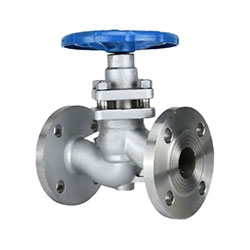
Table of Contents
- Plunger Valve Working Principle
- Plunger Valve Structure
- Plunger Valve Key Characteristics
- Plunger Valve Technical Specifications
- Plunger Valve Typical Applications
- Plunger Valve Advantages
- Plunger Valve Maintenance
- FAQ
Plunger Valve Working Principle
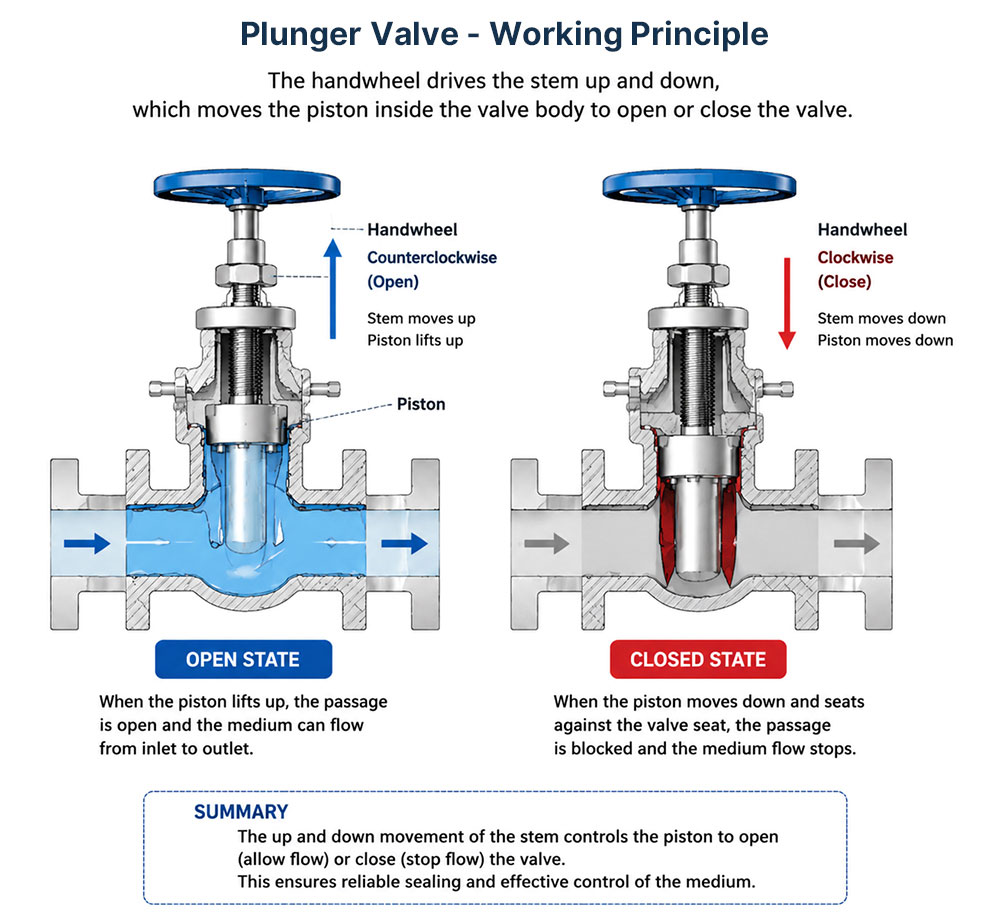
The plunger valve operates through the linear movement of a piston within the valve body.
- When the piston lifts away from the valve seat, the flow passage is opened and fluid can pass through.
- When the piston presses against the valve seat, the flow is completely blocked.
The piston is driven by a valve stem connected to a manual handwheel, pneumatic actuator, or electric actuator, enabling both local and remote operation.
Plunger Valve Structure
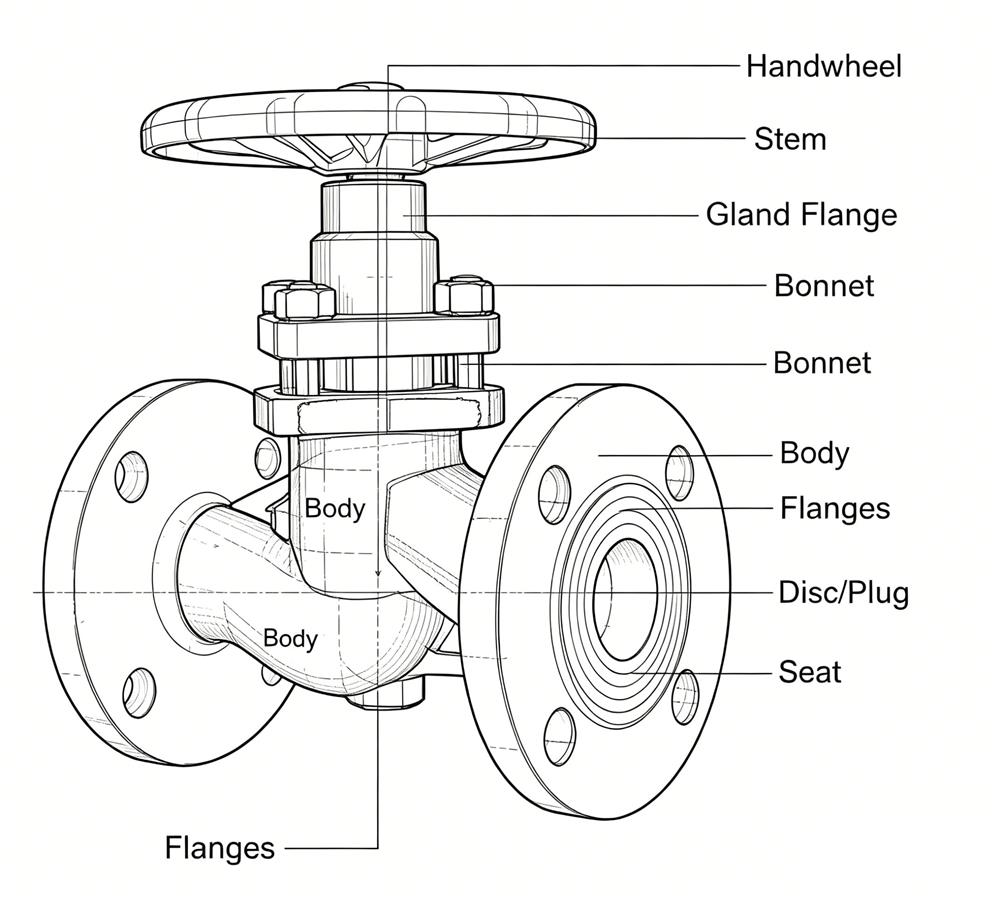
The plunger valve is robust and simple in design, consisting of the valve body, valve bonnet, piston, valve seat, sealing elements (O-rings or gaskets), valve stem, and actuator. The valve body forms the flow path and withstands pressure, the piston controls flow by moving against the seat, the valve stem transmits motion from the actuator or handwheel to the piston, and seals prevent leakage. Actuators can be manual handwheels, pneumatic, or electric for remote control.
Plunger Valve Key Characteristics
The plunger valve is widely used in industrial automation, hydraulic systems, chemical processes, steam systems, and fuel transfer systems due to the following characteristics:
- High sealing performance under high pressure conditions
- Suitable for high-temperature applications
- Precise linear flow regulation
- Resistance to turbulent flow damage
- Compatibility with liquids and gases
- Support for manual and automated actuation
- Long service life in industrial environments
Plunger Valve Technical Specifications
In the following sections, we will explore plunger valves in detail, with examples from the ATO industrial automation product range.
| Model | Nominal Diameter | Nominal Pressure | Medium | Temperature | Connection Method |
| ATO-PV-DN15 | DN15 | 1.6 MPa | Water, steam, oil | ≤425°C | Flange connection |
| ATO-PV-DN25 | DN25 | 1.6 MPa | Water, steam, oil | ≤425°C | Flange connection |
| ATO-PV-DN50 | DN50 | 1.6 MPa | Water, steam, oil | ≤425°C | Flange connection |
| ATO-PV-DN65 | DN65 | 1.6 MPa | Water, steam, oil | ≤425°C | Flange connection |
| ATO-PV-DN80 | DN80 | 1.6 MPa | Water, steam, oil | ≤425°C | Flange connection |
| ATO-PV-DN100 | DN100 | 1.6 MPa | Water, steam, oil | ≤425°C | Flange connection |
| ATO-PV-DN125 | DN125 | 1.6 MPa | Water, steam, oil | ≤425°C | Flange connection |
Plunger Valve Typical Applications
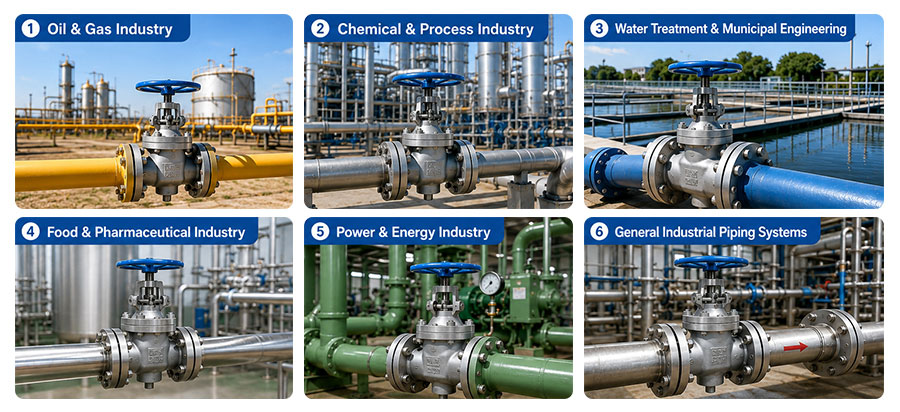
Plunger valves are widely used in industrial fluid control systems, including hydraulic systems for oil flow regulation, chemical and pharmaceutical processing systems, steam and hot water pipelines in boilers and heat exchangers, water treatment and distribution networks, fuel and gas transmission pipelines, and industrial automation systems with remote actuation.
Plunger Valve Advantages
Plunger valves are designed for demanding industrial environments where precise flow regulation and reliable sealing are essential. Their structural design enables stable performance under high pressure, elevated temperatures, and turbulent flow conditions, making them suitable for a wide range of industrial fluid control applications.
- Stable sealing performance under high pressure, reducing leakage risk in demanding systems.
- Precise flow control capability, allowing accurate regulation of liquid or gas flow.
- Reliable operation in high-temperature environments, suitable for steam and thermal systems.
- Wide media compatibility, supporting water, oil, steam, chemicals, and other industrial fluids.
- Reduced wear under turbulent flow conditions, contributing to longer service life and stable performance.
Plunger Valve Maintenance
Plunger valves require routine maintenance to ensure reliable sealing performance, accurate flow control, and extended service life. Regular inspection and timely replacement of worn components can reduce leakage risks and maintain stable operation in demanding industrial environments.
- Inspect piston and valve seat wear regularly to prevent sealing degradation and performance loss.
- Replace sealing elements when leakage occurs to maintain pressure integrity and operational safety.
- Verify actuator movement and response to ensure accurate valve opening and closing performance.
- Clean internal flow passages in contaminated media systems to prevent blockage and maintain smooth fluid flow.
FAQ
Q1: What is a plunger valve?
A plunger valve is a linear motion valve that uses a piston to control fluid flow by opening or closing the flow passage.
Q2: How does a plunger valve work?
It works by moving a piston up or down inside the valve body. Flow is allowed when the piston lifts and blocked when it seals against the valve seat.
Q3: Where are plunger valves used?
They are used in hydraulic systems, steam pipelines, chemical processing, water treatment, and industrial automation systems.
Q4: What media can it handle?
It can handle water, steam, oil, and various industrial gases and liquids depending on material selection.
Q5: How is plunger valve actuated?
It can be operated manually, or via pneumatic or electric actuators for remote control.
Q6: What factors should be considered in selection?
Key factors include DN size, pressure rating, temperature range, material compatibility, and actuator type.
