
What Types of Weighing Indicators Are Available?
Weighing indicators, also known as weight displays, scale controllers, or digital scale heads—are the core processing units of any electronic weighing system. Whether used in a truck scale, warehouse platform scale, packaging line, batching system, or livestock scale, the weighing indicator determines overall system accuracy, stability, and functionality.
With the rapid development of industrial automation and IoT, modern weighing indicators now offer a range of advanced features such as wireless communication, PLC connectivity, data recording, printing, multi-sensor support, smart calibration, and more.
This article provides a comprehensive overview of all major types of weighing indicators and how to choose the right one.
Major Types of Weighing Indicators
1. Electronic Weighing Indicators for Truck / Weighbridge Scales
Designed for heavy-duty applications such as truck scales, axle scales, and weighbridges, electronic weighing indicators prioritize durability, high-capacity handling, and stable performance. They typically feature reinforced housings, surge protection, and advanced filtering circuits to withstand harsh outdoor conditions, electrical noise, and constant vibrations caused by large vehicles. Engineered to process high-load cell signals with exceptional consistency, they deliver reliable measurements even for fast-moving trucks or unevenly distributed loads.
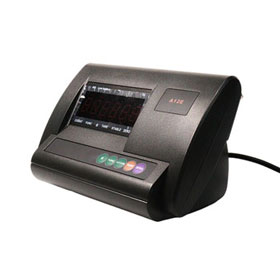
Key Features:
- Bright, high-intensity LED display for clear visibility outdoors, even under direct sunlight or from long distances.
- Anti-vibration structure designed to handle heavy impact loads during vehicle weighing.
- The weighing indicator supports large-capacity, multi-sensor platforms, typically accommodating 4–10 load cells.
- Rugged metal enclosure suitable for harsh industrial environments.
- Built-in rechargeable battery for continuous operation in remote locations or areas with unstable power supply.
2. Industrial Weighing Indicators for Platform and Floor Scales
Industrial weighing indicators are widely used in manufacturing, warehousing, logistics, and commercial settings. Designed for general-purpose weighing tasks, they provide accurate and consistent performance for platform scales, floor scales, bench scales, and other medium-capacity systems. Their robust construction and user-friendly interface make weight indicators suitable for daily industrial use.
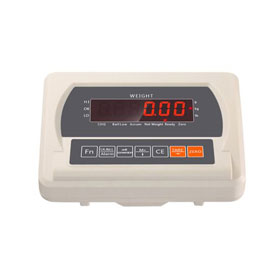
Key Features:
- High-visibility LED or LCD displays with six large digits for clear readings in dim factory environments.
- High-resolution, stable A/D conversion, often reaching 1/1,000,000 internal counts.
- Multiple calibration divisions (typically 3,000–30,000) for precision across various applications.
- Functions include zeroing, taring, holding, counting, and accumulation.
- Broad operating temperature range and durable housing for long-term use in workshops, warehouses, and distribution centers.
3. Digital Weighing Indicators with Advanced Connectivity
As industrial automation and digital data management advance, digital weighing indicators with comprehensive connectivity are increasingly vital. They offer high-speed A/D sampling and support multi-load-cell configurations, suitable for large platforms and multi-point weighing systems. Smart features include counting, checkweighing, dynamic weighing, and peak-hold.

Key Features:
- Multiple communication interfaces: RS232 for printers/ displays, RS485/ Modbus for PLC or SCADA integration, 4–20 mA for process control, USB for data export, and WiFi/ Bluetooth for wireless transfer.
- Many digital weighing indicators support direct label or ticket printing, enhancing workflow efficiency.
- Ideal for facilities requiring seamless integration into automated industrial systems with reliable and stable performance.
4. Weighing Indicators with Built-in Printer
Weighing indicators are designed for operations requiring immediate documentation of weight data. By integrating printing functionality directly into the weight scale indicator, they eliminate the need for external printers and streamline workflow.

Key Features:
- Reliable thermal printer for generating weight tickets, batch reports, and time-stamped records.
- Flexible printing modes, including continuous print and single-label output.
- Widely used in official weighing stations, warehouse inventory management, logistics, and traceability systems requiring immediate printed evidence.
5. Wireless Digital Weighing Indicators
The weighing indicators provide flexibility and mobility, ideal for environments where wired connections are impractical. Wireless weighing scale indicators allow operators to freely position the display unit or move equipment without concern for cable length or routing.
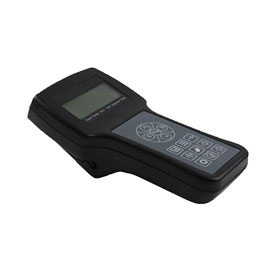
Key Features:
- Stable wireless signal transmission via 433–470 MHz radio frequency or Bluetooth, with ranges up to 100–300 meters depending on the weighing indicator.
- Long battery life, often exceeding 50 hours of continuous use, reducing downtime and maintenance.
- Easy installation and high portability.
- Many models also include optional RS232 output for wired data collection or external integration.
- Versatile solution for mobile weighing in warehouses, job sites, agriculture, and industrial applications.
How to Choose the Right Weighing Indicator
Below is a quick selection guide based on practical requirements:
| Requirement | Best Indicator Type |
| Heavy trucks, large-scale outdoor weighing | Truck/ Weighbridge Weighing Indicator |
| Daily warehouse / factory weighing | Industrial Platform Weight Indicator |
| Need PLC, SCADA, data recording | Digital Weight Scale Indicator with RS485 / 4-20 mA / WiFi |
| Need weight tickets / receipts | Weighing Indicator with Built-in Printer |
| No wiring or mobile weighing | Wireless Weight Indicator |
Conclusion
Modern industrial and commercial environments demand high accuracy, stability, and flexibility from weighing indicators. Different types of electronic weighing indicators cater to various applications: from heavy-duty indicators designed for truck scales and weighbridges, to versatile units for platform and floor scales; from digital indicators with advanced connectivity and high-speed sampling, to models with built-in printers for immediate on-site documentation; and wireless weighing indicators offering mobility and ease of installation. Choosing the right weighing indicator enables businesses to achieve precise, efficient data collection and management, enhancing productivity, logistics, and overall operational reliability. For companies seeking reliable sourcing and support, ATO Online Store provide convenient access to professional weighing solutions and technical assistance.
