
Compass Sensor Buying Guide
Compass sensors (also known as electronic compasses or magnetometers) play a vital role in modern electronic devices. These components, which measure magnetic field strength and determine direction, have become essential components for drones, robots, smartphones, and various navigation devices. Faced with a wide variety of products on the market, how do you choose a compass sensor that suits your needs? This article will provide a comprehensive guide.
- The Core Characteristics to Evaluate Before Buying
- Key Technical Specs for Your Compass Sensor Purchase
- Matching Application Scenario with Purchasing Requirements
- ATO Compass Sensors for Sale
The Core Characteristics to Evaluate Before Buying
When choosing a compass sensor, you should focus on several key characteristics.
Measurement dimensions
This is the primary consideration. Three-axis (X, Y, Z) compass sensors have become mainstream in the market, capable of measuring magnetic field changes in three dimensions. They are particularly suitable for devices requiring tilt compensation or three-dimensional attitude perception, such as drones and advanced robots.
Accuracy and resolution
This directly affects the reliability of measurement results. While standard products offer an accuracy of approximately ±2°, high-performance or precisely calibrated models can achieve ±0.5° to ±1°. While a resolution of 1° is sufficient for most applications, applications such as professional navigation and geological exploration require higher-precision solutions.
Interface type
This determines how the sensor connects to the host control system. The common I2C interface offers simple wiring, the SPI interface offers faster transmission speeds, and the serial port (UART) offers greater compatibility. When selecting, be sure to confirm its compatibility with your host control chip.
Power consumption characteristics
This is particularly critical for battery-powered devices. High-quality compass sensors typically operate with currents in the hundreds of microamperes, and sleep currents can be as low as 1-20μA. This is crucial for the battery life of portable devices like handhelds and wearables.
Key Technical Specs for Your Compass Sensor Purchase
In addition to core features, some deeper technical parameters are also worth considering.
- Range: This determines the magnetic field range that the sensor can measure, typically measured in Gauss. Choosing the appropriate range ensures that the sensor does not experience magnetic saturation in the application environment.
- Output rate: This determines the frequency of data updates and is particularly important for rapidly changing application platforms such as drones. A higher output rate means more timely direction updates.
Matching Application Scenario with Buying Requirements
Different application scenarios have different purchasing requirements for compass sensors.
UAV and robotic navigation applications require more specialized three-axis sensors, preferably with tilt compensation (often in conjunction with an accelerometer). These applications also require special attention to the sensor's resistance to vibration and electromagnetic interference.
High-precision professional applications, such as geological surveying, scientific research, and professional navigation, should consider compass sensors with higher calibration accuracy. While these sensors are more expensive, they offer unparalleled measurement accuracy and stability.
For integration into consumer electronics, such as smartphones and smartwatches, ultra-small package size and ultra-low power consumption are paramount considerations. These applications often require the selection of sensor chips specifically optimized for mobile devices.
ATO Compass Sensors for Sale
| Product | Specs | SKU | Price |
2D Electronic Compass Sensor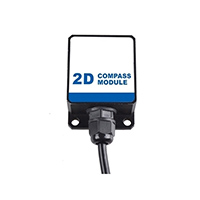 |
Range: 0-360° Accuracy: 1° Environment: -40℃~+70℃ Size: L55×W37×H24mm |
ATO-CPS-SCM225 | $193.47 |
2D Electronic Compass Module |
Range: 0-360° Accuracy: 1° Environment: -40℃~+70℃ Size: L33×W27×H8mm |
ATO-CPS-SCM220 | $178.16 |
3D Electronic Compass Sensor for Car/Boat |
Tilt range: ±85° Resolution: 0.1° Environment: -40℃~+85℃ Size: L55×W37×H24mm |
ATO-CPS-DCM260B | $273.77 |
3D Electronic Compass Sensor, IP67 |
Tilt range: ±85° Resolution: 0.1° Environment: -40℃~+85℃ Size: L60×W59×H33mm |
ATO-CPS-DCM302B | $566.08 |
3D Electronic Compass Sensor, 0°-360°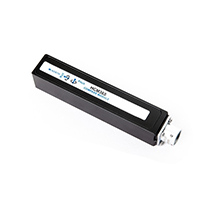 |
Range: heading 0-360°, full attitude Accuracy: heading 0.3-0.5°, tilt 0.1° Environment: -40℃~+85℃ Size: L113×W20×H20mm |
ATO-CPS-HCM365 | $1,116.54 |
High Accuracy Electronic Compass Sensor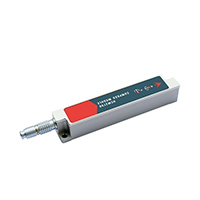 |
Axis: 3-axis Resolution: 0.1° Pitch tilt range: ±85° Roll tilt range: ±180° |
ATO-CPS-HCM375B | $904.85 |
High Accuracy Electronic Compass Module |
Axis: 3-axis Resolution: 0.1° Pitch tilt range: ±85° Roll tilt range: ±180° |
ATO-CPS-DCM6 | $1,119.23 |
When selecting a compass sensor, you need to consider accuracy requirements, power consumption limits, size constraints, interface compatibility, and budget. There's no single best sensor, only the solution that best suits your specific application. By rationally analyzing your requirements and carefully comparing specifications, you'll be sure to find the compass sensor that best meets your project requirements.
We hope this guide provides you with valuable reference information. ATO one-stop shop will help you find the most suitable compass sensor solution among the many options available.
