
Digital Inclinometer Buying Guide
In woodworking, construction, and machinery installation, even a microscopic angular deviation can lead to structural failures, misaligned joints, or severe quality issues. Traditionally, professionals relied on spirit levels, which are prone to human error and visual misinterpretation.
Whether you need to calibrate a table saw blade, set a drainage slope, or align industrial robotics, choosing the right digital inclinometer is critical. As a reliable provider of ATO Industrial Automation sensing solutions, this comprehensive guide breaks down the essential specifications—such as accuracy class, measurement range, and durability—alongside practical operational tips to help you select the best digital inclinometer for your specific application.
Contents
- Choosing the Right Digital Inclinometer for Your Needs
- Applications of Digital Inclinometers
- Practical Tips for Using a Digital Inclinometer Effectively
- ATO Digital Inclinometer for Sale
- Why Choose ATO Digital Inclinometer?
- Frequently Asked Questions
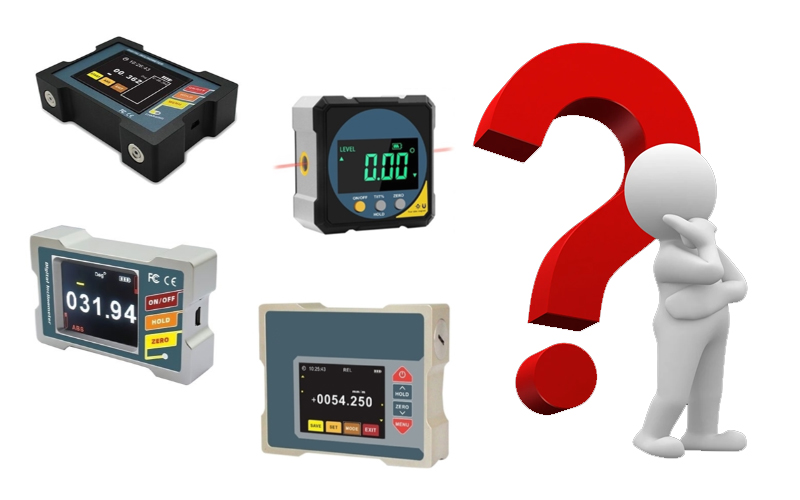
Choosing the Right Digital Inclinometer for Your Needs
A digital inclinometer or digital angle gauge is a precise tool that measures tilt, slope, and elevation angles. Selecting the ideal digital inclinometer requires balancing your specific trade requirements with the device’s technical capabilities. To make the right digital inclinometer, prioritize these critical specifications:
Accuracy and Precision
Acoustic and mechanical tolerances dictate the success of your measurements. Not all projects require medical-grade precision, but choosing the wrong tolerance can compromise your work.
- Industrial/Machining Applications: Require a high-accuracy digital inclinometer with a rating between ±0.05° and ±0.1°at 0° and 90° for tasks like CNC setup or structural steel leveling.
- General Construction and Woodworking: Typically requires a standard accuracy of ±0.2°, which is more than sufficient for framing, drainage slopes, and miter saw calibration.
- Resolution Check: Ensure the digital inclinometer offers a resolution of 0.05° or 0.1° so the display catches microscopic shifts in real-time.
Pro Tip: Don't overpay for accuracy you don't need. Opt for an ultra-precise ±0.05° digital inclinometer if you are calibrating industrial CNC machinery, but stick to a standard ±0.2° gauge for everyday carpentry and woodworking to save on budget without sacrificing project quality.
Range of Measurement
The measurement range determines how far the digital inclinometer can tilt while still providing an accurate reading, as well as how it handles multi-directional slopes.
- Single-Axis (4 × 90° or 360°): Measures tilt on a single plane. A single-axis digital inclinometer is perfect for checking blades, pipes, and rafter angles where you only need to track pitch in one direction.
- Dual-Axis (X and Y-axis): Measures both pitch and roll simultaneously. This multi-directional capability makes a dual-axis digital inclinometer essential for leveling large platforms, medical imaging equipment, or heavy industrial machinery bases.
Pro Tip: If your primary task involves aligning flat surfaces, machinery bases, or large platforms, invest in a dual-axis digital inclinometer to view X and Y planes simultaneously. For vertical wall framing, pipe bending, or saw blade calibration, a standard single-axis gauge will do the job faster and more affordably.
Durability and Build Quality (Environmental Fit)
The environment where you deploy your tool dictates the physical materials and protective features required to prevent sensor drift or housing failure.
- Frame Material: Heavy-duty jobsites demand a digital inclinometer with an aluminum or magnesium alloy frame to survive drops and eliminate flexing, while light DIY tasks can utilize lightweight ABS engineered plastics.
- Ingress Protection (IP Rating): Outdoor or dust-heavy environments (like woodshops or muddy construction sites) require at least an IP54 rating to protect the internal electronic sensors from fine particulate and water splashes.
- Magnetic Base Integration: Working with steel framing, table saw blades, or pipe bending requires hands-free stability. Look for rare-earth (neodymium) magnets embedded directly into the base.
Pro Tip: Pick a magnetic IP54-rated aluminum digital inclinometer available in both single and dual-axis versions for harsh and rugged construction job sites.
Battery Life and Power Options
Sensor stability and display brightness heavily depend on a reliable power supplies. Consider how and where you will use the digital inclinometer before choosing a power configuration.
- AAA or AA Batteries: Highly convenient for field workers. If your digital inclinometer dies on a remote jobsite, you can swap the batteries instantly without waiting for a charge.
- Rechargeable Lithium-ion: Better for heavy, daily use. Digital inclinometers offer superior performance in cold weather and save money on replacements over time.
- Auto-Off Functionality: Ensure the digital inclinometer has an automatic shut-off feature to prevent accidental battery drain while sitting in your toolbox.
Pro Tip: Avoid models powered strictly by specialized coin-cell batteries (like CR2032) unless you only use the tool occasionally. Backlit LCD screens and strong magnetic sensors drain coin cells quickly, which can cause screen dimming and inaccurate readings when the voltage drops.
Data Transfer Capability
For quality control, industrial automation, or long-term structural monitoring, reading the angle on an LCD screen isn’t enough; you need to log the data.
- Wireless (Bluetooth/Wi-Fi): Ideal for real-time monitoring on a smartphone or tablet. This allows you to safely check leveling data from a distance while adjusting heavy machinery or leveling a vehicle.
- Wired Outputs (RS485 / Modbus RTU / 4–20mA): Essential for industrial automation. Wired connections allow the digital inclinometer to communicate directly with a PLC or smart integration systems for continuous feedback loops.
- USB Connectivity: Great for field technicians who need to export stored data logs directly to a laptop for compliance reporting.
Pro Tip: If your project requires hands-free alignment, choose a digital inclinometer with Bluetooth connectivity. It allows you to monitor the angular adjustments in real-time on your phone while physically manipulating the equipment.
Applications of Digital Inclinometers: Where Are They Used?

Digital inclinometers are highly versatile instruments utilized across industries where precise angle measurement and leveling are critical to safety, quality, and efficiency.
Woodworking & Cabinetry
In carpentry, even a fraction of a degree off can ruin an entire project. Woodworkers use a digital inclinometer to achieve flawless precision:
- Calibrate Machinery: Set exact angles on table saw blades, miter saws, and jointer fences.
- Bevel Cutting: Ensure perfectly matched compound angles for crown molding and custom cabinetry.
Construction & Civil Engineering
Civil construction relies on proper grading and structural alignment to ensure safety and regulatory compliance. Key applications include:
- Drainage and Grading: Measuring precise slopes for roads, plumbing pipes, and landscaping to ensure proper water runoff.
- Structural Steel Alignment: Verifying the verticality (plumb) of steel beams and concrete formwork with a digital inclinometer to secure the structural integrity of high-rise buildings and infrastructure.
- ADA Compliance: Checking the slope of wheelchair ramps and sidewalks to meet strict accessibility standards.
Geotechnical & Land Surveying
Geotechnical engineers and surveyors rely on digital inclinometers for critical landscape assessment and structural planning.
- Slope Stability Monitoring: Measuring the movement and tilt of hillsides, embankments, and retaining walls to assess and mitigate landslide risks.
- Terrain and Boundary Surveying: Measuring angles and land slopes to generate accurate topographic maps, define property lines, and safely plan foundations for major construction projects.
Automotive & Aerospace Diagnostics
Proper geometry is essential for the aerodynamics, safety, and handling of vehicles and aircraft. Implementing a high-precision digital inclinometer ensures these critical angles are maintained to exact manufacturing standards.
- Wheel Alignment: Measuring camber, caster, and toe angles during automotive servicing.
- Drive Shaft Inspection: Utilizing a digital inclinometer to check the u-joint angles on drive shafts to eliminate driveline vibrations.
- Flap and Rudder Calibration: Verifying the precise angular deflection of aircraft control surfaces during maintenance.
Practical Tips for Using a Digital Inclinometer Effectively
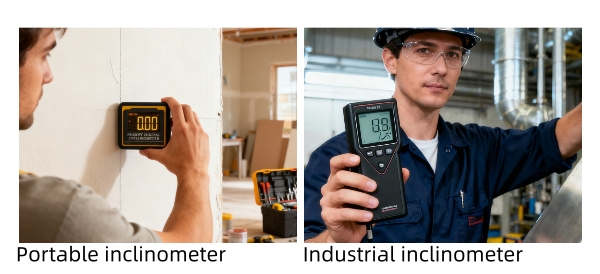
To ensure precise measurements and extend your digital inclinometer's lifespan, keep these practical field tips in mind:
- Position Correctly: Place the digital inclinometer on a completely stable surface or snap its magnetic base securely onto the object. Ensure it sits flush and level before logging a reading to avoid cross-axis errors.
- Master ABS vs. REF: Use Absolute mode (ABS) to measure angles relative to true earth gravity (e.g., drainage slopes). Use Relative mode (REF/ZERO) to set a custom "virtual zero" for comparing angles (e.g., matching a saw blade to an unlevel table).
- Control Environmental Factors: Minimize external interferences during testing. High vibrations from nearby machinery, extreme humidity, or sudden temperature shifts can compromise sensor accuracy.
- Take Multiple Readings: For critical layouts, lift the digital inclinometer and take 2–3 separate measurements on the same spot, then calculate the average to eliminate manual placement errors.
- Calibrate & Zero Frequently: Always utilize the Zero Calibration function before starting a new project. Resetting the baseline eliminates cumulative offset errors caused by rough transit.
- Maintain the Device: Keep the housing and the V-groove magnetic base free from dust and metallic shards. Monitor battery life closely, as dropping voltage can lead to processing drift or screen dimming.
ATO Digital Inclinometer for Sale
Below is a comprehensive breakdown of the top ATO digital inclinometers available for sale, comparing their key technical specifications to help you find the perfect match for your application.
| Product | SKU | Specifications | Price |
 |
ATO-DMI-810 | Features: Single-axis, USB output Accuracy: 0.005°/0.001° Measurement range: ±15°/±30° Output signal: USB1.1/RS232/RS485 |
$849.20-972.27 |
 |
ATO-DMI-820 | Features: Dual-axis, USB output Accuracy: 0.005°/0.001° Measurement range: ±15°/±30° Output signal: USB1.1/RS232/RS485 |
$912.70-1,035.77 |
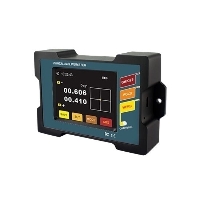 |
ATO-DMI-815 | Features: Single-axis, high accuracy Accuracy: 0.005°/0.001° Measurement range: ±15°/±30° Output signal: RS232/RS485 |
$849.20-891.42 |
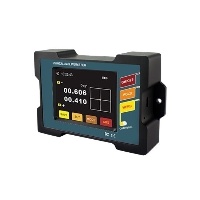 |
ATO-DMI-825 | Features: Dual-axis, high accuracy Accuracy: 0.005°/0.001° Measurement range: ±15°/±30° Output signal: RS232/RS485 |
$912.70-954.92 |
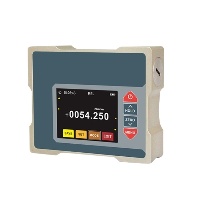 |
ATO-DMI-610 | Features: Magnetic, supports 1/2 axis Accuracy: 0.02°/0.005° Measurement range: ±90°/±30° |
$1,215.74 |
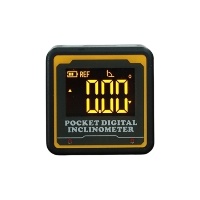 |
ATO-DMI-43 | Features: Mini, wireless Accuracy: ±0.2° Measurement range: 4×90° Output signal: Bluetooth |
$63.24 |
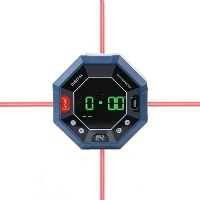 |
ATO-DMI-131 | Features: 4-sided laser, 9-sided magnetic Accuracy: ±0.2° Measurement range: 8×90° |
$69.61 |
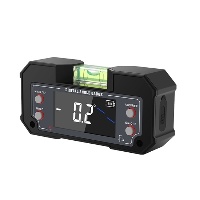 |
ATO-DMI-WD112 | Features: Single-axis/Dual-axis with level bubble Accuracy: ±0.2°/0.3° Measurement range: 360° |
$76.18 |
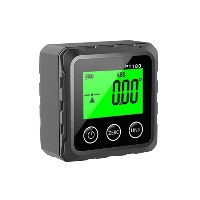 |
ATO-DMI-PT180 | Features: Magnetic, portable Accuracy: ±0.1°/0.2° Measurement range: 4x90° |
$82.83 |
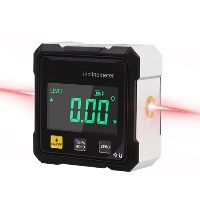 |
ATO-DMI-WD106 | Features: Dual Laser with magnetic Accuracy: ±0.2°-0.5° Measurement range: 4x90° |
$84.71 |
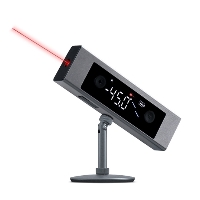 |
ATO-DMI-119 | Features: Laser inclinometer with stand Accuracy: ±0.2°/0.3° Measurement range: 4x90°(1 axis), ±40°(2 axis) |
$97.88 |
Why Choose ATO Digital Inclinometer?
When it comes to precise angle measurement, finding a digital inclinometer that balances accuracy, durability, and value can be a challenge—but ATO delivers on all fronts. Here is why our digital inclinometers stand out from the competition:
- Cost-Effective Quality & Versatile Selection: ATO digital inclinometers boast premium build quality at low prices, with a comprehensive range of models that cover an extensive spectrum of functional needs—from basic angle measurement to advanced data storage.
- Precision, Wide Range & Reliable Stability: Boast exceptional accuracy (down to ±0.01° for high-precision models), broad measurement ranges (up to 360° full-angle options), and long-term stability. For example, the ATO MEMS dual-axis digital inclinometer (±0.01° accuracy, ±90° range) and rugged industrial tilt sensor excel in harsh environments and critical applications.
- Flexible Output Options: ATO digital inclinometer supports diverse output modes, including RS485, Bluetooth, and USB, ensuring seamless integration with different control systems and adapting to varied data transmission requirements.
- Ideal for Home & Industrial Applications: Cater to both everyday needs—such as furniture alignment during home renovations—and professional industrial applications, including structural health monitoring, machinery calibration, and agricultural equipment tuning. Digital inclinometers can be selected from low to high price, and from mini portable to professional, according to the needs of different applications.
Frequently Asked Questions
Q1: What is the difference between a digital inclinometer and a digital protractor?
A: A digital inclinometer measures angles relative to a fixed gravitational benchmark (true level or plumb). A digital protractor, however, typically measures the relative angle between two joined, physical arms or surfaces, independent of Earth's gravity.
Q2: Why should I choose a dual-axis model over a single-axis digital inclinometer?
A: A single-axis model tracks tilt on one plane (pitch) at a time. A dual-axis model measures two perpendicular planes (pitch and roll) simultaneously. Choose a dual-axis unit if you need to level large platforms, heavy machinery, or medical equipment efficiently without moving the tool.
Q3: Can I use a digital inclinometer upside down?
A: Yes. Most modern digital inclinometers feature an auto-flipping or auto-rotating display. When you turn the device upside down to measure overhead rafters or ceilings, the screen text automatically flips 180% so it remains easily readable.
Q4: How often should I calibrate my digital inclinometer?
A: You should calibrate your digital inclinometer when you first unbox it, after a hard drop, if it has experienced a sudden, major temperature shift, or if you notice inconsistent readings on an identical surface. For daily professional use, a quick weekly calibration check is recommended.
