
Air Quality Sensor Buying Guide
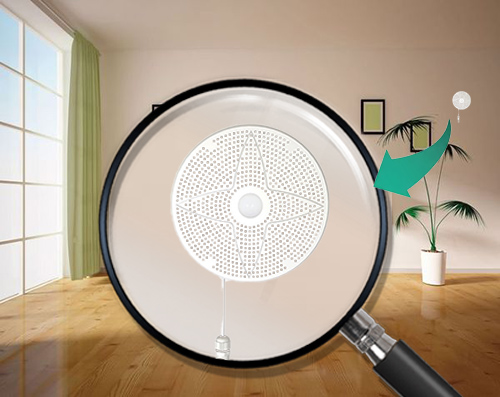
Selecting the right air quality sensor requires matching measurement technologies (NDIR, Laser Scattering) with stability and industrial protocols (RS485). This guide simplifies the selection of CO2, PM2.5, and VOC sensors, compares industrial vs. consumer grades, and showcases ATO’s high-precision solutions for seamless project integration.
Contents
- How air quality sensors work (CO2, PM2.5, VOC)
- How to choose the right air quality sensor
- Key differences between industrial-grade and consumer sensors
- Best Air Quality Sensors for Sale
How air quality sensors work (CO2, PM2.5, VOC)
In the era of Industry 4.0, air quality sensors act as the "eyes" of environmental control systems:
- Compliance: Meets LEED/WELL building standards (e.g., maintaining CO2 below 1000ppm).
- Energy Efficiency: Linking air quality sensors to HVAC systems can reduce energy costs by up to 30%.
- Safety & Health: Real-time tracking of PM2.5 and TVOC prevents long-term health risks.
How to choose the right Air quality sensor
Selecting the right air quality sensor for your system requires considering several factors to ensure reliable performance and long-term accuracy.
Sensor Types and Technologies
| Parameter | Technology | Key Benefit |
| Carbon Dioxide | Non-Dispersive Infrared with Automatic Baseline Calibration | Industry standard; enhanced accuracy |
| Particulate Matter (PM2.5 / PM10) | Laser scattering | High precision, fast response (<1 second) |
| Formaldehyde & TVOC | Advanced interference-filtering algorithms | Stable readings even with alcohol or cleaning agents |
Key Factors for Reliability and Accuracy
- Data Compensation: Built-in temperature and humidity compensation algorithms in air quality sensors improve accuracy.
- Calibration Report: Supplier should provide factory calibration reports for air quality sensors using standard reference gases.
- Consistency: Air quality sensors ensure minimal reading variance across different deployments.
- Durability: Air quality sensors feature industrial-grade, anti-corrosion housing for harsh environments.
Communication Protocols
| Protocol | Best For | Notes |
| RS485 (Modbus RTU) | PLC / BMS systems | Supports long distance (up to 1200 m) |
| Analog signals (4-20 mA) | Legacy HVAC controllers | Simple, reliable connection |
Pro Tip: Keep air quality sensor signal lines away from high-power equipment (potential transformers) to avoid electromagnetic interference (EMI).
Key differences between industrial-grade and consumer sensors
| Metric | Consumer Grade | ATO Industrial Grade |
| Data Drift | >15% per year | <3% per year (maintenance-free) |
| Durability | Indoor use only | IP65 rated; operates from -40°C to 85°C |
| Protocols | Wi-Fi/Bluetooth only | RS485 (Modbus), I2C, UART |
Key Takeaway: Industrial-grade sensors provide superior durability and accuracy, along with better communication protocols like RS485 (Modbus), ideal for PLC/BMS systems. They are built to operate in a broader range of environments.
Best Air Quality Sensors for Sale
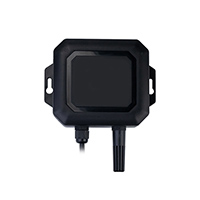
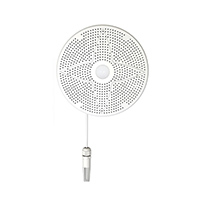
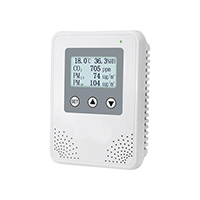
When buying an air quality sensor, factors such as power consumption, response time, and sensor life may also need to be considered. Relevant data can be found at ATO automation.
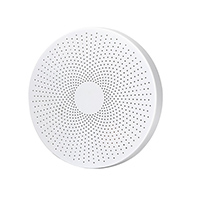
| Product | SKU | Feature | Price |
|
Air Particle Sensor |
ATO-AQS-FST100 |
|
$249.55 |
|
Air Quality Monitor Sensor |
ATO-AQS-SMG111 |
|
$276.34 (WIFI: +$40.00) |
|
Digital Air Quality Sensor |
ATO-AQS-LFG303 |
|
$320.89 |
|
Indoor Air Quality Sensor |
ATO-AQS-HAQS |
|
$317.56-$471.56 |
|
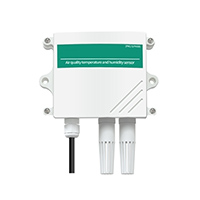
Industrial Air Quality Sensor |
ATO-AQS-IAQS |
|
$129.98 |
|
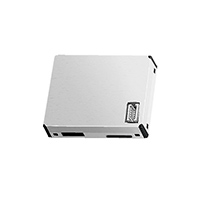
Laser PM2.5 Air Quality Sensor |
ATO-AQS-PM16 |
|
$95.78 |
Final Tips for Choosing the Right Air Quality Sensor
Choosing a sensor is about long-term reliability. Define your application environment, confirm your communication protocols, and verify your accuracy requirements.
Need Help Choosing an Air Quality Sensor? Talk to Our Experts
The engineering team at the ATO Store provides customized selection guidance and technical support to ensure your project’s success.
