
Fiber Optic Sensor Buying Guide
A fiber optic sensor uses optical fibers to detect objects, position, pressure, or changes in the environment by transmitting light signals. It is widely used in industrial automation where high precision and stable sensing are required. Here is a professional fiber optic sensor selection guide from ATO Online Shop to assist you in choosing the right model.
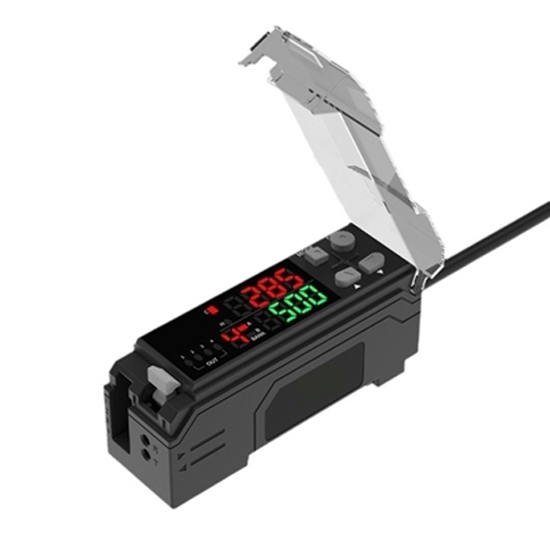
Fiber Optic Sensor vs Photoelectric Sensor
| Feature | Fiber Optic Sensor | Photoelectric Sensor |
| Detection Accuracy | Detects objects smaller than 0.1 mm | Typically detects objects larger than 1 mm |
| EMI Resistance | Excellent, suitable for >1000 V/m EMI environments | Moderate EMI resistance |
| Installation Space | Compact sensing head, flexible cable installation | Larger integrated sensor body |
| Operating Temperature | Up to 250°C in special environments | Typically 0°C to 70°C |
| Detection Distance | Short to medium range | Medium to long range |
| Cost | Higher initial cost | Lower cost |
Quick Selection tips:
Choose a fiber optic sensor for high precision, limited installation space, or harsh industrial environments.
Choose a photoelectric sensor for general automation and cost-sensitive applications.
Types of Fiber Optic Sensors
Through-beam sensors: through-beam sensors are ideal for high-precision detection, small object sensing, and high-speed counting, offering long sensing distances up to 1,000 mm.
Reflective sensors: reflective sensors are suitable for compact installations and general object detection, with medium ranges (10–500 mm).
Diffuse reflective sensors: diffuse reflective sensors work best in short-range applications where space is limited, typically 5–100 mm.
Heat-resistant fiber optic sensors: heat-resistant fiber optic sensors are designed for high-temperature environments such as welding, metal processing, and furnaces, providing reliable detection under extreme conditions.
Choosing the right type ensures optimal performance, durability, and integration in industrial systems.
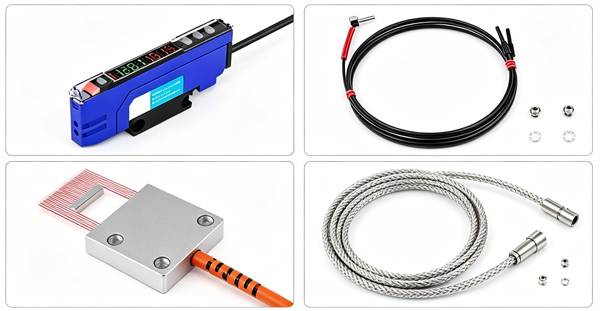
How to Choose a Fiber Optic Sensor
Consider Detection Distance
Different applications require different sensing distances.
| Use Case | Recommended Sensing Distance |
| Precision electronics | 0–10 mm |
| Packaging systems | 10–100 mm |
| Conveyor automation | 100–800 mm |
Shorter sensing distances usually provide higher accuracy and faster response times.
Evaluate Detection Accuracy
High-precision applications require smaller detectable object sizes.
| Precision Level | Typical Detectable Object Size |
| Standard industrial sensing | ≥1 mm |
| Precision positioning | 0.1–0.5 mm |
| Semiconductor applications | <0.1 mm |
For robotics and electronics assembly, high-resolution fiber optic sensors are recommended.
Check Environmental Conditions
- High Temperature: Choose heat-resistant fiber optic sensors for environments up to 350°C.
- Dust and Oil Contamination: Use sealed fiber heads with IP67–IP68 protection for long-term stability in dusty or oily conditions.
- Strong Electromagnetic Interference (EMI): Fiber optic sensors remain stable even in high EMI environments (>1000 V/m) because the sensing head contains no electrical components.
- Limited Installation Space: Micro fiber heads (0.25–1 mm) are ideal for tight or hard-to-reach areas.
- Vibration and Shock: Reinforced fiber cables and secure mounting brackets ensure reliable operation in high-vibration conditions (up to 20 g).
In welding factories or motor-driven production lines, fiber optic sensors maintain stable performance where standard photoelectric sensors may fail.
Evaluate Response Speed
High-speed automation systems require fast sensor response.
| Use Case | Recommended Response Time |
| Conveyor systems | ≤1 ms |
| Precision robotics | ≤0.5 ms |
| Semiconductor inspection | ≤0.1 ms |
Faster response improves positioning accuracy and production efficiency.
Select the Right Output Type
Choosing the correct output type ensures compatibility with your control system and maximizes sensor performance. Common fiber optic sensor output options include:
- NPN / PNP Switching Output: Ideal for simple on/off detection in PLCs and basic industrial automation. Provides fast switching for object presence or position detection.
- Analog Output (Voltage / Current): Suitable for monitoring variable signals like pressure, temperature, or distance. Common ranges include 0–10V or 4–20mA, allowing integration with most controllers and data acquisition systems.
- Digital Communication Output (I²C, SPI, Modbus, RS485): Best for smart systems or IoT applications. Offers high noise immunity, precise calibration, and long-distance signal transmission.
Common Applications of Fiber Optic Sensors
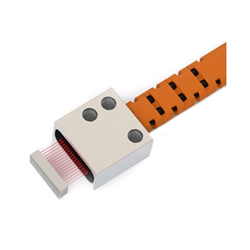
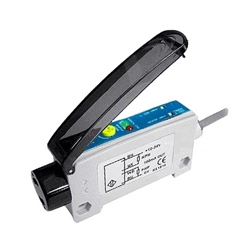
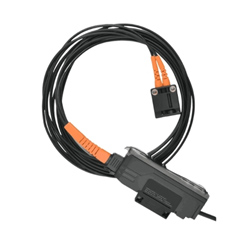
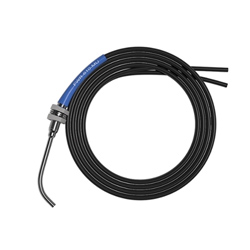
| Application | Industry Example | Recommended Fiber Optic Sensors |
| Object Positioning | Robotics, Assembly Lines |
|
| Transparent Object Detection | Packaging, Bottling |
|
| Edge Detection | Printing, Cutting |
|
| Presence Sensing | Electronics, Small Parts |
|
| Precision Counting | Pharmaceutical, Fast-moving Assembly |
|
| Automated Assembly Systems | General Industrial Automation |
|
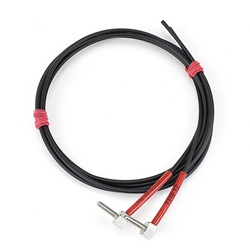
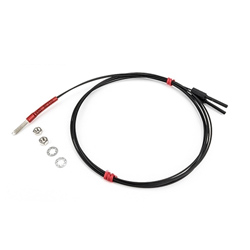
Frequently Asked Questions
Q: What is a fiber optic sensor?
A: A fiber optic sensor is an industrial device that detects changes such as object presence, position, temperature, or vibration by measuring variations in light transmitted through an optical fiber.
Q: Can fiber optic sensors detect transparent objects?
A: Yes. They are highly effective for detecting transparent materials such as glass, plastic films, and bottles.
Q: What is the sensing distance of fiber optic sensors?
A: Depending on the type, sensing distance typically ranges from 5 mm to 1,000 mm or more with amplifiers.
Q: Can fiber optic sensors work in high-temperature environments?
A: Yes. Heat-resistant fiber optic sensors can operate in temperatures from -55°C to 350°C, making them suitable for metal processing, furnaces, or high-heat manufacturing lines.
Conclusion
Fiber optic sensors are ideal for industrial applications requiring high precision, fast response, and reliable operation in harsh environments. Compared with traditional photoelectric sensors, they offer better EMI resistance, compact installation, and superior detection performance for modern automation systems. Before selecting a fiber optic sensor, evaluate your application requirements carefully.
