
How to Fix Step Loss in a Stepper Motor?
Stepper motor step loss is a common problem in motion control systems, especially in CNC machines, robotics, and automation equipment. Lost steps can cause positioning errors, vibration, reduced accuracy, and unexpected production failures. To solve stepper motor losing steps, it is necessary to optimize the entire drive system. This article explains the most effective methods to reduce or eliminate step loss and improve stepper motor reliability.
- What Is Step Loss?
- What Causes Lost Steps?
- How to Fix Step Loss?
- How to Prevent Stepper Motor Step Loss?
- Conclusion
I. What Is Step Loss?
A stepper motor moves by receiving pulse signals from a controller. Each pulse commands the motor to rotate at a specific step angle. Under normal conditions, the rotor follows these commands accurately. Step loss occurs when the motor fails to complete the commanded number of steps. The rotor cannot keep up with the control pulses, causing the actual position to differ from the expected position. For example, if a motor should rotate 1° after receiving a pulse but only rotates 0.8°, the accumulated difference will eventually create positioning errors.
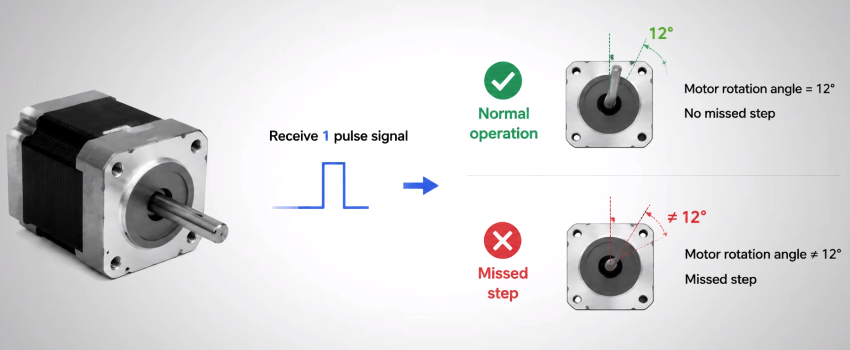
Step loss can lead to:
- Reduced positioning accuracy
- Increased vibration and noise
- CNC machining errors
- Robot arm misalignment
- 3D printing defects
- Unexpected system downtime
II. What Causes Lost Steps?
A stepper motor loses steps when the rotor cannot follow the commanded pulse signals from the controller. This usually happens when the motor does not have enough torque, the control system is improperly configured, or external factors affect normal operation. The most common causes of stepper motor step loss include:
1. Excessive Load
When the mechanical load exceeds the motor’s rated torque capacity, the stepper motor cannot generate enough force to maintain synchronization with the control pulses. As a result, the rotor falls behind the commanded position, causing missed steps and positioning errors.
2. Unstable Power Supply
A stable power supply is essential for reliable stepper motor operation. Voltage fluctuations or unstable power input can affect stepper motor driver performance, interrupt pulse transmission, and reduce motor output torque, increasing the risk of step loss.
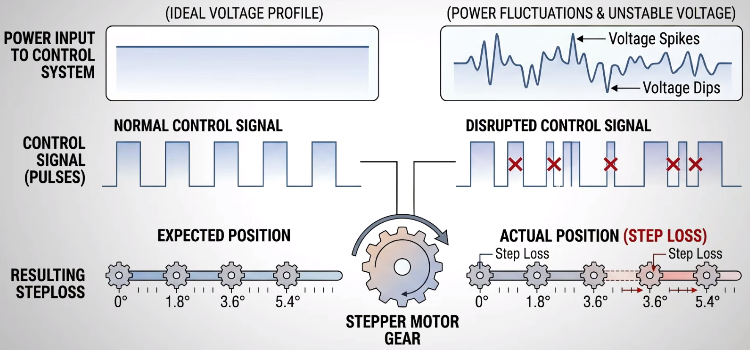
3. Insufficient Drive Voltage
Drive voltage directly affects the motor's high-speed performance. When the supplied voltage is lower than the required level, the motor may not generate sufficient torque, especially during high-speed operation or rapid acceleration, causing the rotor to lose synchronization.
4. Insufficient Current Supply
The motor requires adequate current to produce the necessary electromagnetic force. If the driver current setting is too low, the motor may fail to start properly, accelerate smoothly, or maintain sufficient torque during operation, resulting in step loss.
5. Excessive Speed or Acceleration
A stepper motor needs sufficient time to respond to control pulses during acceleration. If the initial speed or acceleration setting is too high, the rotor cannot follow the pulse frequency accurately and may lose synchronization with the controller.
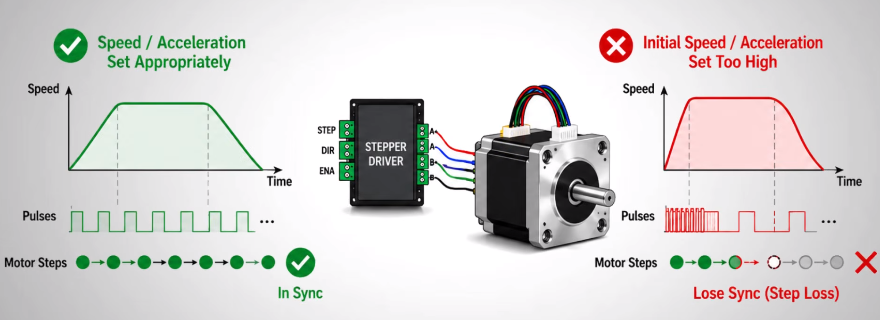
6. Signal Interference
Stepper motors rely on accurate pulse signals for precise movement. Any interference affecting signal quality can cause incorrect pulse recognition and lead to step loss. Common sources of interference include:
- Unshielded cables
- Electrical noise from nearby high-power equipment
- Improper wiring or grounding
7. Incorrect Controller Settings
Improper controller configuration can directly affect motor movement accuracy. Incorrect parameters, such as:
- Step angle
- Pulse frequency
- Microstepping settings
May cause the motor to receive incorrect motion commands and result in missed steps.
8. Programming Errors
Software and control logic problems can also cause step loss, especially in systems using PLCs, timing belts, or complex motion sequences. Common issues include:
- Incorrect execution order
- Improper pulse timing
- Incorrect compensation routines
These errors may cause the motor position to deviate from the expected path.
9. Mechanical Problems
Mechanical issues can increase resistance and prevent the motor from moving smoothly. Possible causes include:
- Damaged or aged motor windings
- Worn couplings or gears
- Blocked lead screws
- Excessive friction or misalignment
III. How to Fix Step Loss?
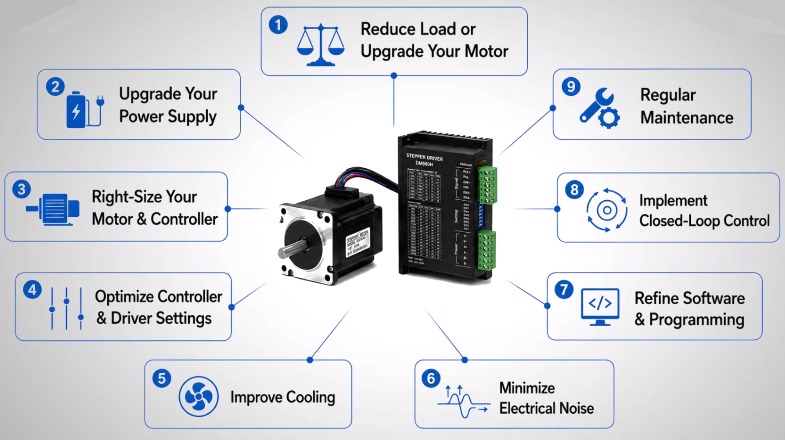
Fixing stepper motor step loss requires a systematic approach. The following methods can help reduce or eliminate step loss and improve stepper motor performance.
1. Reduce Load or Upgrade the Stepper Motor
When the load exceeds the motor’s rated torque capacity, the stepper motor cannot maintain synchronization with the control pulses. Reducing the load or increasing the available torque is the first step to solving this problem.
Recommended solutions:
- Ensure the load does not exceed the motor’s rated capacity.
- Reduce the mechanical load if possible or use a gearbox to lower the required torque.
- Upgrade to a higher-torque or higher-performance stepper motor when the load cannot be reduced.
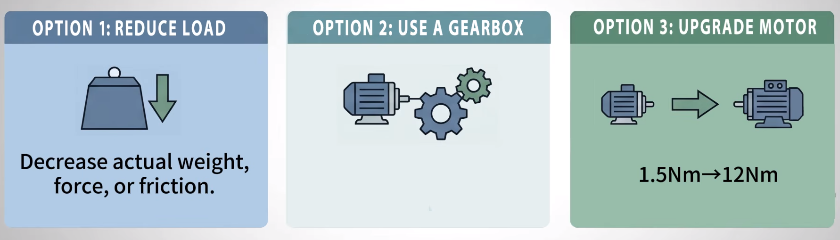
A properly sized motor should provide sufficient torque margin to handle both normal operation and sudden load changes.
2. Improve Power Supply Stability
A stable power supply is essential for maintaining consistent motor torque and reliable operation. Insufficient voltage or current can prevent the motor from generating enough torque, especially during startup and high-speed operation.
Recommended solutions:
- Ensure the power supply provides the required voltage and current.
- Use a stable and clean power source.
- Increase voltage or current only within the motor and driver specifications.
- Use regulated power supplies, filters, voltage stabilizers, or UPS systems when necessary.
When increasing power output, always use a suitable current-limiting driver to prevent overheating and protect the motor from excessive current.
3. Select the Right Motor and Controller
Proper motor and driver matching plays an important role in preventing step loss. An incorrectly sized motor or unsuitable controller may cause insufficient torque, vibration, or unstable operation.
Recommended solutions:
- Select a stepper motor according to required speed and torque.
- Ensure sufficient holding torque for the application.
- Choose a high-quality driver with stable current control.
- Use anti-resonance features or damping solutions when vibration occurs.
A well-matched motor and controller system can improve motion stability and reduce the risk of lost steps.
4. Optimize Controller and Driver Settings
Incorrect driver parameters are one of the most common causes of stepper motor step loss. Proper configuration allows the motor to respond accurately to control commands.
Optimize Current Settings
The driver current determines the torque output of the motor. If the current setting is too low, the motor may not generate enough torque and can lose steps during operation.
Recommended adjustments:
- Set the driver current at or slightly above the motor’s rated peak current.
Optimize Speed Settings
Excessive acceleration or sudden speed changes may cause the rotor to lose synchronization.
Recommended adjustments:
- Reduce initial speed when necessary.
- Increase acceleration and deceleration time.
- Use smooth acceleration and deceleration curves. Use EDA tools to design optimal speed profiles.
A gradual speed transition allows the motor to respond properly and maintain accurate positioning.
Optimize Microstepping Settings
Microstepping improves motion smoothness by dividing each full step into smaller steps.
Benefits include:
- Reduced vibration.
- Improved positioning resolution.
- Smoother operation at higher speeds.
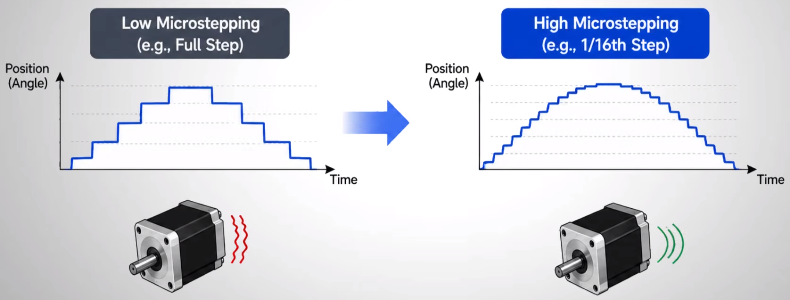
However, higher microstepping settings require higher pulse frequency from the controller. Make sure the controller and driver can support the selected resolution.
5. Improve Cooling Performance
Heat buildup can reduce motor efficiency and affect long-term reliability. Stepper motors operating at higher voltage or continuous load conditions may generate significant heat.
Recommended solutions:
- Improve ventilation around the motor and driver.
- Install cooling fans when necessary.
- Prevent continuous operation under excessive load.
- Monitor motor temperature during operation.
Maintaining proper temperature helps keep torque output stable and prevents performance degradation.
6. Minimize Electrical Noise
Stepper motors rely on accurate pulse signals from the controller. Electrical interference can distort these signals and cause incorrect motor movement.
Recommended solutions:
- Check signal wiring and connection quality.
- Keep motor cables away from signal and high-voltage cables.
- Use shielded cables to reduce interference.
- Apply ferrite cores and proper grounding methods.
- Add filters or opto-isolated drivers when required.
Improving signal integrity ensures reliable communication between the controller, driver, and motor.
7. Optimize Software and Control Programming
Programming errors or incorrect controller logic can also cause step loss, especially in systems controlled by PLCs or motion controllers.
Recommended solutions:
- Verify PLC programs and execution sequences.
- Check step angle, pulse timing, and compensation parameters.
- Debug motion control programs carefully.
- Add delays, error compensation, or fault detection routines when necessary.
Correct software configuration ensures that the motor receives accurate and consistent motion commands.
8. Implement Closed-Loop Stepper Motor Control
Traditional stepper motors usually operate in an open-loop system without real-time position feedback. When step loss occurs, the controller cannot detect or correct the position error. A closed-loop stepper motor solves this problem by using an encoder to monitor actual motor position.
Advantages of closed-loop control:
- Real-time position monitoring.
- Automatic error correction.
- Reduced risk of step loss.
- Improved positioning accuracy.
- Better stability in demanding applications.
With encoder feedback, the system can detect position deviations and automatically compensate for errors, making closed-loop stepper motors an effective solution for applications requiring high precision and reliability.
9. Perform Regular Maintenance
Regular maintenance helps prevent step loss caused by mechanical wear or component failure.
Recommended maintenance steps:
- Inspect motor windings and mechanical components regularly.
- Check couplings, gears, and lead screws for wear or damage.
- Lubricate moving parts and guide rails.
- Remove mechanical blockages and excessive friction.
- Ensure proper alignment of the transmission system.
A well-maintained mechanical system reduces unnecessary resistance and helps the stepper motor operate smoothly.
IV. How to Prevent Stepper Motor Step Loss?
Preventive maintenance can significantly reduce the possibility of step loss.
- Check motor torque requirements before selection.
- Regularly inspect mechanical components.
- Keep transmission parts properly lubricated.
- Check cable connections and grounding.
- Maintain suitable operating temperature.
- Review control parameters after system changes.
A well-designed system with proper maintenance can greatly improve stepper motor reliability.
V. Conclusion
Stepper motor losing steps is a common challenge in motion control systems, but it can be prevented by optimizing motor selection, power supply, driver settings, and mechanical conditions. A systematic troubleshooting approach helps improve positioning accuracy, operational stability, and overall service life.
To learn more about step loss causes and solutions, watch the detailed video below. For reliable motion control applications, explore ATO online store to find a suitable product for your system.
