
Inductive Proximity Sensors vs. Capacitive Proximity Sensors
Inductive and capacitive proximity sensors are two widely used non-contact detection devices in industrial automation systems. Although they look similar, they work based on completely different sensing principles and are designed for different detection requirements. Understanding the differences between these two proximity sensors helps you select the right sensor for specific industrial applications. If you've ever found yourself wondering which one to choose for your application, this article will clear up the confusion.
- What Is a Proximity Sensor?
- Working Principle
- Key Differences
- Quick Way to Identify Inductive and Capacitive Sensors
- How to Choose
- Conclusion
I. What Is a Proximity Sensor?
A proximity sensor is a device that detects the presence or absence of an object without physical contact. It then sends an electrical signal to a control system, triggering an action. Widely deployed in industrial environments, these sensors handle positioning, counting, quality inspection and safety protection tasks, with inductive and capacitive types being the two most prevalent options.
II. Working Principle
Although both inductive and capacitive proximity sensors are used for non-contact detection, their sensing methods are completely different.
1. Inductive Proximity Sensor
An inductive proximity sensor works based on electromagnetic induction. Inside the sensor, a coil and oscillator generate a high-frequency electromagnetic field. When a metallic object enters the sensing area, the electromagnetic field creates eddy currents on the metal surface. These eddy currents change the oscillator amplitude, causing the sensor output to switch. It featuring fast response, long contact-free lifespan and strong resistance to harsh industrial conditions, and is widely used in CNC machines, auto production lines and metal position detection.
2. Capacitive Proximity Sensor
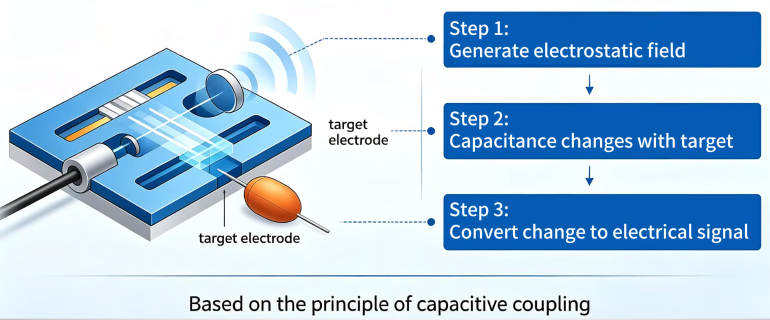
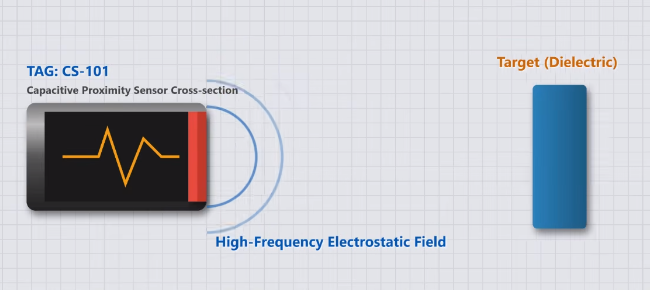
A capacitive proximity sensor operates based on changes in capacitance. The sensor creates an electrostatic field through an internal capacitor plate. When an object enters the sensing area, it changes the capacitance between the target and the sensor. Once the capacitance reaches a preset threshold, the sensor output changes. It detects metals, non-metals, liquids and powders with adjustable sensitivity, long sensing distance and through-container detection, widely used for liquid level monitoring, plastic and glass inspection as well as food and pharmaceutical packaging machinery.
III. Key Differences
Understanding the working principles is the first step. Next, let's take a look at how they differ so you can make a better choice.
| Sensor Type | Inductive Proximity Sensor | Capacitive Proximity Sensor |
| Working Principle | Electromagnetic induction | Capacitance variation |
| Detection Target | Metal objects only | Metal and non-metal objects |
| Detection Materials | Steel, iron, aluminum, copper, etc. | Plastic, glass, wood, liquid, powder, metal |
| Detection Range | Usually shorter, up to around 60 mm depending on model | Generally longer, sometimes up to 80 mm |
| Environmental Resistance | Excellent resistance to dust, moisture, vibration | More affected by humidity and material changes |
| Sensitivity Adjustment | Usually fixed | Adjustable sensitivity available |
| Cost | More economical | Usually higher cost |
1. Target Material
Inductive Proximity Sensor
- Designed for metal detection: Inductive prox sensors are primarily used to detect metallic objects, especially ferrous metals, including iron, steel, aluminum, and other conductive materials.
- High detection stability: Since they are not affected by non-metallic materials, they provide reliable and accurate detection in industrial automation applications.
- Ideal for metal-related applications: They are commonly used for position detection, machine control, and metal part inspection in manufacturing systems.
Capacitive Proximity Sensor
- Detects various materials: Capacitive prox sensor can detect not only metal objects but also non-metallic materials such as plastics, glass, wood, liquids, powders, and granules.
- Flexible material detection: Their ability to sense different materials makes them suitable for applications requiring wider detection capability.
- Ideal for diverse applications: They are widely used in liquid level detection, packaging equipment, food processing, and material monitoring systems.
2. Detection Range
Detection distance is another important factor when selecting a proximity sensor. Both inductive proximity sensors and capacitive proximity sensors have different advantages in practical applications.
Inductive Proximity Sensor
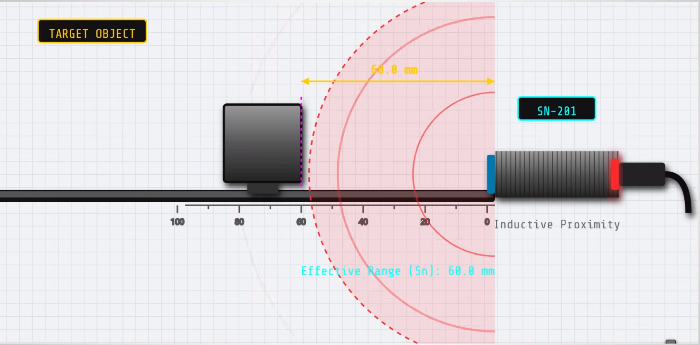
- Shorter sensing distance: Inductive prox sensors typically provide a detection range from a few millimeters up to around 60 mm, depending on the sensor size and target material.
- Stable detection performance: The sensing distance is mainly affected by the metal type, with ferrous metals usually providing better detection performance.
- Suitable for precise positioning: Their consistent detection characteristics make them ideal for industrial positioning and automation control.
Capacitive Proximity Sensor
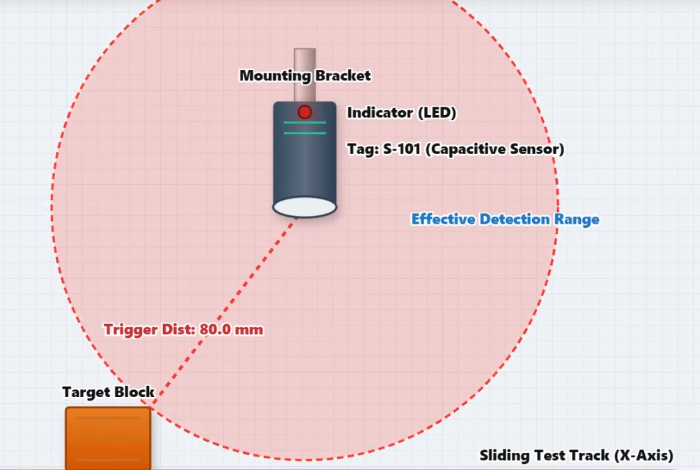
- Longer detection range: Capacitive prox sensors can generally achieve a longer sensing distance, with some models reaching up to approximately 80 mm. The actual detection range is influenced by factors such as dielectric constant, humidity, and material density.
- Adjustable sensitivity: Many capacitive prox sensors include sensitivity adjustment, allowing more accurate detection for different materials and applications.
3. Environmental Performance
Environmental conditions can significantly affect sensor performance. Selecting a suitable proximity sensor requires considering factors such as dust, moisture, temperature, and vibration.
Inductive Proximity Sensor
- Excellent environmental resistance: Inductive prox sensors perform reliably in harsh industrial environments with dust, oil, moisture, and vibration. They are commonly used in CNC machines, automotive production lines, and heavy manufacturing equipment.
- Stable long-term operation: Their metal-only detection principle reduces interference from surrounding materials.
Capacitive Proximity Sensor
- More sensitive to environmental changes: Capacitive proximity sensors may be affected by humidity, material properties, and nearby objects. Sensitivity settings may need to be adjusted to maintain stable detection performance.
- Suitable for flexible detection tasks: They are preferred for applications involving liquids, powders, and non-metallic materials.
IV. Quick Way to Identify Inductive and Capacitive Sensors
If the sensor type is unclear, a simple test can help. Place a finger near the sensor:
- A capacitive proximity sensor can usually detect a finger because the human body changes capacitance.
- An inductive proximity sensor will not respond because a finger is not a metal target.
V. How to Choose
To make the right decision, you need to consider the following factors:
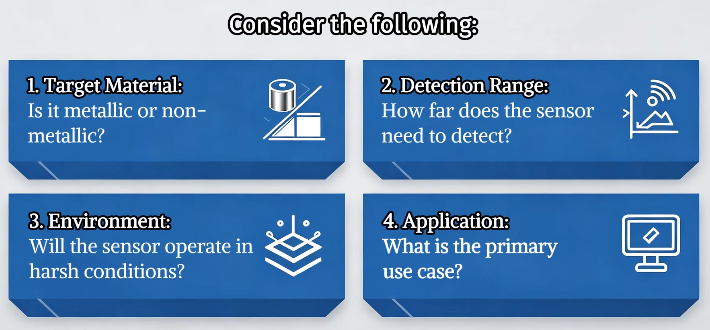
1. Material
- Detecting metal objects, such as iron, steel, aluminum, and other conductive materials→Inductive proximity sensor
- Detecting both metallic and non-metallic materials, including plastics, glass, liquids, powders, and granules→Capacitive proximity sensor
2. Detection Distance
- Precise short-range detection→Inductive proximity sensor
- A wider detection range→Capacitive proximity sensor
3. Environmental Conditions
- Dusty, wet, or vibrating → Inductive is safer
- Clean, controlled environment → Capacitive is viable
4. Applications
- Metal detection, machine positioning, CNC equipment, and industrial automation→Inductive proximity sensor
- Liquid level detection, material monitoring, packaging systems, and non-metal object detection→Capacitive proximity sensor
VI. Conclusion
Both inductive proximity sensors and capacitive proximity sensors play important roles in industrial automation. Inductive sensors provide reliable metal detection with excellent environmental resistance, while capacitive sensors offer greater flexibility for detecting different materials. Understanding the differences between inductive and capacitive proximity sensors can help improve detection accuracy, system reliability, and overall equipment performance.
For a more detailed explanation of the differences between inductive and capacitive proximity sensors, please watch the video below. If you are looking for reliable proximity sensors for industrial applications, welcome to explore and purchase proximity sensors from ATO online store.
