
What are the Different Types of Level Sensors?
Accurate measurement of liquid and bulk material levels is essential across a wide range of industries, including chemical processing, wastewater treatment, food production, oil and gas, and power generation. Maintaining proper level control helps prevent overflow, dry running, material waste, and potential safety hazards. It also plays a key role in ensuring product quality, optimizing resource usage, and maintaining stable, continuous operation within industrial systems.
Selecting the appropriate level sensor is therefore critical for achieving safe, efficient, and reliable process control. Different applications require different measurement technologies depending on factors such as medium properties, installation conditions, accuracy requirements, and environmental challenges. In this article, we introduce the main types of level sensors, covering both contact and non-contact measurement principles, to help readers better understand their working characteristics and typical applications.
- Contact Mode Level Sensor
- Non-Contact Mode Level Sensor
- Contact & Non-Contact Level Sensor
- Conclusion
I. Contact Mode Level Sensor
Contact mode level sensors measure liquid levels by coming into direct contact with the substance. These sensors detect changes through physical interaction, such as pressure, conductivity, or the movement of a float, and convert them into electrical signals or switch outputs. They are widely used in applications where direct measurement is feasible and provide reliable, accurate monitoring across a variety of industrial processes.
Submersible Level Sensor
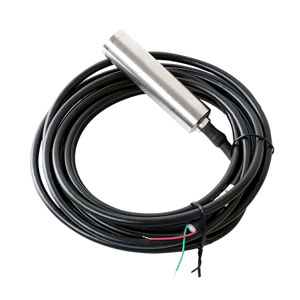 A submersible level sensor is designed to be installed directly in the liquid being measured. Operating fully submerged in the medium, it determines the liquid level by detecting pressure changes created by the height of the liquid column above it. High-performance isolated diffused silicon sensing elements or ceramic capacitive pressure components are typically incorporated to convert the liquid’s static pressure into a standard electrical output signal, such as 4–20 mA or 1–5 VDC, enabling precise and continuous transmission to monitoring or control systems.
Suitable for measuring liquid depths ranging from a few meters to several tens of meters, submersible level transmitter maintain stable and reliable performance even in water or other liquids containing impurities. Thanks to their robust construction and strong environmental adaptability, they are widely used in industries such as petrochemical processing, metallurgy, pharmaceuticals, water supply and drainage, and environmental protection, where accurate and dependable liquid level monitoring is critical.
Electrode Level Sensor
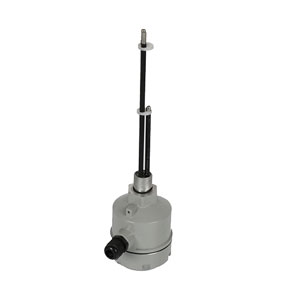
An electrode level sensor determines material level by measuring resistance or conductivity. It works by applying a voltage across two or more electrodes installed in the tank or container. By monitoring changes in conductivity between the electrodes, the sensor can identify whether the medium has reached a specific level. When the liquid or material rises and covers the electrodes, it completes an electrical circuit between them. This change is detected and converted into a switch signal through an internal conversion circuit, allowing the system to trigger alarms, pumps, or other control actions.
With no moving parts, electrode level sensors are structurally simple and reliable. They are cost-effective, easy to install, and straightforward to operate, making them a popular choice for basic level detection tasks. Some limitations exist. They require direct contact with the medium, can only detect conductive liquids, and the electrodes may corrode over time, which could affect long-term performance and require maintenance or replacement.
Tuning Fork Level Sensor
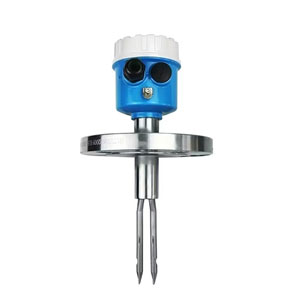
Tuning fork level sensors operate based on the vibration principle of fork-shaped elements. The fork vibrates at a specific frequency when it is not in contact with the medium. Once the substance—typically a liquid—reaches the fork, both the vibration frequency and amplitude change. As the liquid level rises or falls, these changes are detected by the sensor’s internal circuitry. The signal is then processed and converted into a switching output, which can be used to activate alarms, pumps, or other control systems.
One of the main advantages of tuning fork level sensors is their simple installation and low maintenance requirements. They offer reliable and stable performance under a wide range of operating conditions. Since they are contact-based devices, the sensing element must be inserted directly into the medium, making them an intrusive measurement solution. Tuning fork level sensors are widely used in industries such as petroleum and chemical processing, where dependable level detection is critical for safe and efficient operation.
Float Level Sensor
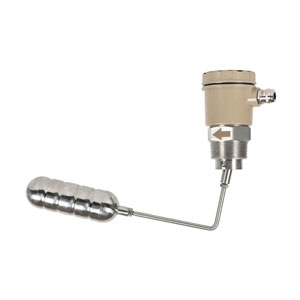
The final contact-type level sensor to be introduced is the float level sensor. It is typically composed of three main parts: a float, a connecting rod, and a sensor body. The sensor operates based on the movement of the float, which rises and falls with changes in the liquid level. As the float moves, it actuates an internal switch or sensing mechanism to indicate the current level. The resulting signal can be used for level indication, alarm activation, or basic control functions.
Float level sensors offer several notable advantages. They feature a simple structure, do not require an external power supply for basic operation, and provide direct liquid level indication. They are also cost-effective and generally reliable in suitable applications. The float must remain in direct contact with the medium, which makes the installation intrusive. In addition, the presence of moving parts introduces the possibility of mechanical wear or contact failure over time. Compared with some other level sensing technologies, float level sensors are relatively large, which may limit their use in compact installations.
II. Non-Contact Mode Level Sensor
Non-contact level sensors measure the level of liquids or solids without physically touching the substance. Using technologies such as light, ultrasonic, radar, or electromagnetic waves, these sensors provide accurate and reliable readings while minimizing contamination, wear, or maintenance issues. They are ideal for applications where hygiene, safety, or harsh operating conditions make direct contact measurement impractical.
Optical Level Sensor
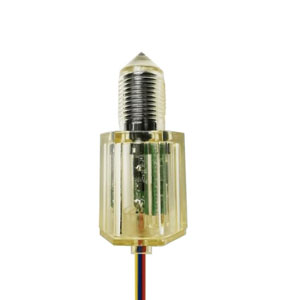
An optical level sensor uses a light beam to detect the presence or absence of a substance at a specific point inside a container. When the liquid reaches the sensing position, the light signal changes, allowing the sensor to determine whether the target level has been reached. Optical level sensors are available in both integrated and separate designs, offering flexibility for different installation requirements. They are compact in size and provide fast response times.
These sensors contain no moving parts and are not affected by high pressure or temperature conditions. Their non-intrusive design makes them well suited for clean and clear liquids. They are widely used in industries such as beverage production, pharmaceuticals, and semiconductor manufacturing. Over time, the sensor lens may accumulate dirt and requires regular cleaning to maintain accurate performance.
Ultrasonic Level Sensor
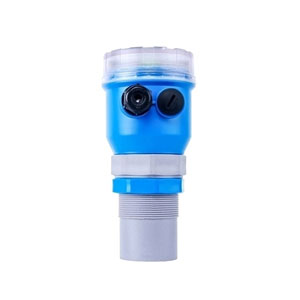
An ultrasonic level sensor measures liquid or material levels by emitting ultrasonic waves toward the surface of the medium. The waves reflect back after striking the surface, and the sensor calculates the distance based on the time it takes for the echo to return. This time-of-flight principle allows the system to determine the level accurately without direct contact. Ultrasonic sensors have no moving parts and feature a compact structural design.
They provide non-contact measurement and are suitable for a wide range of materials. With a large measuring range and high accuracy, they are capable of handling various industrial applications. The vibration generated by ultrasonic waves also helps keep the sensing surface clean. These sensors are relatively high in cost and may be influenced by environmental conditions such as dust. With these characteristics, ultrasonic level sensors are widely used in wastewater treatment, chemical processing, and tanks with agitated surfaces.
Radar Level Sensor
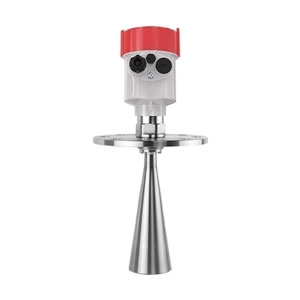
Radar level sensors determine material levels by using radar waves. They emit microwave signals toward the surface of the monitored medium, and when these signals reach the surface, part of the energy is reflected back to the sensor. By measuring the time it takes for the signal to travel to the surface and return, the sensor calculates the distance between itself and the material surface, thereby determining the level.
Valued for their high accuracy and reliable performance in demanding environments, radar level sensors are less influenced by factors such as temperature, pressure, dust, and vapors that may affect other sensing technologies. As non-contact devices, they do not need to touch the measured medium, making them suitable for both liquids and solids. Their advanced performance results in relatively higher costs, and their operating principle also limits the measurement range. These qualities make them widely used in chemical processing, water treatment, food and beverage production, and oil and gas industries, where precise and continuous level measurement is critical for process control and safety.
III. Contact & Non-Contact Level Sensor
Contact & Non-Contact level sensors combine the advantages of both measurement methods. They can operate in direct contact with the material for precise readings or use non-contact technologies for applications where hygiene, corrosive liquids, or hazardous conditions make direct contact undesirable. This versatility allows a single sensor to adapt to a wide range of liquids and solids, providing reliable, accurate, and flexible level measurement across diverse industrial applications.
Capacitive Level Sensor
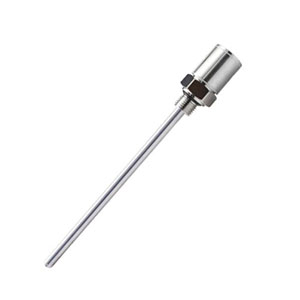
Capacitive level sensors measure material levels by detecting changes in capacitance as the level of the substance varies. When the sensor comes into contact with the liquid inside a container, the liquid can act as a dielectric medium. As the liquid level rises or falls, the capacitance changes accordingly, allowing the sensor to determine the level. These sensors can also be configured for non-contact measurement, making them suitable for corrosive, conductive, and non-conductive liquids.
They are compact in size and contain no moving parts, eliminating concerns about mechanical wear. And they also provide accurate level readings, though regular calibration may be required to maintain precision. Their adaptability and reliable performance make them widely used in food processing, pharmaceuticals, and oil and gas industries.
IV. Conclusion
Each level sensor is based on a specific technology and offers unique advantages tailored for particular applications. From contact sensors like submersible, electrode, tuning fork, and float sensors to non-contact options such as optical, ultrasonic, radar, and capacitive sensors, each type meets the monitoring needs of different industries. Together, these sensors ensure accurate, reliable, and efficient measurement of liquids and materials, supporting safety, process control, and operational efficiency across diverse applications. ATO.com offers a comprehensive selection of these high-quality level sensors, providing solutions for a wide range of industrial and commercial needs.