
DC-DC Converter Buying Guide
Shopping for the right DC-DC converter can be overwhelming—especially with so many options available. Whether you're building a smart home device, powering a robotics system, or working on an experimental project, selecting the best DC-DC converter is one of the most important purchasing decisions you'll make. Your choice directly impacts device stability, energy efficiency, and overall performance. This guide will help you understand what to look for when buying a DC-DC converter, so you can shop with confidence and power your projects successfully.
- Why do I need a DC-DC converter
- How to choose a DC-DC converter before buying
- ATO DC-DC converter for sale
Why do I need a DC-DC converter
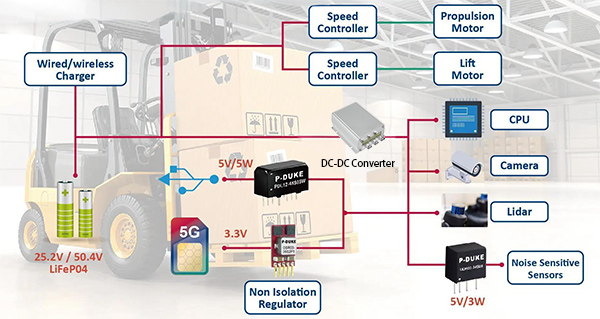
In electronic systems, the supply voltage often mismatches the component operating voltage. For example, when using a 12V battery to power a microcontroller system that requires a 5V operating voltage, voltage conversion is necessary. Similarly, when powered by a lithium battery, its voltage fluctuates between 3.0 and 4.2V, while many electronic modules require a stable 3.3V or 5V. In these cases, a DC-DC converter is needed to act as a voltage regulator, ensuring a stable and reliable operating voltage for subsequent circuits.
Beyond basic voltage conversion, DC-DC converters can also effectively improve system energy efficiency. Compared to traditional linear regulators, switching DC-DC converters offer higher conversion efficiency, especially when the input-output voltage difference is large. This high efficiency makes them particularly suitable for battery-powered portable devices, significantly extending their operating time. Furthermore, in complex electromagnetic environments such as industrial control, isolated DC-DC converters can provide electrical isolation, enhancing system immunity and safety.
How to choose a DC-DC converter before buying
Selecting a suitable DC-DC converter requires considering the following key aspects:
Basic electrical parameters
When selecting a DC-DC converter, first determine the basic electrical parameters of your system.
- Input voltage: The input voltage range must cover all possible voltages provided by the power supply. Especially when powered by batteries, consider voltage fluctuations when the battery is fully charged and under voltage.
- Output voltage: This depends on the load requirements. Some modules offer a fixed output (such as 5V), while others can be adjusted over a wide range using a potentiometer or resistor.
- Output current (Iout): This is one of the most critical parameters. The converter must be able to provide a current greater than the maximum operating current of your load, and a 20%-30% margin is recommended to ensure stability and prevent overheating. Calculate the total current requirements of all loads.
Voltage conversion requirements
The choice of converter type depends on the specific voltage conversion requirements. When the output voltage is consistently lower than the input voltage, a step-down converter should be selected. When the voltage needs to be boosted, a boost converter should be used. In situations where the input voltage can be higher or lower than the output voltage, such as in lithium-ion battery-powered systems, a buck-boost converter is recommended.
In addition, in specialized applications requiring safety isolation or level shifting, an isolated converter should be selected. Although more expensive, it offers improved safety guarantees.
Performance and efficiency
Conversion efficiency is a key performance parameter. High efficiency means less energy loss, which not only saves energy but also reduces heat and simplifies heat dissipation design. For precision analog circuits, it's also important to pay attention to output ripple and noise levels, choosing a converter with low ripple characteristics.
Modern DC-DC converters often integrate multiple protection features, such as overcurrent, overtemperature, and overvoltage protection, which significantly improve system reliability and safety.
Ease of use and safety
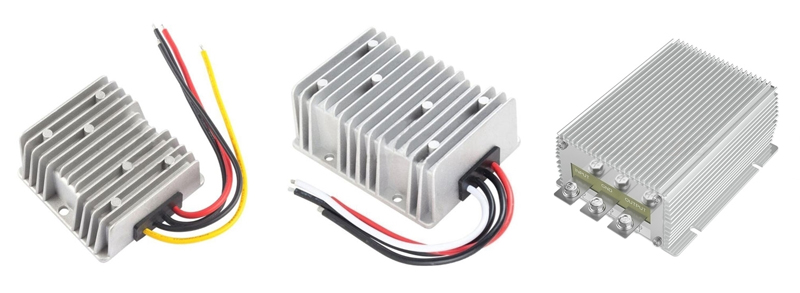
When choosing a DC-DC converter, consider package size and mounting method. For portable devices with limited space, a small converter with a surface-mount package should be selected. During the experimental and debugging phase, a modular converter may be more convenient. Finally, while meeting all technical requirements, consider cost factors and the supplier's technical support capabilities to select the most cost-effective solution.
Cost and budget
Among candidate models that meet technical requirements, cost is the key to the final decision. A wise cost decision isn't about choosing the cheapest option, but rather pursuing overall cost-effectiveness. The key lies in understanding the "total cost of ownership"—amounting not only to the purchase price of the chip or module, but also to factoring in the cost of peripheral components. While highly integrated solutions may have a slightly higher unit price, they can reduce the number of peripheral components and PCB design complexity, potentially lowering overall costs. On the other hand, simply pursuing a low-cost core chip may necessitate the use of expensive, high-precision peripheral components, which may not necessarily result in lower overall costs.
Budget planning must be calibrated to the project stage and scale. For prototyping or small-batch production, off-the-shelf modular converters, while costly per unit, save on R&D and debugging time, making them more economical. For mass production, adopting an in-house solution, while requiring an initial investment, offers significant cost savings per unit, far surpassing modular solutions.
ATO DC-DC converter for sale
| SKU | Input Voltage Range | Input Rated Voltage | Output Voltage | Output Current | Price |
| Boost (step-up) DC-DC converters | |||||
| ATO-DCDC-1219 | 9 - 16V | 12V | 19V | 3 - 30 Amps | $56.51-195.59 |
| ATO-DCDC-1224 | 9 - 23V | 12V | 24V | 1 - 50 Amps | $53.26-344.36 |
| ATO-DCDC-1228 | 10 - 18V | 12V | 28V | 5 - 40 Amps | $69.29-269.19 |
| ATO-DCDC-1236 | 10 - 25V | 12V | 36V | 1 - 30 Amps | $75.26-335.42 |
| ATO-DCDC-1248 | 10 - 25V | 12V | 48V | 1 - 20 Amps | $63.45-367.36 |
| ATO-DCDC-2448 | 18 - 35V | 24V | 48V | 3 - 40 Amps | $96.74-401.36 |
| Buck (step-down) DC-DC converters | |||||
| ATO-DCDC-122405 | 8 - 36V | 12/24V | 5V | 3 - 60 Amps | $98.45-331.56 |
| ATO-DCDC-2412 | 18 - 36V | 24V | 12V | 1.5 - 100 Amps | $102.58-369.45 |
| ATO-DCDC-3612 | 28 - 63V | 36V | 12V | 5 - 60 Amps | $83.44-326.18 |
| ATO-DCDC-4812 | 35 - 60V | 48V | 12V | 5 - 60 Amps | $82.17-345.36 |
| ATO-DCDC-4824 | 35 - 60V | 48V | 24V | 3 - 63 Amps | $72.14-324.73 |
| ATO-DCDC-6012 | 50 - 75V | 60V | 12V | 5 - 20 Amps | $82.29-189.49 |
| ATO-DCDC-7212 | 30 - 90V | 72V | 24V | 5 - 20 Amps | $58.59-79.69 |
| ATO-DCDC-7224 | 18 - 90V | 72V | 12V | 5 - 10 Amps | $56.99-66.99 |
| ATO-DCDC-48138 | 30 - 60V | 48V | 13.8/36V | 5 - 60 Amps | $82.29-189.51 |
| ATO-DCDC-24138 | 18 - 36V | 24V | 13.8/15/19V | 1 - 100 Amps | $82.29-189.52 |
| Boost-Buck (step-up/down) DC-DC converters | |||||
| ATO-DCDC-83612 | 8 - 40V | 12/24V | 12V | 6 - 20 Amps | $70.92-88.46 |
| ATO-DCDC-93624 | 9 - 40V | 12/24V | 24V | 6 - 15 Amps | $76.15-103.84 |
| ATO-DCDC-183624 | 18 - 40V | 24/36V | 24V | 20 - 30 Amps | $88.46-122.30 |
| DC-DC Boost Converter Module | |||||
| ATO-DCDC-3705 | 0.8 - 4.2V | 1.5/1.8/2.5/3/3.3/3.7/4.2V | 5V | 7 - 480 mA | $4.29 |
By systematically analyzing project requirements and comprehensively considering electrical parameters, conversion types, performance indicators, actual application requirements, as well as cost and budget, ATO one-stop online shop can help you select the most suitable DC-DC converter for your specific project, laying a solid foundation for the stable operation of your electronic equipment.
