
How to Choose the Right Floor Blower
A floor blower is a high-velocity mechanical fan designed to accelerate the evaporation of moisture from floors, carpets, and structural surfaces by generating a powerful, targeted stream of air close to the ground. Selecting high-quality floor blowers—often referred to as commercial air movers—is critical for ensuring operational efficiency, structural preservation, and safety in both restoration and facility maintenance environments. To make your purchase easier, the ATO online store provides a floor blower selection guide.
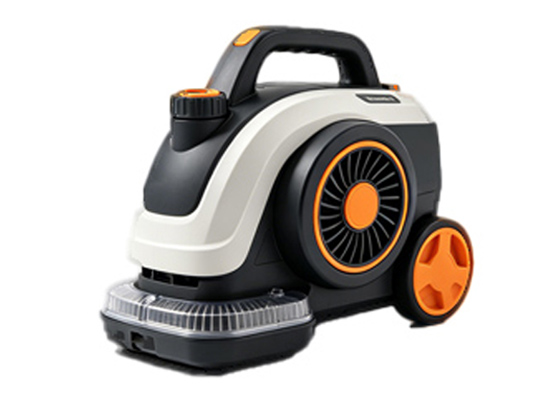
Understand the main types of floor blowers
- Centrifugal Floor Blowers (The "Snail" Fan): Utilizes an internal squirrel-cage wheel to draw air from the sides and exhaust it through a narrow, flat snout. Directed, high-pressure airflow. Ideal for drying baseboards, wall cavities, or clamping under carpets to dry the padding underneath.
- Axial Floor Blowers: Features large, open propeller blades that pull air directly through the back and push it forward in a wide path. High volume, low-pressure air movement. Ideal for whole-room ventilation, cooling warehouses, or drying wide-open concrete/tile floors.
- Low-Profile Floor Blowers: A modern, flat-stacked variation of the centrifugal fan designed to slide into tight spaces while remaining highly stable. High-traffic hallways, crawl spaces, and commercial cleaning crews with limited vehicle storage space.
Compare Floor Blowers Key Technical Specifications
| Technical Specification | Target Performance Range | Core Function |
|
CFM (Air Volume) Cubic Feet per Minute |
Small Rooms: 800-1200CFM Commercial Sites: 2500-3500+CFM |
Measures the total volume of air displacement over a fixed area. |
|
Amp Draw & Power Electrical Efficiency |
Low Draw: 1.5–2.5 Amps | Determines the electrical current consumed by the blower motor during operation. |
|
Operating Positions Housing Angles |
0°: Floors 45°: For walls 90°: For ceilings |
Articulating housing feet that lock the fan chassis into multi-angle vectors. |
Common applications of floor blowers
Water Damage Restoration and Flood Mitigation
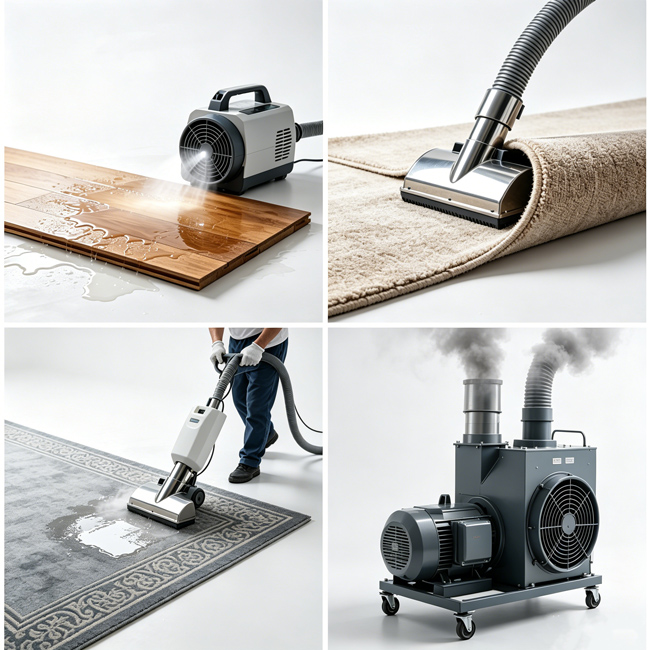
Floor Blowers are essential tools for disaster recovery. They quickly strip away the saturated boundary layer of air directly above wet materials—such as wooden subflooring, drywall, and concrete foundations—to accelerate evaporation and prevent structural warping, rot, and hazardous mold growth.
Janitorial Maintenance and Floor Drying
In facility management, floor blowers significantly minimize facility downtime and enhance public safety. After carpets are steam-cleaned or hard floors are mopped, waxed, or sealed, these fans provide rapid drying to dramatically reduce slip-and-fall hazards in high-traffic areas like lobbies and corridors.
Specialized Sub-Floor and Cavity Drying
Certain types of Floor Blowers (specifically centrifugal models) feature a flat, narrow snout that can be clamped directly underneath wet carpet edges to force high-pressure air into the hidden padding layer. Equipped with ducting attachments, they can also push dry air into wall cavities, crawl spaces, and other hard-to-reach areas.
Industrial Ventilation and Fume Extraction
In environments like automotive workshops, manufacturing plants, and construction sites, Floor Blowers are frequently utilized to maintain air quality. They effectively force dense fumes, chemical odors, fresh paint vapors, and airborne dust out of enclosed workspaces and direct them toward external exhaust points, creating a safer environment for personnel.
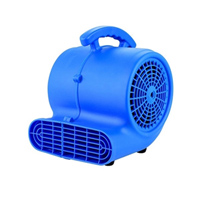
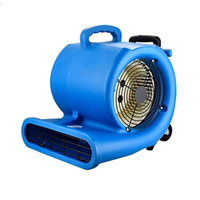
ATO Recommended Price Budget Table for Floor Blowers
| Budget Level | Unit Price (USD) | Recommended Floor Blower | Key Performance Features | Target Scene |
|
Small-Scale / Residential (Under $300) |
$291.53 |
|
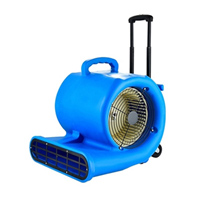
Low noise, portable rollers and levers design. | Home use, residential rooms, and localized spot drying. |
|
Mid-Range / Commercial ($300-$500) |
$472.30 |
|
High air volume, quiet runtime, 3 speeds (1215/1313/1375 rpm). | Hotels, shopping malls, public restrooms, and commercial kitchens. |
|
Large-Scale / Industrial ($700+) |
$748.46 |
|
Maximum air volume, heavy-duty build, 3 speeds (1215/1313/1375 rpm). | Large-scale scenes, expansive commercial halls, and industrial structural drying. |
Floor Blowers Maintenance Tips
- Maintain unrestricted airflow: Always keep side intake grills free of debris to prevent the motor from pulling excessive amperage and tripping breakers.
- Protect the electrical components: Never bypass a grounded 3-prong plug or operate a unit with a compromised power cable in wet environments.
- Verify multi-unit configurations: Before linking multiple floor blowers sequentially (daisy-chaining), confirm that the combined amp draw does not exceed the circuit breaker's capacity (typically 15-20 Amps).
FAQ
Q: What is the difference between a standard household fan and a floor blower?
A: Standard household fans are designed to circulate air broadly across a room for cooling comfort. Floor blowers, or commercial air movers, are engineered with high-velocity, high-pressure motors designed to deliver a concentrated, flat stream of air flush against floors, carpets, and walls.
Q: What is the optimal CFM rating for a commercial floor blower?
A: The optimal CFM rating for a commercial floor blower depends on the project scale, requiring 800-1200CFM for small areas or localized spot drying. For large commercial jobsites or intense water mitigation, industry professionals require heavy-duty units delivering 2500-3500+CFM to ensure adequate air displacement across wide or highly porous surfaces.
Q: How long should I leave a floor blower running to dry a room?
A: Typically, commercial floor blowers should run continuously for 24 to 48 hours to ensure structural materials are completely dry. Adequate ventilation or dehumidification must be active during this time.
Conclusion
Choosing the right floor blower ultimately comes down to matching your specific project scale with the correct technical specifications. By evaluating the required volumetric airflow (CFM), ensuring a low amp draw for safe multi-unit daisy-chaining, and prioritizing multi-angle versatility (0°, 45°, 90°), you can drastically accelerate drying times and protect your property from structural water damage.
