
ATO Weighing Indicator Buying Guide
Selecting the right weighing indicator plays a significant role in system accuracy, operational efficiency, and ease of integration. Across regions, whether in the USA, Southeast Asia, or Europe, choosing a compatible model contributes to long term reliability and cost effective operation.
This guide provides a practical framework to help you evaluate and select an weighing indicator that meets your application requirements. A variety of digital weighing indicators are available at the ATO.com Online Store, offering options for different industrial needs, from compact panel displays to multifunctional controllers.
- What Is a Weighing Indicator
- Why Choose ATO Weighing Indicators
- How to Choose the Right Weighing Indicator
- Selection Tips
What Is a Weighing Indicator
A weighing indicator is the central control unit of a scale system. It receives signals from load cells and converts them into accurate, readable weight values. Modern weighing indicators also support a range of advanced functions, including:
- Data transmission
- Printing
- Automation control
- Remote monitoring
Today, indicators are more than just displays—they serve as intelligent data hubs that enhance efficiency and connectivity across industrial operations.
Why Choose ATO Weighing Indicators
Selecting a reliable weighing indicator is critical for achieving accurate, stable, and efficient performance in any weighing system. Whether you are operating in industrial environments across North America, Europe, or Southeast Asia, a high-quality digital weight indicator ensures precise measurement, seamless system integration, and long-term reliability.
1. High Accuracy and Measurement Stability
ATO weighing indicators are engineered to deliver high-precision measurement using advanced A/D conversion technology and high-resolution signal processing. They accurately capture load cell signals and maintain calibration stability over time, making them ideal for demanding applications such as truck scales, platform scales, and weighbridge systems. This ensures consistent weighing results even under heavy loads or continuous operation.
2. Smart Connectivity for Modern Systems
Modern digital weighing indicators from ATO support multiple communication interfaces, including RS232, RS485, USB, WiFi, and Bluetooth. These connectivity options enable easy integration with PLC systems, printers, computers, and SCADA platforms, improving data acquisition and automation efficiency. Whether for factory automation or remote monitoring, ATO indicators provide flexible and scalable solutions.
3. Built for Industrial Environments Worldwide
Designed for global industrial use, ATO weight indicators feature robust construction, clear LED/LCD displays, and reliable performance in various environments. With support for different power supplies, wide operating temperature ranges, and durable housing, these indicators perform consistently in both indoor and outdoor conditions. They are widely used in logistics, manufacturing, agriculture, and infrastructure projects worldwide.
How to Choose the Right Weighing Indicator
Choosing the right weighing indicator is critical for system accuracy, operational efficiency, and long-term reliability. The following steps provide a practical framework to evaluate your requirements and select the most suitable indicator.
Step 1: Define Your Performance Requirements
Before selecting a weighing indicator, it’s important to clearly define your performance expectations:
- Accuracy & Resolution: Check the A/D resolution or conversion method. For example, high-precision models like ATO-XK3109-A9 offer 1,000,000 counts with Delta-Sigma A/D conversion, suitable for laboratory or industrial scales where precise measurement is critical. Lower-resolution models may be sufficient for general platform scales or truck scales.
- Readability / Scale Division: Consider the scale’s readability, e.g., 1/30,000 (ATO-XK3190-A12E) versus selectable divisions (ATO-XK3109-A9). High readability improves measurement accuracy in large-scale applications.
- Weight Range: Although the indicator itself does not limit weight, ensure it supports your load cell type and signal range.
Step 2: Evaluate Key Features and Functions
Different indicators have specialized features to match various applications:
| SKU | Product | Details | Price |
| ATO-WI-A12E | 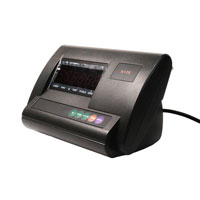 |
Power Supply: Built-in 6V/4AH rechargeable battery Display: LED red digital display Communication: 5-pin Vibration-resistant & Long-battery |
$222.79 |
| ATO-WI-E360 | 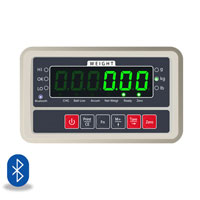 |
Power Supply: 5V 1000 mA Display: 6-digit LED Digital Tube Interface: USB-B Wireless-connectivity & Portable |
$143.97-160.15 |
| ATO-WI-GSI404 | 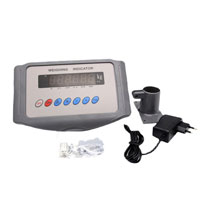 |
Power Supply: AC 100–240V Display: 0.8-inch red LED Interface: Print/ RS485/ 4-20mA/ WiFi Multi-interface & Industrial-grade |
$133.38-324.56 |
| ATO-WI-E218W | 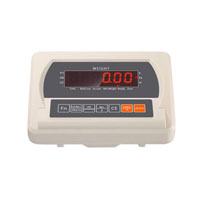 |
Power Supply: 220V, 50Hz AC Display: 6-digit LED Digital Tube Interface: Wired (1–8 sensors) Platform-scale & Basic-display |
$118.82 |
| ATO-WI-XK3109 | 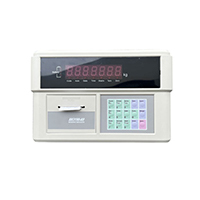 |
Power Supply: DC 5V Display: 7 bits LED Input Signal Range: -16 mV to 18 mV Print-enabled & High-precision |
$333.68 |
| ATO-WI-280P | 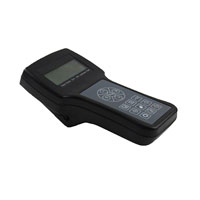 |
Power Supply: Battery ≥50 h Display: LCD screen Interface: RS232 Remote-transmission & Multi-unit |
$289.26 |
Features to Prioritize:
- Display Type: LED displays offer high visibility, while LCD can be preferable for compact or wireless units.
- Power Supply: Consider whether AC power, built-in rechargeable battery, or portable battery suits your environment.
- Communication & Connectivity: USB, RS232, wireless, or Bluetooth connections determine integration with printers, PCs, or other systems.
- Special Functions: Unit conversion, zero tracking, tare, clock display, and load cell compatibility can influence operational efficiency.
- Environmental Adaptability: Check operating temperature, relative humidity, and housing material for industrial or outdoor use.
Selection Tips
- Industrial & High-Capacity Applications: For truck scales, weighbridges, or platform scales, models like ATO-WI-XK3190 and ATO-WI-E218W are reliable due to high stability, long-term accuracy, and sensor compatibility.
- Portable & Lightweight Applications: For small scales or lab use, ATO-WI-E360 or ATO-WI-GSI404 offers compact size, long battery life, and unit conversion capabilities.
- High-Precision Needs: Choose ATO-WI-XK3109 when ultra-precise measurements and advanced features such as Delta-Sigma A/D and automatic long-wire compensation are required.
- Wireless or Remote Operation: ATO-WI-WI280P is ideal for situations requiring remote readings, with wireless transmission up to 800 meters and fast stabilization.
- Connectivity & Integration: Ensure the chosen indicator supports your existing load cells, printers, or system interface (RS232, USB, signal port).
