
How to Choose a Laser Module?
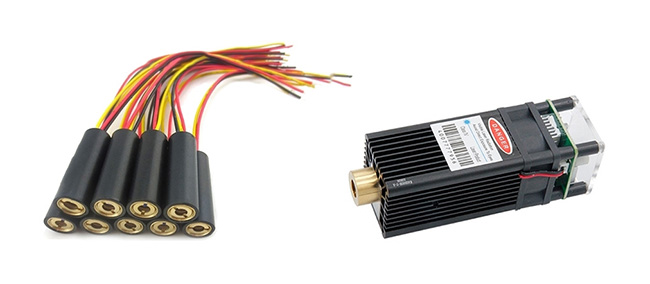
Selecting the appropriate laser module is critical for diverse application scenarios, whether for industrial laser cutting, scientific research, DIY engraving, or laser alignment. Each application requires a specific type of laser module to ensure optimal performance and precise operation. To facilitate your selection, ATO Online Store has compiled a comprehensive guide on choosing high-quality laser modules.
Key factors to consider when choosing a laser
- Wavelength: Choose based on the material or surface you're working with. Common wavelengths include 405nm (violet), 650nm (red), and 808nm (infrared).
- Power output: Laser power is measured in milliwatts (mW) or watts (W). Higher power may be needed for cutting, engraving, or long-distance projection, while lower power suffices for pointer or alignment applications.
- Beam quality: The beam shape and divergence are important for precision work. A Gaussian beam profile is ideal for fine cutting or engraving, while a collimated beam is used for distance applications.
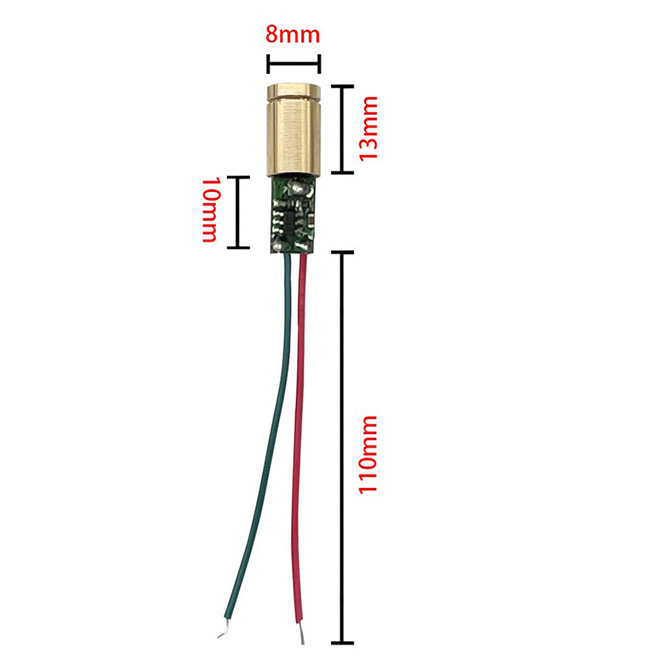
- Size and mounting: Depending on the space constraints of your project, choose a compact laser module with suitable mounting options.
- Cooling mechanism: High-power lasers may require active cooling systems (e.g., fans or heatsinks) to prevent overheating.
Laser module types and their applications
Fiber Laser Modules
Fiber Laser Modules (1064nm) are highly efficient for high-precision cutting and metal processing. They offer excellent beam quality, high power density, and are commonly used in industrial tasks like micromachining and laser marking.
Red Laser Modules
Red Laser Modules (650nm) are used for low-power applications like laser pointers, engraving, and alignment. They are cost-effective and ideal for simple tasks on materials like wood and plastic, where precision isn't critical.
Blue/Violet Laser Modules
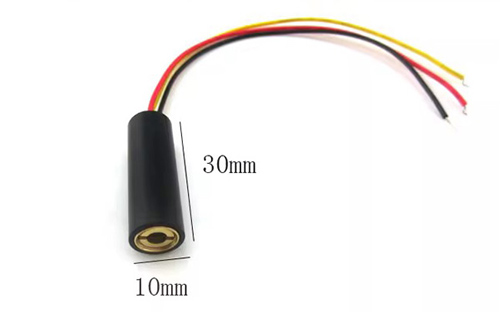
Blue/Violet Laser Modules (445nm blue, 405nm violet) are perfect for high-precision engraving and cutting. They are used in industrial settings for detailed work on metal, wood, and acrylic due to their fine focus and higher energy density.
Infrared (IR) Laser Modules
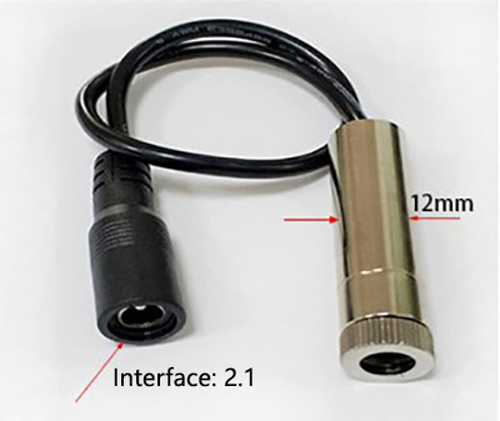
Infrared (IR) Laser Modules (750-1500nm) are used in metalworking and high-power applications like laser welding. Their invisible light makes them ideal for specialized environments such as medical treatments and night vision systems.
Common mistakes to avoid when selecting a laser module
- Choosing the wrong power: Users often mistakenly choose low-powered lasers for heavy-duty tasks.
- Overlooking cooling needs: Many ignore the importance of cooling systems, which can drastically affect the longevity of the module.
- Ignoring compatibility: Compatibility with the driver, power supply, and mount is often overlooked, leading to inefficiencies.
ATO cost-performance comparison of laser modules
| Product Name | Wavelength | Power | Price | Target Audience | Key Features |
| Blue Laser Engraver Module | 450nm | 10W | $258.75 | Hobbyists/Amateurs | Aluminum alloy, PWM modulation, dot-shaped spot, versatile material compatibility |
| Blue Laser Module for 3D Printer | 445nm | 1500mW | $98.79 | Hobbyists/Amateurs | TTL/PWM control, works on wood, leather, paper, ideal for 3D printing and engraving |
| High Power Laser Diode Module | 450nm | 40W | $1,153.64 | Industrial Users | High precision, PWM modulation, suitable for metal, plastic, wood cutting |
| Infrared Fiber Coupled Laser Module | 808nm | 35W | $1,419.23 | Industrial Users | Fiber-coupled, high-output, infrared laser suitable for industrial applications |
FAQ
Q: Can I use a laser module for metal engraving?
A: Yes, laser modules are often used for metal engraving, but the choice of module depends on the material and required precision. Fiber laser modules are particularly effective for engraving metals, as they offer high power and precision. Diode lasers, like those at 808nm, can also be used for metals, but may require multiple passes for more precise engraving.
Q: Can I use a blue diode laser to engrave clear glass?
A: Not directly. Because the glass is transparent, the beam passes through it. You must "prime" the glass with a dark coating (like tempera paint or specialized marking spray) so the laser has a surface to heat.
Q: What is the difference between Single-Mode and Multi-Mode emitters?
A: Single-mode emitters (3µm–7µm) produce a much smaller, cleaner spot for high-precision work. Multi-mode emitters (30µm–300µm) offer significantly higher power but at the cost of a slightly "blurrier" focal point.
Conclusion
When selecting a laser module, it’s important to assess your specific application needs—whether for DIY projects, industrial use, or scientific research. Consider the wavelength, power output, beam quality, and Cooling Mechanism before making a purchase. Always ensure proper safety precautions and check any local regulations that apply to laser use in your area. If you need to purchase laser module products, visit ATO Online Store. It offers a wide variety of products and boasts professional expertise.
