
How to Make Water Turbine at Home?
Hydropower is a clean, renewable energy source, and while large hydroelectric plants require massive infrastructure, you can actually make a DIY water turbine at home with simple tools and recycled materials. This type of homemade hydropower generator is perfect for students, hobbyists, or anyone who wants to learn how renewable energy works in practice. In this guide, we’ll show you step by step how to build a small water turbine at home.
How Does a Water Turbine Work?
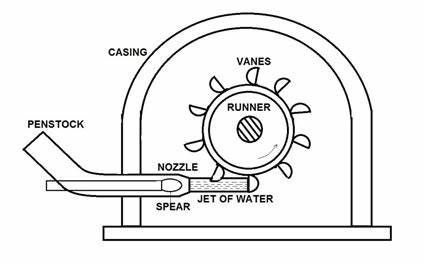
The working principle of a water turbine generator is based on energy conversion. Flowing water carries kinetic energy, and when it strikes the turbine blades, it makes them rotate. The rotation is transferred to a DC motor acting as a generator, which then converts the mechanical energy into electrical energy. In this way, a homemade water turbine demonstrates the same principle as large hydropower stations but on a smaller scale, showing how renewable energy can be harnessed from moving water.
Materials Needed for a DIY Water Turbine
To start your renewable energy project, prepare the following:
- PVC pipes and PVC sheets (for casings, discs, and blades)
- Small DC motors, wires, and LED bulbs (for power generation and testing)
- Compass, pencil, scissors/utility knife, sandpaper (for drawing, cutting, and grinding)
- Glue or epoxy resin, discarded marker pen cases, and thin plastic sheets (for fixing and supporting structures)
- Water source (such as faucet, bucket, or stream)
Using recycled materials not only saves money but also makes your homemade water turbine more eco-friendly.
Construction Steps
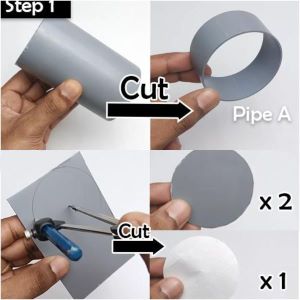
Step 1: Cut a PVC pipe into a short cylinder (Pipe A) and prepare another smaller pipe (Pipe B). Use PVC plates and paper to create circular pieces that fit inside the pipes.
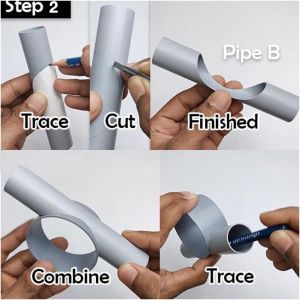
Step 2: Smooth the edges of the PVC circles, then cut and adjust Pipe B so it can be inserted into Pipe A. Mark and cut the slot on Pipe A for fitting. Paint Pipe B if desired and glue it firmly to Pipe A.
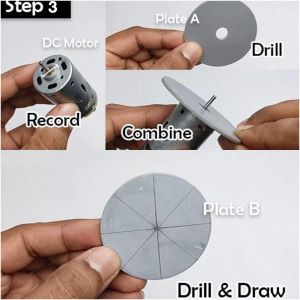
Step 3: Prepare a DC motor. Mount it on one PVC circle (Plate A) with a center hole matching the motor base, and use another circle (Plate B) with a smaller hole for the motor shaft. Divide Plate B into eight equal sections.
Step 4: Make turbine blades from PVC squares, glue them evenly onto Plate B, then combine Plate A and Plate B. Insert this rotor assembly into Pipe A to complete the generator body.
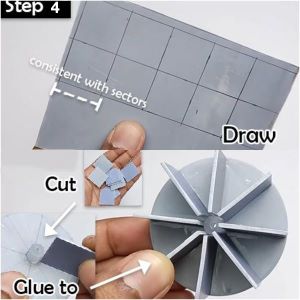
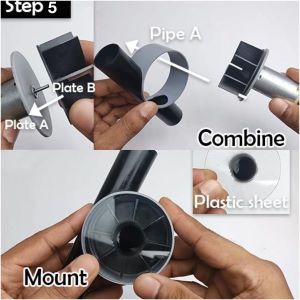
Step 5: Add a thin plastic sheet around the blades to prevent splashing. Connect wires from the motor to a load (like a light bulb). Pour water into Pipe B to spin the blades and generate electricity.
Applications of a Homemade Water Turbine
- Science projects: Demonstrate how renewable energy works.
- STEM learning: Teach the basics of electricity generation.
- Small power supply: Charge mini batteries or power tiny devices.
While this homemade hydropower project won’t produce large-scale electricity, it’s a valuable tool for learning and experimentation.
Troubleshooting Tips
- No rotation: Adjust the blade angle.
- No electricity: Recheck the wiring.
- Weak output: Increase water flow or add more blades.
Conclusion
Learning how to make a water turbine at home is a simple yet rewarding project. With just a DC motor, plastic spoons, and a water source, you can build your own DIY hydropower generator and explore the basics of renewable energy. This hands-on experiment is ideal for science fairs, classrooms, or anyone curious about sustainable power solutions.
Start your renewable energy project today and see how water can be transformed into electricity at home!
