
How to Select the Right Hipot Tester
Buy the right hipot tester to ensure not only safety for end users but also compliance with international and local standards. Hipot testing is a critical process for ensuring electrical safety and equipment reliability. Whether you are testing industrial machinery, electronic devices, or printing equipment, a proper Hipot Tester protects both your products and users. ATO Online Store presents a comprehensive guide to help you pick the perfect hipot tester.
What is the difference between an AC and DC Hipot Tester?
| Feature | AC Hipot Tester | DC Hipot Tester |
| Voltage Range | Typically1–50 kV AC | Typically 0.5–100 kV DC |
| Typical Applications | Motors, transformers, appliances | Cables, PCBs, batteries |
| Detects | Leakage current & insulation weakness | Insulation breakdown & resistance |
| Test Duration | Usually longer, simulates real operation | Short, rapid detection |
| Advantage | Real-world simulation | Fast, high-resistance detection |
What Should You Consider When Choosing A Hipot Tester?
- Voltage and Current Range: Ensure the tester covers the maximum voltage your equipment requires—typically up to 5–15 kV AC or DC, depending on the application. A tester with too low a voltage range will not detect insulation weaknesses.
- Safety Features: Look for grounding connections rated at 10 A, emergency stop buttons that cut off voltage in <50 ms, overvoltage protection (activating at 110–120% of set voltage), and leakage current monitoring with sensitivity of 0.1–10 mA. These features prevent accidents during testing.
- Usability: Clear digital displays with ±1% accuracy, intuitive controls, and portability (lightweight models <5 kg) increase testing efficiency and reduce operator error.
- Durability: Industrial-grade testers should withstand frequent high-voltage applications, e.g., 1,000 cycles at maximum rated voltage, without degradation.
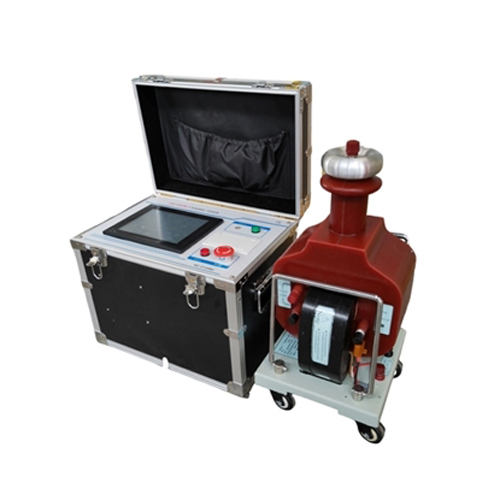
Understanding Standards For Hipot Testers
- USA – UL (Underwriters Laboratories): Ensures hipot tester equipment meets strict safety standards for electrical equipment used in the United States. Look for UL-listed models to guarantee compliance.
- EU – CE Marking: Indicates conformity with European safety directives, including low-voltage and electromagnetic compatibility requirements. CE-marked testers are mandatory for sale in the European Union.
- Global – IEC (International Electrotechnical Commission): Provides internationally recognized standards for electrical safety and testing procedures. Compliance with IEC 61010 ensures reliability and interoperability across regions.
Hipot Testers Application
| Application | Specific Application Type | Recommended Hipot Tester |
| Household Appliances & Consumer Electronics | Safety compliance testing, factory outgoing quality inspection, after-sales fault detection for household/consumer electronic products including refrigerators, washing machines, air conditioners, TVs, etc. |
|
Industrial Motors & Power Equipment |
Type test, factory outgoing inspection, operation and maintenance overhaul for industrial equipment including three-phase motors, servo motors, generators, transformers, switchgears, etc. |
|
| Cables & Wiring | Type certification, production line sampling inspection, project acceptance testing for power/communication/control cables, wire harnesses, and wiring systems. |
|
| Electronic Components & PCBs | Incoming material inspection, production line testing, reliability verification for capacitors, resistors, connectors, relays, PCB/PCBA assemblies. |
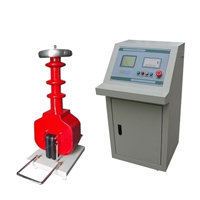
1.5 kVA 50 kV AC/DC Hipot Tester |
| Medical Devices | Safety compliance testing, registration testing, factory outgoing quality inspection for medical devices including ECG monitors, patient monitors, ventilators, anesthesia machines, surgical equipment, etc. |
1.5 kVA 50 kV AC/DC Hipot Tester |
| Electric Vehicles & Power Tools | Type test, factory outgoing inspection, safety certification for complete electric vehicles, power batteries, motor controllers, charging piles, power tools such as electric drills/angle grinders, etc. |
|
FAQ
Q: Should I choose an AC or DC Hipot Tester?
A: AC testers are ideal for simulating real-world operating conditions and leakage current measurement, commonly used in motors, transformers, and appliances. DC testers are often preferred for detecting insulation breakdown in cables, PCBs, and long-term insulation stability tests.
Q: How to ensure Hipot tester safety?
A: Check for interlocks, emergency stop, grounding, overvoltage protection, and leakage monitoring. Compliance with UL, CE, and IEC is essential.
Q: How do I ensure my Hipot Tester meets international standards?
A: Verify compliance with UL (USA), CE (EU), and IEC 61010 (global) standards. This ensures safety, reliability, and legal conformity for both domestic and export markets.
Q: How often should I calibrate my Hipot Tester?
A: Calibration is recommended once a year, or more frequently if the device is heavily used. Proper calibration ensures accurate voltage output, correct leakage detection, and continued safety compliance.
Conclusion
Selecting the right hipot tester involves understanding your equipment, required voltage, safety features, and local compliance standards. By following this guide, you can choose a reliable AC or DC Hipot Tester that ensures electrical safety and quality compliance.
