
Conductivity Sensor Price List
Conductivity sensor prices typically range from $155 to $2,926, depending on sensor type, accuracy, and application.
A conductivity sensor is an analytical instrument designed to precisely measure the ability of a solution to conduct an electric current. This conductivity is directly proportional to the concentration of ions present, serving as a reliable indicator of total dissolved solids (TDS), sample purity, and chemical composition.
Whether applied in water treatment, pharmaceutical manufacturing, food and beverage production, boiler management, or scientific research, selecting the appropriate sensor is crucial for ensuring process integrity, enhancing product quality, and reducing operational costs.
Different applications require specific sensor specifications, including accuracy, measurement range, materials, and working temperature. To help you buy the most suitable conductivity sensor for your needs, we provide detailed specifications and price information below which about defferent types of conductivity sensorto support your value-driven selection process.
ATO Conductivity Sensor Price List
| Product | SKU | Specifications | Price |
| Inductive Conductivity Sensor for Water | |||
 |
ATO-CS-S7S |
Measuring Range: 0~1000ms/cm, 0~2000ms/cm |
$1,293.54 |
| 4 Electrode Electrical Conductivity (EC) Sensor | |||
 |
ATO-CS-CON620D |
Measuring Range: 0.1~500ms/cm |
$616.46 |
| 2 Electrode Electrical Conductivity (EC) Sensor | |||
 |
ATO-CS-CON615D |
Measuring Range: 0-9999μs/cm or 0.01-100.00ms/cm |
$302.62 |
| Inline Conductivity Sensor/Probe for Liquid | |||
 |
ATO-CS-406-S |
Measuring Range: 0~5000μs/cm |
$521.85 |
| High Temperature Conductivity Sensor | |||
 |
ATO-CS-100-1 |
Measuring Range: 0~2000μs/cm |
$703.07 |
| Industrial EC Sensor | |||
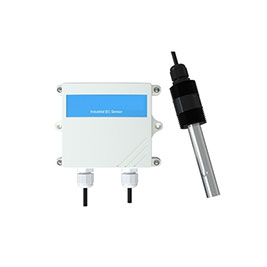 |
ATO-CS-SUS01 |
Measuring Range: 0.01~20μS/cm |
$195.08 |
| Contacting Conductivity Sensor/Probe for Water | |||
 |
ATO-CS-1.0 |
Measuring Range: 0μs/cm~2000μs/cm |
$314.55 |
| Sanitary Inductive Conductivity Sensor | |||
 |
ATO-CS-DNFA-5 |
Measuring Range: 1ms/cm ~ 2000ms/cm |
$2,925.84 |
| Wireless Conductivity Sensor | |||
 |
ATO-CS-306 |
Measuring Range: 0~5000 μs/cm |
$427.39 |
| Bluetooth Wireless Transmission Module for Conductivity Sensor | |||
 |
ATO-CS-MINI1 |
Measuring Range: According to sensor settings |
$96.62 |
| Portable Laboratory Conductivity Sensor | |||
 |
ATO-CS-1VTC |
Measuring Range: 2~20000μs/cm |
$155.38 |
| PH and Conductivity Sensor with Composite Electrode | |||
 |
ATO-PHB-5 |
Measuring Range: 0-14pH |
$695.65 |
What Factors Affect the Price of a Conductivity Sensor?
Five factors drive the price difference between conductivity sensor models:
- Sensor type and measurement technology. Contacting conductivity sensors are generally more affordable, while inductive (toroidal) conductivity sensors usually cost more because they measure without direct electrode contact, resist fouling better, and last longer in aggressive liquids.
- Accuracy grade. Tighter tolerance costs more — a general-purpose probe rated ±2.5% F.S. is priced lower than a sensor rated ±1.5% F.S. or better.
- Electrode and housing material. Standard PPS, ABS, or graphite electrodes cost less than corrosion-resistant alloys (e.g., Hastelloy) or hygienic PFA/PEEK housings used in chemical- and food-grade sensors.
- Protection rating and temperature range. Sensors rated for high temperature (up to 130°C) or continuous submersion cost more than standard-duty probes limited to about 60°C.
- Signal output type. A basic single 4-20mA analog output is the cheapest configuration; RS485 Modbus, multi-parameter (EC/TDS/temperature) readout, and wireless/Bluetooth output add cost.
These five factors explain most of the price spread in the table above: the jump from a $155 benchtop-style glass probe built for spot lab readings to a $2,926 continuously-immersed hygienic sensor built for 24/7 industrial duty reflects a different measurement technology plus different accuracy classes, materials, and protection ratings stacking up across that range.
2-Electrode vs. 4-Electrode: Why the Price Differs
In the table above, the 2-Electrode EC Sensor (ATO-CS-CON615D) costs $302.62, while the 4-Electrode EC Sensor (ATO-CS-CON620D) costs $616.46 — about double.
The price difference comes from three main factors:
- Measurement stability:
The extra electrode pair in the 4-electrode design helps reduce polarization effects and cable-resistance errors, providing more stable measurements. - Wider measurement range:
The 4-electrode model supports higher-conductivity applications, with a measurement range of up to 500 mS/cm compared with approximately 100 mS/cm for the 2-electrode model. - Material and accuracy performance:
The 4-electrode sensor achieves a tighter accuracy rating (1.5% F.S. vs. ±2.5% F.S.) and uses a more corrosion-resistant Hastelloy electrode instead of PPS, which increases durability and cost.
In short, the additional cost of a 4-electrode conductivity sensor provides a wider measurement range, improved stability, and more durable materials — not simply one additional electrode.
This comparison reflects these two specific ATO models; it does not mean every 4-electrode sensor on the market is automatically more accurate than every 2-electrode sensor. Within ATO's own lineup, however, the 4-electrode design represents a higher-cost option designed for applications requiring extended measurement range and tighter tolerance.
How to Select a Conductivity Sensor
Selecting the most suitable conductivity sensor requires a systematic evaluation of your application needs, sensor performance, and environmental factors. Here are the key considerations.
- Clarify the application scenario and measurement range. Because the two factors directly determine the type and range of the conductivity sensor. For instance, conventional water monitoring typically requires a two-electrode conductivity sensor with a moderate range (0–2000 μS/cm) and high cost-effectiveness.
- Consider the measurement range, accuracy and working temprature of the conductivity sensor. The conductivity measurement range should be chosen so that the expected values fall within 50%–80% of the sensor's full scale to ensure optimal accuracy—avoid using a low-range sensor for high-concentration samples. Accuracy, typically expressed as a percentage of full scale (e.g., ±0.5% F.S.), correlates directly with cost. Higher precision comes at a higher price. Besides, conductivity is highly temperature-sensitive, you should ensure the correct automatic temperature compensation.
- Consider the materials and structural design. These will impact corrosion resistance, service life, and application suitability. Common electrode materials include cost-effective 316L stainless steel for most water applications, economical graphite with limited mechanical strength, and high-performance platinum coating for demanding conditions. Housing options range from low-cost PP with moderate resistance, chemical-resistant PVDF, durable PEEK for harsh environments, to inert PTFE for extreme acids.
Is a Cheap Conductivity Sensor Accurate Enough for Industrial Use?
It depends on the application tier, not the price tag alone:
- Basic industrial models (~$155–$300): Portable and basic probes are accurate enough for general process monitoring, spot checks, and non-critical applications such as tap water or cooling tower monitoring.
- Mid-range industrial models (~$300–$700): 4-electrode, inline, and wireless sensors rated around ±1.5% F.S. handle most industrial process control, including wastewater and chemical processing where fouling resistance matters.
- Premium / compliance-grade models (~$700–$2,926): High-temperature, inductive, and sanitary sensors add IP68-level protection and hygienic PFA/PEEK materials required for compliance-sensitive settings — pharmaceutical CIP sterilization, food-grade processing, and environmental discharge monitoring, where regulatory reporting depends on measurement traceability.
A lower-priced sensor is not inherently "less accurate" — it is built for a narrower range of conditions. For regulated or compliance-driven environments, match the sensor to the accuracy grade and material rating your standard requires, rather than choosing by price alone.
Are Expensive Conductivity Sensors More Accurate?
Not automatically. Price mainly buys resistance to harsh conditions — wider range, corrosion-resistant materials, and higher protection ratings — not necessarily a better accuracy number for the same job. For example, the $521.85 Inline Conductivity Sensor/Probe is rated ±1.5% F.S., a tighter tolerance than the $1,293.54 Inductive Conductivity Sensor for Water, which is rated <2.5% F.S. Check the accuracy spec for your specific application rather than assuming a higher price always means a more accurate reading.
Should you be in need of purchasing a conductivity sensor or require technical support regarding conductivity sensors, please visit ATO automation shop, where you may find the answers you seek.
