
Micrometer Price List
A micrometer price list is determined by four core metrics: accuracy, resolution, range, and IP rating. These factors directly shape digital outside micrometer prices and 3-point inside micrometer costs. In high-precision manufacturing, balancing tight budgets with strict tolerance requirements is a daily challenge. This guide compares both micrometer types, explains what drives industrial pricing, and helps you find the best value for your shop floor.
Key Takeaways:
- Digital Outside Micrometers generally range from $139 to $198, with pricing driven by expanded mechanical frames and IP65 coolant-proof protection.
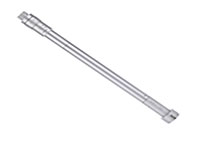
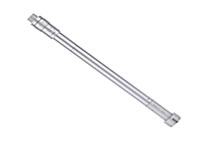
- 3-Point Inside Micrometers carry a higher pricing baseline ($236 - $445) due to their self-centering radial mechanics and include 150mm extension rods.
- Procurement Strategy: For high-exposure CNC environments, prioritize IP65-rated models from suppliers such as ATO to ensure measurement traceability and avoid costly over-specification.
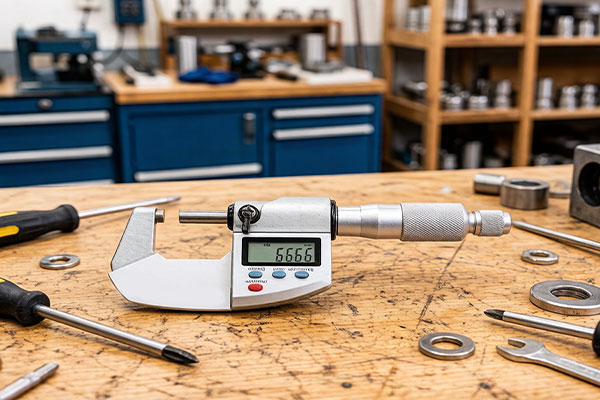
Digital & Inside Micrometer Price Comparison Sheets
A micrometer is a precision instrument designed to achieve micron-level measurements through a mechanical screw mechanism, with primary variations including inside and outside models widely used across machining, engineering inspection, and scientific research. For quick referencing and procurement budgeting, the following structured data provides a direct price list of micrometers for sale, mapped against vital technical specifications including measuring range, resolution, and accuracy.
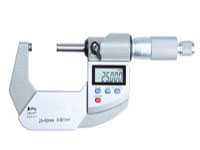
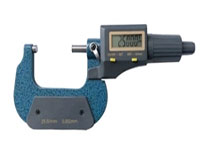
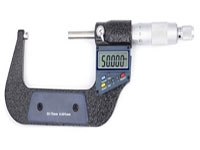
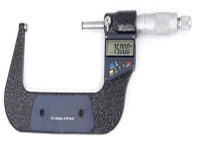
Digital Outside Micrometer Price List
A digital micrometer is a precision electronic tool for external dimension measurement. This digital outside micrometer combines a mechanical screw mechanism with a digital display, supports metric/inch conversion, and is widely used in machining, manufacturing, and quality control.
| SKU | Measuring Range |
Measuring Range | Resolution | Accuracy | Price (USD) |
Key Feature |
|
|
0~25mm | 0~1inch | 0.001mm |
0.00005inch | $139.62 | IP65 protection, metric/inch conversion, high resolution |
|
|
0.00007inch | $139.62 | HD LCD, data hold, tolerance alert, carbide measuring faces | |||
|
|
25~50mm |
1~2inch |
$178.94 | Digital + dial display, carbide anvil, hardened spindle | ||
|
|
0.00005inch | $198.76 | Digital + mechanical vernier double display, IP65 protection | |||
|
|
0.0001inch |
$153.96 | Digital + mechanical scale, IP65 protection, economic model | |||
|
|
50~75mm | 2~3inch | $179.86 | Digital, LCD screen, ideal for mechanical machining | ||
|
|
75~100mm | 3~4inch | $198.46 | Digital + dial, smooth ratchet mechanism, high precision |
3-Point Inside Micrometer Price List
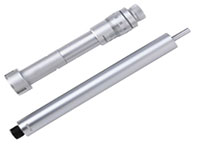
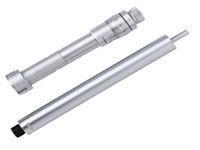
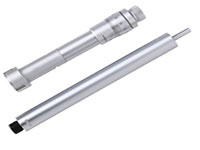
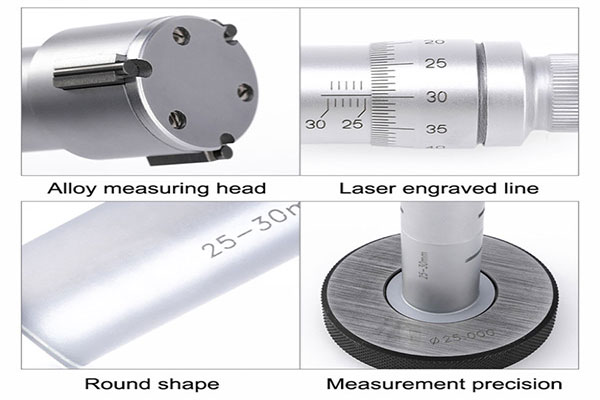
An inside micrometer is a precision tool for internal dimension measurement. Types include two-point and 3 point inside micrometers. These three-point designs self-center for blind holes and accurate bore inspection, often with extension rods.
| SKU | Measuring Range | Resolution | Accuracy | Material & Packing | Price (USD) |
Key Features |
|
|
6~8mm | 0.005mm |
0.004/0.005inch |
Bearing Steel / Plastic Box |
$317.06 | For blind and through holes, carbide measuring jaw |
|
|
10~12mm | $318.25 | For bore diameter and groove inside measurement | |||
|
|
16~20mm | $236.31 | Economic model, easy deep hole reading, accurate | |||
|
|
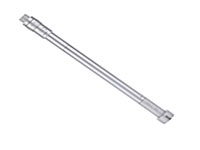
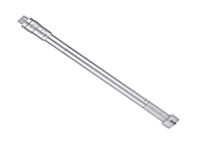
25~30mm | $291.41 | Precision tube ID measurement, 150mm extension rod | |||
|
|
30~40mm | $328.50 | Medium bore measurement, durable bearing steel | |||
|
|
50~63mm | $392.08 | 50~63mm range, suitable for blind and through holes | |||
|
|
87~100mm | $445.01 | Factory-direct price, portable, high precision |
Core Factors Affecting Micrometer Prices
When reviewing the pricing tables above, you will notice distinct differences in cost across various models. Industrial metrology instruments are priced based on the raw materials, mechanical complexity, and structural engineering required to guarantee stable measurements.
- Material Composition: Entry-level instruments rely on basic carbon steels, whereas premium models use high-grade bearing steel or feature hardened spindles and carbide-tipped measuring faces. Carbide is highly resistant to abrasion, preventing the microscopic wear on contact points that causes measurement drift over months of heavy usage.
- Accuracy & Resolution Tiers: There is a clear pricing premium for tighter mechanical tolerances. A digital micrometer 0-25mm with an accuracy threshold of 0.00005 inches commands a higher cost than an economic variant rated at 0.0001 inches. Machining components to meet a tighter baseline accuracy requires far more rigorous factory calibration, which is reflected in the final retail price.
- Measuring Range & Tool Type: As the mechanical frame expands to accommodate larger dimensions (e.g., jumping from 0–25mm up to 75–100mm), material costs and engineering complexities rise. Furthermore, internal instruments like a three-point inside micrometer are structurally more intricate than outside micrometers. They utilize an internal cone-and-anvil mechanical link to translate axial motion into three outward radial movements, and they come standard with critical hardware like 150 mm extension rods for deep-bore measurements. This explains why inside micrometers generally start at higher price baselines ($230–$445+).
- Ingress Protection (IP Ratings): Standard electronics fail quickly when exposed to airborne oils and liquid splashes. Tools equipped with the IP65 Protection feature have specialized hermetic seals around the battery compartment, screen, and encoders. This industrial waterproofing allows the micrometer to operate reliably alongside active CNC machines flooded with cutting fluids and coolant.
- Digital Integration & Connectivity: Enhanced digital features—such as high-contrast HD LCD screens, real-time data hold, tolerance alerts for fast pass/fail filtering, and single-button metric/inch conversions—increase tool utility and factory throughput, adjusting the pricing tier upward compared to strictly manual mechanical instruments.
How to Choose the Right Micrometer for Your Needs
Selecting the best micrometer for your workshop or lab depends on your specific measurement tasks, accuracy requirements, and budget. Use the following guidelines to match your needs with the right model.
| Application | Recommended | Type Example SKU | Key Reasons | Budget Range (USD) |
| General Machine Shop (CNC, turning, milling) | IP65-rated digital outside micrometer |
DM-N7025 |
Coolant/dust resistance, metric/inch conversion, data hold | 140–200$ |
| Quality Control / Inspection Lab | High-accuracy digital outside micrometer + 3-point inside micrometer | ATO-DM-J025 ATO-IM-2530 |
High repeatability, tolerance alert, self-centering bore measurement | 180–450$ |
| Toolroom / Mold Making | Dual-readout digital outside micrometer + multi-range inside micrometer | ATO-DM-J50 ATO-IM-1620 |
Mechanical scale backup, extension rod for deep cavities | 180–330$ |
| Hobbyist / DIY / Entry-level | Basic digital outside micrometer (no IP rating) | ATO-DM-1025 | Economical, sufficient for basic external measurements | 140–160$ |
| Professional Internal Diameter (blind holes, deep bores) | 3-point inside micrometer with 150mm extension rod | All ATO-IM series | Self-centering design, suitable for blind and through holes | 236–445$ |
Common Mistakes to Avoid
- Over-specifying accuracy: Don’t pay for ±0.002mm if your parts allow ±0.01mm.
- Ignoring environmental protection: In wet or dusty shops, a non-IP micrometer will fail quickly.
- Forgetting calibration: Even the best micrometer needs periodic verification. Factor in calibration costs.
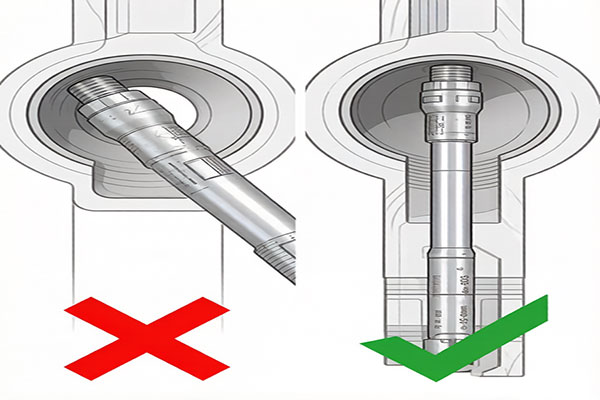
- Buying inside micrometers without extension rods: For deep holes, a 150mm rod is essential – all ATO-IM models come standard with one.
FAQs of Digital & Inside Micrometer
Q1: Why is there a price gap between digital and traditional mechanical micrometers?
A: Digital models require integrated electronic rotary encoders, custom circuit boards, LCD panels, and protective rubber seals to function. While manual vernier micrometers remain cheaper, digital variants save valuable time on the shop floor by removing operator calculation errors and enabling instantaneous data collection.
Q2: Does a larger measuring range mean a higher price?
A: Yes. Because micrometers measure absolute distances via direct contact, larger sizes require heavier, sturdier C-frames to prevent structural flexing during use. Keeping a 75–100mm micrometer perfectly rigid and parallel requires premium materials and extra calibration steps, which increases the cost compared to a 0–25mm tool.
Q3: Can a 3-point inside micrometer measure both blind and through holes?
A: Yes. Premium three-point models (such as the ATO-IM series) feature specialized contact jaws designed to measure internal surfaces right down to the very bottom of a blind hole, while remaining equally accurate when centered inside standard open-ended through holes.
Q4: What is the benefit of the "double display" (digital + mechanical) found on some models?
A: Tools like the ATO-DM-J50 provide a dual digital LCD screen and a traditional engraved mechanical sleeve scale. This gives machinists a highly efficient digital readout for daily inspection workflows, while retaining the physical vernier scale for fast analog cross-checks or manual calibration verifications.
Q5: Are extension rods interchangeable across different inside micrometer models?
A: Generally, no. Extension rods—such as the 150mm rods included with the ATO-IM line—are engineered and thread-matched for specific measuring ranges to preserve the tool's core alignment. Mixing rods across different sizes can compromise the instrument's accuracy.
Conclusion
Having a clear micrometer price list helps you balance precision needs with your budget. Use the tables and tips above to compare digital outside and three‑point inside micrometers based on range, accuracy, and shop environment. Whether you need IP65 protection for a busy CNC shop or a self‑centering three‑point design for blind hole inspection, matching your application to the right specifications ensures long‑term reliability.
When you are ready for dependable measurement tools, the ATO shop provides a solid selection of digital and inside micrometers at competitive prices. Every instrument is built to consistent quality standards, and we offer calibration support and responsive customer service to help you keep your tools accurate over time. We hope this guide makes your purchase decision easier and more confident. For bulk inquiries or technical advice, feel free to reach out to our team.
