
Portable Exhaust Fan Buying Guide
A portable exhaust fan is a movable ventilation device designed to remove heat, smoke, fumes, moisture, dust, and odors from enclosed spaces. Selecting the correct ventilation system can improve comfort, workplace safety, and long-term operational efficiency. To help you select the right portable exhaust fan more efficiently, ATO Industrial Automation Company provides a professional selection guide.
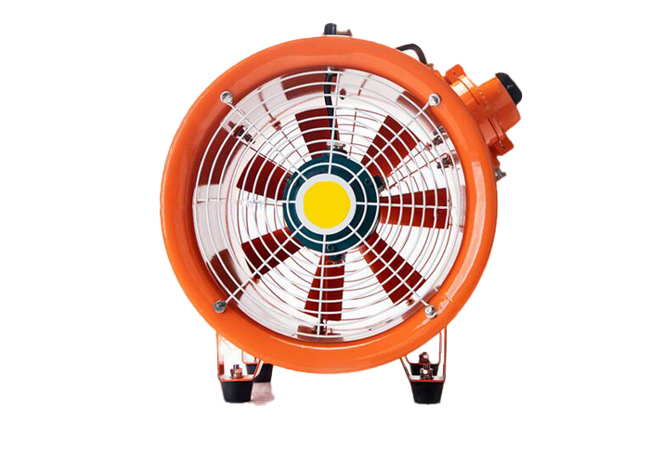
AC vs DC Portable Exhaust Fans
| Feature | AC Portable Exhaust Fans | DC Portable Exhaust Fans |
| Airflow Performance | Higher airflow capacity and stable static pressure, suitable for long duct systems and continuous industrial ventilation | Moderate airflow performance, suitable for portable and temporary ventilation applications |
| Mobility | Limited by power outlets and cable length, less flexible for remote work sites | Highly portable, can operate with batteries, vehicle power systems, or portable DC power supplies |
| Energy Consumption | Higher power consumption during continuous high-volume airflow operation | More energy efficient, especially with brushless DC motors and battery-powered systems |
| Maintenance | Requires periodic inspection of motors, wiring, and cooling components, designed for heavy-duty operation | Lower maintenance requirements, reduced vibration and noise, and battery management required for rechargeable models |
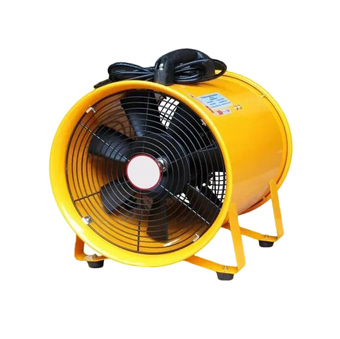
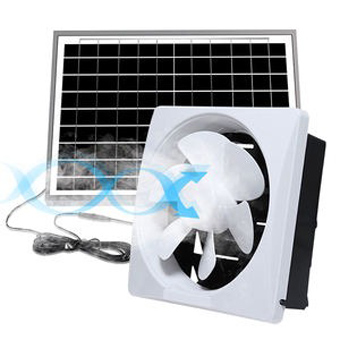
How To Choose A Suitable Portable Exhaust Fan
Check Airflow Capacity (CFM)
CFM stands for Cubic Feet per Minute and measures how much air the fan can move. Higher CFM ratings are generally better for large spaces, industrial ventilation, smoke extraction, and high-temperature environments. Smaller rooms may only require lower airflow systems.
General CFM Recommendations
| Environment | Recommended CFM |
| Bedroom | 100–250 CFM |
| Garage | 500–1500 CFM |
| Workshop | 1000–3000 CFM |
| Industrial area | 3000+ CFM |
Basic Airflow Formula
CFM=(Room Length x Width x Height x Air Changes)÷60
This formula estimates the airflow needed for effective ventilation.
Consider Portability
Portable exhaust fans should be easy to move and position. Important portability features include carry handles, wheels or casters, compact size, and foldable frames.
- Carry Handles: Carry handles are essential for manual transport of portable exhaust fans. A well-designed handle should be ergonomically shaped, heat-resistant, and strong enough to support the full weight of the unit.
- Wheels or Casters: Wheels or casters significantly improve mobility for medium and large-sized portable exhaust fans. Heavy-duty rubber or polyurethane casters allow smooth movement across rough surfaces such as concrete floors, construction sites, or industrial workshops.
- Compact Size: Compact design directly affects portability and deployment speed. Smaller exhaust fans are easier to transport, store, and install in confined or restricted spaces. Compact units are commonly used in maintenance operations, HVAC servicing, and emergency ventilation where space is limited.
- Foldable Frames: Foldable frames enhance portability by reducing storage space and simplifying transportation. This design allows the fan housing or support structure to collapse when not in use, making it easier to fit into service vehicles or storage areas.
Evaluate Noise Levels
Noise level is especially important for indoor environments.
Recommended Noise Ranges
| Environment | Suggested Noise Level |
| Bedroom | Under 40 dB |
| Office | 40–55 dB |
| Workshop | 60–75 dB |
| Industrial site | 75+ dB |
Think About Power Options for Portable Exhaust Fans
| Power Type | Best For | Advantages | Limitations |
| AC Powered | Workshops | Stable airflow | Requires outlet |
| DC Powered | Vehicles Portable | Portable | Lower power |
| Battery Powered | Remote sites | Mobility | Runtime limits |
| Explosion-proof | Hazardous areas | Safety | Higher cost |
Compare Build Quality
Build quality affects durability, operating lifespan, and safety.
Metal housing advantages: Better durability, heat resistance, heavy-duty operation, and longer lifespan.
Plastic Housing Advantages: Lightweight, Lower cost, Easier portability.
ATO Portable Exhaust Fans For Different Applications
| Application Scenario | Recommended Portable Exhaust Fan | Fan Diameter | Price | Reason for the applicable scenario |
| Industrial Facilities |
|
16 inch | $891.29 | High airflow capacity and explosion-proof protection make it ideal for factories, chemical plants, and large industrial ventilation systems. |
| Construction Sites |
|
12 inch | $667.99 | Portable and durable design provides reliable airflow for construction areas, temporary ventilation, and dust removal. |
| HVAC Systems |
|
10 inch | $644.79 | Compact size and stable airflow make it suitable for HVAC duct ventilation, maintenance work, and air circulation tasks. |
| Underground Workspaces |
|
14 inch | $797.69 | Strong ventilation performance and explosion-proof safety features are ideal for tunnels, confined spaces, and underground maintenance areas. |
| Emergency Smoke Extraction |
|
20 inch | $831.79 | Large fan diameter and powerful airflow allow fast smoke extraction and emergency ventilation in hazardous environments. |
| Small Hazardous Work Areas |
|
8 inch | $627.99 | Lightweight and portable ventilation solution for small confined spaces with flammable gases or vapors. |
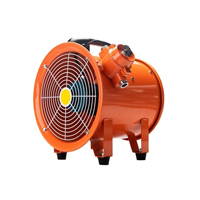
Common Buying Portable Exhaust Fan Mistakes
Many buyers focus only on price while overlooking ventilation performance and operational requirements.
- Choosing Insufficient CFM: Low airflow systems may not provide adequate ventilation for large spaces.
- Ignoring Noise Ratings: Some industrial fans are too loud for indoor residential use.
- Overlooking Power Requirements: Certain heavy-duty fans require specialized electrical connections.
- Forgetting Duct Compatibility: Not all fans support flexible ventilation ducts.
- Choosing Low-Quality Materials: Poor build quality can reduce durability and long-term reliability.
FAQ
Q: Can portable exhaust fans remove smoke?
A: Yes. Portable exhaust fans are commonly used for smoke extraction and fume removal in industrial and commercial settings.
Q: Are exhaust fans better than circulation fans?
A: Exhaust fans remove contaminated air from a room, while circulation fans primarily move existing air around.
Q: Are portable exhaust fans safe for indoor use?
A: Yes, provided they are properly installed and used according to manufacturer guidelines.
Conclusion
Portable exhaust fans provide an effective and flexible solution for improving ventilation in residential, commercial, and industrial environments. Whether you need to remove smoke, reduce heat, control humidity, or improve indoor air quality, choosing the right fan depends on airflow capacity, portability, durability, and application requirements.
