What Would Cause a Capacitor to Fail?
Wed, Jul 25, 2018
Cause of damage of parallel power capacitor
- When cutting off the capacitor bank, restriking overvoltage caused by breaker restrike leads to the insulation damage or breakdown between capacitors. Some capacitor banks don’t have any overvoltage protection measures nor series reactor, particularly, the frequently operated capacitors easily lead to insulation damage or even explosion.
- Too large current over the capacitor and overcurrent caused by overcurrent harmonics in power grid make the capacitor overheated, insulation reduction or even damage.
- The capacitor is not equipped with a single fuse or the fuse characteristics (characteristic aegis of ampere second) are too poor. When the internal components of the capacitor are seriously breakdown and the fault current is generated, the fuse can't fuse in time. Meanwhile, effective protective relaying measures fail to keep up, overcurrent leads to a sharp rise in the temperature inside the capacitor and thereof leads to capacitor expansion or explosion.
- Poor product quality. The paper oil insulation fails to be dried or dipping treatment under a strict vacuum condition, the residual bubbles inside produce partial discharge under the long-term working voltage, while partial discharge further leads to insulation damage and aging. As a result, the temperature also rises, which eventually leads to electrochemical breakdown of components and the capacitor damages.
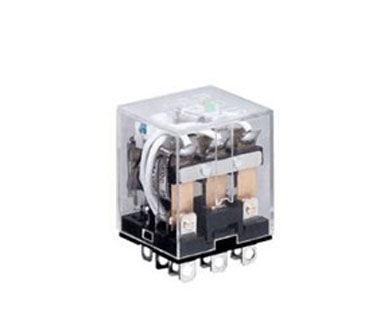 In addition to comprehensive parameter testing and effective screening of relays, proper use of relays is also an effective way to improve the reliability of relays. Conversely, improper use will shorten the life of the relay. How to improve the reliability of the relay? Here are some suggestions for your reference.